Polikarpov I-16 Fighter
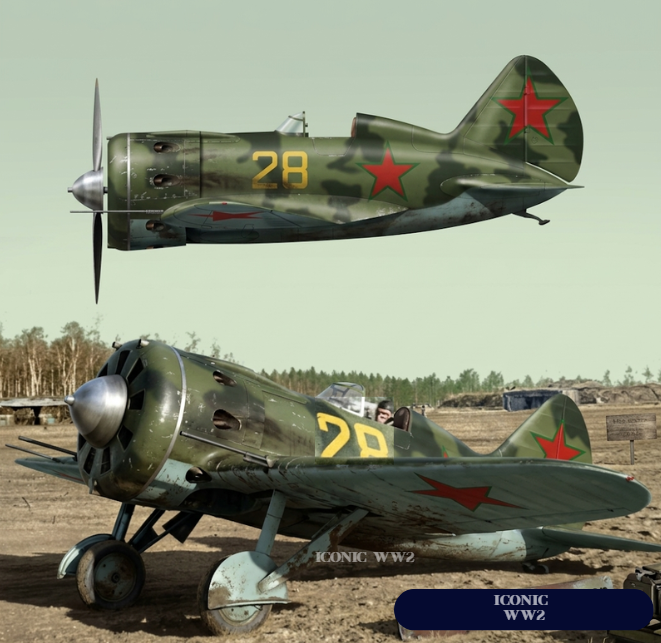
Developer: Polikarpov
Country: USSR
First flight: 1934
Type: Fighter
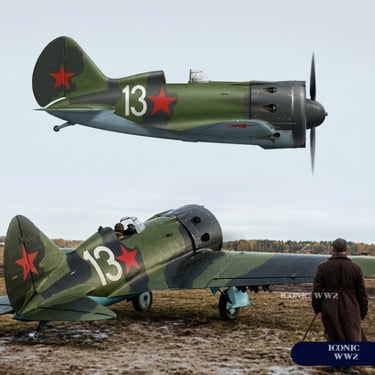
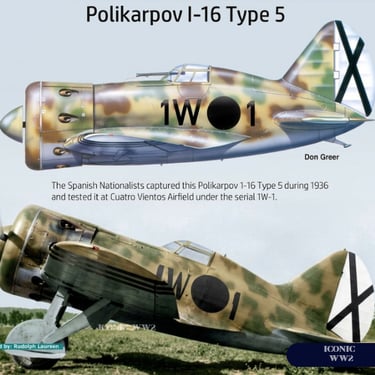
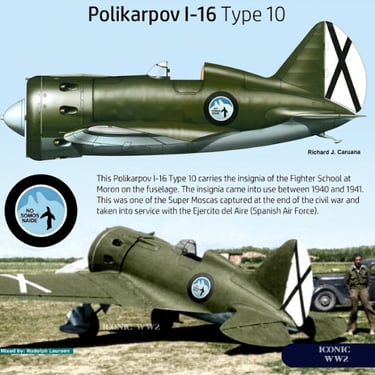
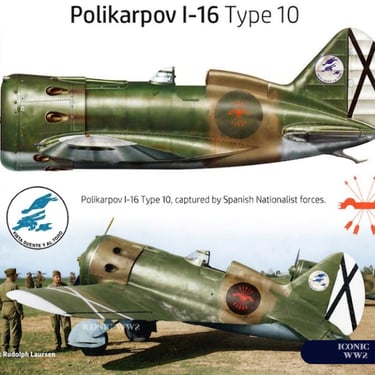
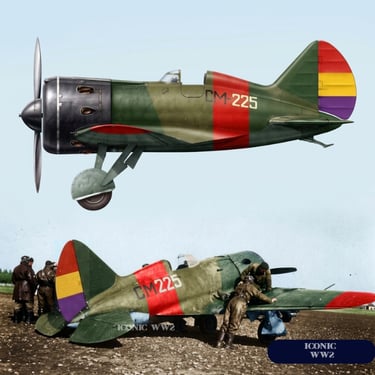
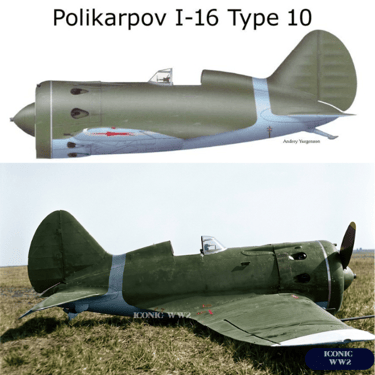
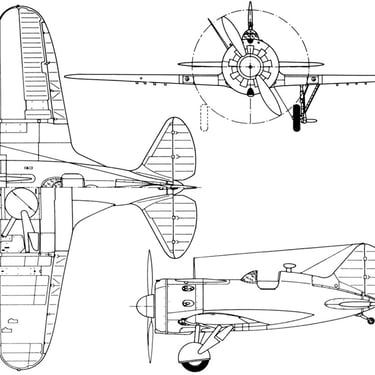
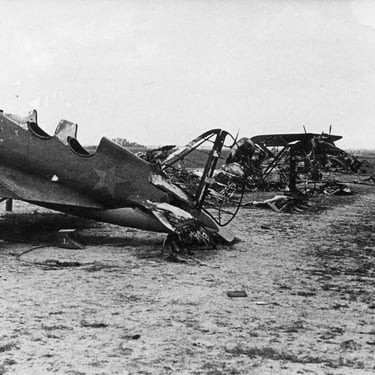
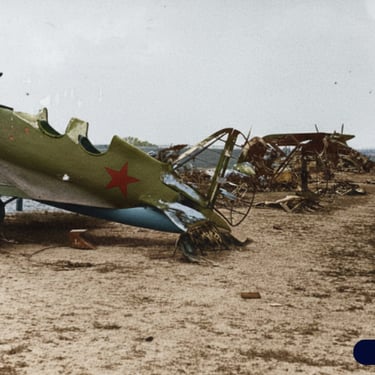
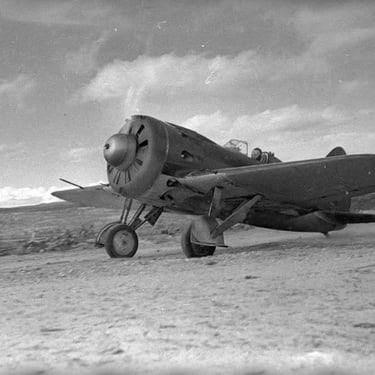
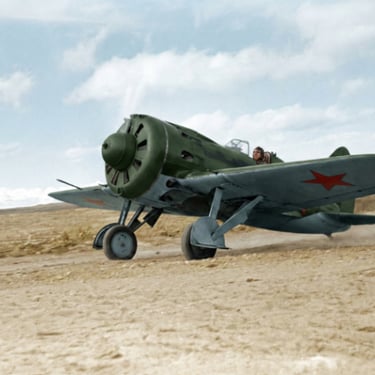
The 1930s were a decade of accelerated transformation in military aviation, and few aircraft embodied that shift more decisively than the Polikarpov I-16. Of the vast Soviet inventory of the interwar and early Second World War period, the I-16 remains the most historically significant — and arguably the most influential — single-engine fighter the USSR ever produced. It served in the skies over Spain, Mongolia, Karelia, and on the entire length of the Eastern Front. It was the aircraft on which figures such as Valery Chkalov, Vladimir Kokkinaki, and Andrei Yumashev developed their test-flying reputations, and the machine through which an entire generation of Soviet fighter pilots — many of whom would later become Heroes of the Soviet Union — first learned the realities of modern aerial combat.
The I-16 is more than a footnote in Soviet aviation history. It was, in the strict technical sense, the world's first operational low-wing cantilever monoplane fighter with retractable landing gear to enter front-line service in significant numbers. Its appearance forced a fundamental reassessment of fighter design philosophy and prompted the abandonment of the biplane formula that had dominated military aviation since the First World War. The aircraft also changed how air combat itself was conceived, taught, and conducted.
The Polikarpov I-16: The Fighter That Changed Aerial Warfare
A Soviet Revolution in Combat Aviation
Origins and Development
The I-16 was the product of the design bureau led by Nikolai Polikarpov — sometimes referred to in Soviet sources as the "King of Fighters" — working within the constraints and ambitions of early-1930s Soviet aviation industry. The prototype made its maiden flight in late 1933. State acceptance followed in 1934, and serial production was authorized the same year. Manufacture continued until 1942, by which point more than 10,000 airframes of all variants had been produced.
The I-16 was publicly demonstrated at the Milan aeronautical exhibition in 1935, where its performance caused a considerable stir among Western observers. Until 1937, the Soviet Union remained the only major power operating a high-speed monoplane fighter in front-line service — a notable technological lead in a period when France, Britain, Germany, and the United States were still committed to biplane interceptors.
Service Introduction and the Pilot Problem
The introduction of the I-16 into operational units revealed difficulties that were as much psychological as technical. Soviet pilots of the early 1930s had trained almost exclusively on docile, forgiving biplanes. The transition to a stubby, short-coupled monoplane with a rearward-shifted centre of gravity, retractable undercarriage, and unforgiving handling characteristics produced a wave of training incidents and accidents. Many pilots openly distrusted the new machine: the single wing seemed insufficient, and the retractable gear introduced a failure mode that biplane pilots had never had to consider.
To address this resistance, the Soviet air arm organised a series of demonstration flights led by senior test pilots, including formation aerobatics intended to convince front-line pilots that the new fighter was controllable and reliable. The aircraft used for these displays were painted bright red, giving rise to the famous "Red Fives" demonstration formations that toured Soviet air districts in the mid-1930s.
The I-16 ultimately earned two affectionate nicknames that reflected its dual reputation. To Soviet pilots, it was the Ishak — "donkey" or "little donkey" — a name born of its stubborn handling and its tendency to bite the inattentive. To German and Spanish Nationalist pilots, who first encountered it over Spain, it was the Rata — "rat" — for its small, blunt silhouette and tight turning radius.
Baptism of Fire: Spain, 1936
The introduction of the I-16 into operational units revealed difficulties that were as much psychological as technical. Soviet pilots of the early 1930s had trained almost exclusively on docile, forgiving biplanes. The transition to a stubby, short-coupled monoplane with a rearward-shifted centre of gravity, retractable undercarriage, and unforgiving handling characteristics produced a wave of training incidents and accidents. Many pilots openly distrusted the new machine: the single wing seemed insufficient, and the retractable gear introduced a failure mode that biplane pilots had never had to consider.
To address this resistance, the Soviet air arm organised a series of demonstration flights led by senior test pilots, including formation aerobatics intended to convince front-line pilots that the new fighter was controllable and reliable. The aircraft used for these displays were painted bright red, giving rise to the famous "Red Fives" demonstration formations that toured Soviet air districts in the mid-1930s.
The I-16 ultimately earned two affectionate nicknames that reflected its dual reputation. To Soviet pilots, it was the Ishak — "donkey" or "little donkey" — a name born of its stubborn handling and its tendency to bite the inattentive. To German and Spanish Nationalist pilots, who first encountered it over Spain, it was the Rata — "rat" — for its small, blunt silhouette and tight turning radius.
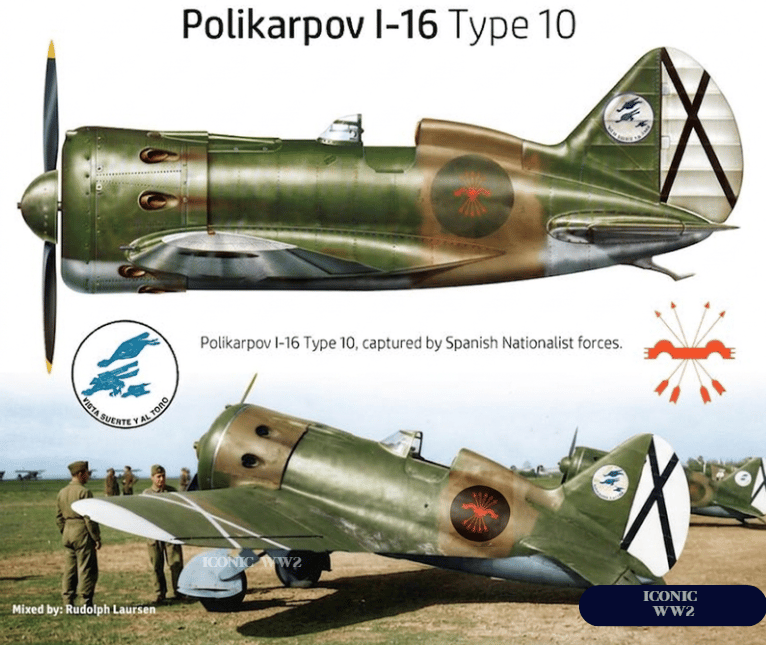
The I-16 saw combat for the first time over the Iberian Peninsula. The first batch of aircraft arrived in Republican Spain in late October 1936, flown both by Soviet "volunteers" and by Spanish pilots who had received conversion training in the USSR. The first recorded air-to-air engagement occurred on 9 November 1936.
In its early Spanish service, the I-16 was decisively superior to the biplane fighters of the Italian Regia Aeronautica and the Nationalist Spanish air arm. The arrival of the Messerschmitt Bf 109 in Nationalist service from 1937 onward, however, marked the beginning of the I-16's gradual technical obsolescence — a process that would accelerate sharply over the following four years.
A frequently cited anecdote from the Spanish theatre records that Francisco Franco, on seeing captured examples, refused to accept that the aircraft had been designed and built in the USSR. He referred to it as "a Boeing," reflecting a widespread Western assumption that Soviet industry was incapable of producing a fighter of this calibre.
The Far East, Khalkhin Gol, and the Winter War
From 1937 the I-16 was deployed in significant numbers to China and Mongolia, where it operated against the Imperial Japanese Army Air Service. Its principal opponents in the Far East were the Mitsubishi A5M and the Nakajima Ki-27. For several years the I-16 retained a clear performance margin over Japanese types, although that advantage narrowed as Japanese fighter development accelerated.
In August 1939, during the Khalkhin Gol border conflict, the I-16 became the first fighter in history to use unguided air-to-air rockets in combat: a pair of Japanese aircraft were destroyed by RS-82 salvoes. The same month, the Soviet Union and the Republic of China signed an agreement to establish a licensed assembly facility for Soviet aircraft on Chinese soil.
In the Winter War against Finland (November 1939 – March 1940), the I-16 faced the Fokker D.XXI of the Finnish Air Force. Despite an overwhelming Soviet numerical advantage, losses were heavy, and the conflict exposed deep deficiencies in Soviet pilot training, tactical doctrine, and command structure — problems that would prove catastrophic eighteen months later.
The Eastern Front: From First Victory to Obsolescence
The I-16 was committed to combat from the opening hours of Operation Barbarossa. At 03:30 on 22 June 1941, an I-16 pilot in the Brest sector destroyed a Bf 109 in what is recorded as the first Soviet aerial victory of the Great Patriotic War. Approximately thirty minutes later, the Luftwaffe scored its own first kill in the same sector — an I-16.
On 8 July 1941, a group of I-16 pilots from the 158th Fighter Aviation Regiment became the first Soviet fighter pilots of the war to be decorated as Heroes of the Soviet Union.
At the moment of the German invasion, the Western Military Districts held more than 1,600 I-16 fighters of various modifications. By mid-1941, however, the aircraft was conclusively obsolete as a front-line interceptor. Against the Bf 109E and the later Bf 109F, the I-16 was inferior in level speed and climb rate, though it retained a clear advantage in horizontal manoeuvrability. German pilots, recognising this, generally avoided turning engagements and exploited their superior energy performance — climbing, diving, and breaking off engagements at will.
The catastrophic losses of the summer of 1941 forced the Red Army Air Forces to replace experienced cadres with rapidly trained recruits. The I-16 punished inexperience severely: non-combat losses reached approximately 40 per cent. In 1941, the average operational life expectancy of a newly assigned I-16 pilot was between one and three combat sorties.
Despite this, the aircraft remained in front-line Soviet service until 1944. In January 1943, Soviet pilot Ivan Golubev recorded one of the more remarkable feats of the type's late career: flying an obsolescent I-16, he shot down two of the most advanced German fighters then in service — Focke-Wulf Fw 190As.
In Spain, captured and licence-built I-16s remained operational with the Ejército del Aire until 1953.
Design and Construction
The I-16 was built around what was, in the early 1930s, a genuinely advanced aerodynamic concept: a low-wing cantilever monoplane with retractable undercarriage and a fully cowled radial engine. Its construction, however, reflected the practical limitations of Soviet industry at the time, combining steel, aluminium alloy, and wood in roughly equal measure.
The fuselage was of semi-monocoque construction, built in two halves from wooden spars, stringers, and frames sheathed in birch plywood. Steel reinforcement was used at high-stress points. The skin was finished with doped fabric over the plywood, then filled and polished to reduce drag.
The wing was a two-spar structure consisting of a centre section and two outer panels. The spars were steel tube; the ribs were rolled duralumin sections. The forward portion of the centre-section skin was plywood; the rear was duralumin. The ailerons occupied almost the entire trailing edge of the outer wing panels — a design choice that contributed to the aircraft's exceptional roll rate and equally exceptional touchiness.
The tail surfaces were single-piece, with a metal frame and fabric covering.
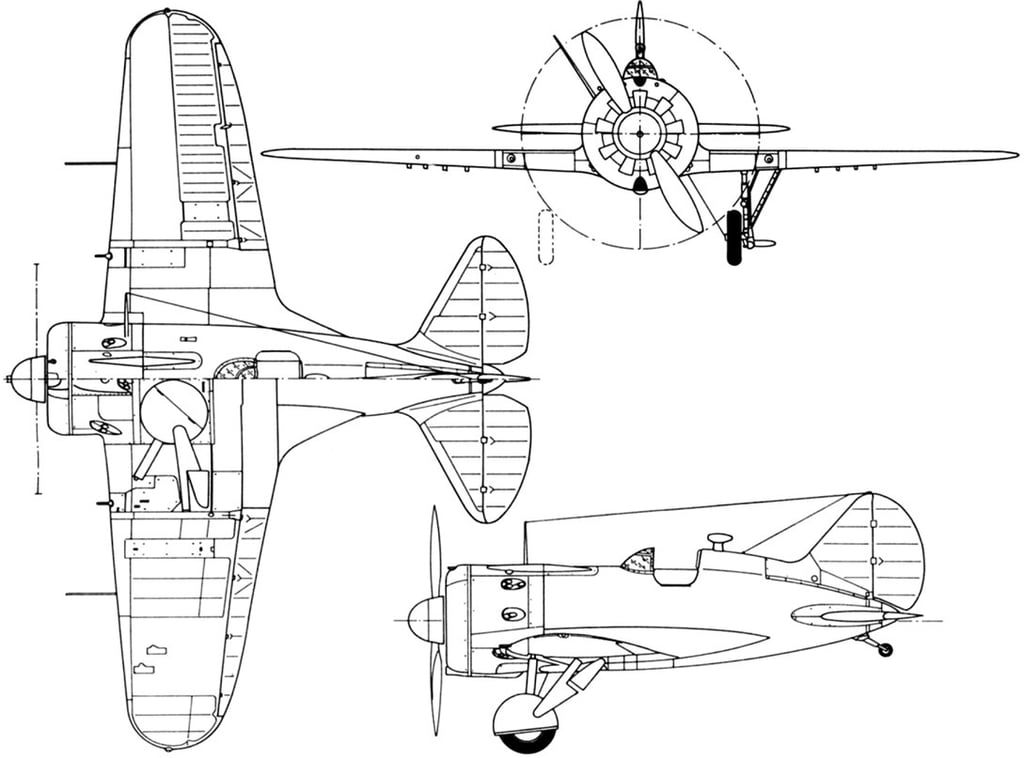
The undercarriage was a conventional (tailwheel) configuration with two retractable main wheels and a tail skid — replaced on later variants by a fixed tailwheel. The main wheels were fitted with drum brakes operated by rudder pedals, and the legs were damped by a hydropneumatic system. Retraction and extension were entirely manual, by means of a hand winch in the cockpit. The system was complex, prone to failure, and physically demanding: the pilot was required to complete forty-four winch revolutions to retract the gear, often while simultaneously climbing away from the airfield.
The cockpit was set well aft on the fuselage. Initial production aircraft were fitted with an enclosed sliding canopy, but pilot feedback led to its replacement with an open windscreen on most production variants. Two factors drove this change: the original canopy offered very poor visibility, and pilots widely distrusted it — fearing they would be unable to jettison it in an emergency. From later production batches onward, an 8mm armoured backplate was fitted to protect the pilot from rearward fire.
Powerplant
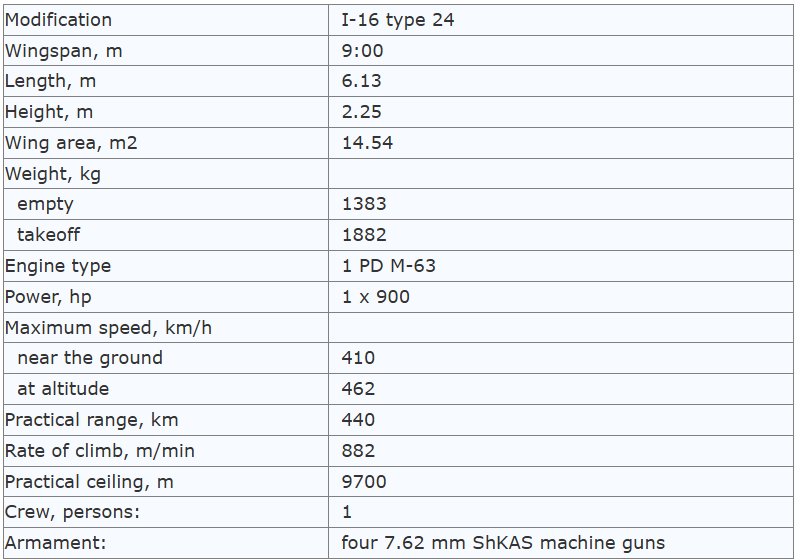
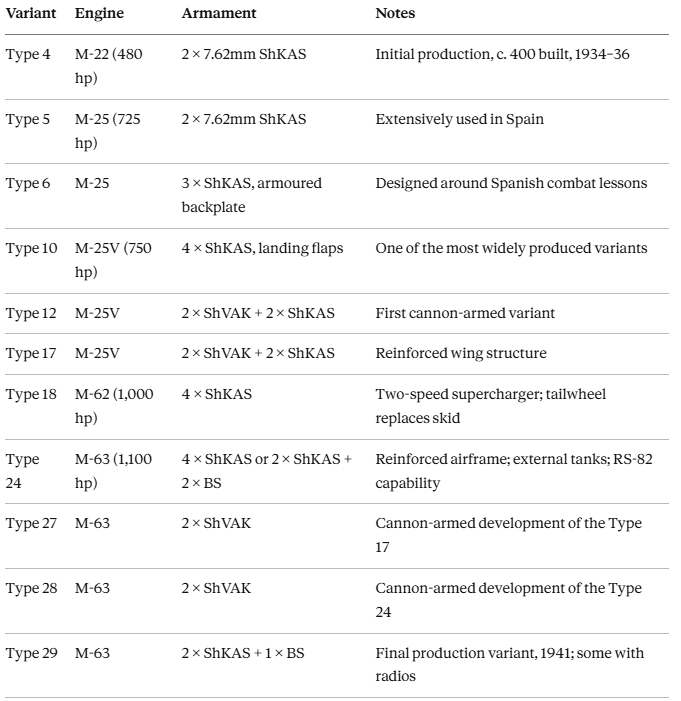
The I-16 was powered throughout its life by a single nine-cylinder air-cooled radial engine, with the specific type varying by modification. The earliest production Type 4 used the M-22, a Soviet development of the Bristol Jupiter, producing 480 hp. Later production aircraft progressed through the M-25 series (a licensed Wright Cyclone derivative, 725–750 hp), the M-62 (1,000 hp, with a two-speed supercharger), and finally the M-63 (1,100 hp).
The propeller was a two-blade aluminium alloy unit with ground-adjustable pitch on early variants, replaced by a constant-speed VISh-6A propeller on later models.
The engine was enclosed in a short cylindrical cowling with nine forward-facing openings to admit cooling air and eight lateral cutouts to vent it. The lateral cutouts also served as exhaust outlets.
Armament Development
The I-16's armament evolved substantially over its production life, tracking both the increasing performance of opposing aircraft and the broader Soviet shift from rifle-calibre machine guns to cannon armament.
The initial Type 4 carried two wing-mounted 7.62mm ShKAS machine guns. Subsequent variants added two synchronised cowl-mounted ShKAS, bringing the total to four. From the Type 12 onward, certain variants replaced the wing ShKAS with 20mm ShVAK cannon. The late Type 17 and Type 27 carried twin 20mm ShVAK in the wings. Some Type 24 and Type 29 aircraft mounted 12.7mm BS heavy machine guns in place of two of the rifle-calibre weapons.
External stores increased with the type. Hardpoints could accommodate auxiliary fuel tanks (up to 200 litres), light bombs, or up to six RS-82 unguided rockets. The RS-82 installation made the I-16 one of the first fighters in the world capable of launching guided or unguided air-to-air rockets in combat.
Principal Modifications
Operators
The principal operator of the I-16 was the Soviet Air Forces, but the type also saw service with the Spanish Republican Air Force, the Chinese Nationalist Air Force, and the Mongolian People's Air Force. Captured examples were operated, in limited numbers, by Finland and Romania. The Luftwaffe is known to have tested at least one airworthy I-16 for evaluation purposes, although it was never operated in combat by German units.
Assessment
The I-16 occupies a singular position in the history of fighter aviation. As the first operational fighter to combine cantilever monoplane construction, retractable undercarriage, and a powerful radial engine, it set the template that every subsequent first-generation monoplane fighter — including the Hawker Hurricane, the Messerschmitt Bf 109, and the Curtiss P-36 — would refine and ultimately surpass.
Its principal design flaw — a centre of gravity placed too far aft — was responsible for most of its handling deficiencies, and was the source of the demanding control characteristics that earned the type both its reputation for ruthlessness toward inexperienced pilots and its enduring respect among veterans. A standing Soviet axiom of the late 1930s held that a pilot who could master the I-16 could fly anything.
By 1941 the aircraft was, by every meaningful metric, obsolete. That it remained in front-line service for three further years — and continued to score victories against the most advanced fighters of the Luftwaffe — speaks both to the desperate shortages of the Soviet air arm during the early war years and to the residual qualities of a design that, when handled by an experienced pilot, was never entirely without teeth.
The I-16 was the bridge between two eras of aerial combat. It was conceived in the world of fabric and wire and entered service into the world of all-metal monoplanes; it began its career as the most advanced fighter in the world and ended it as a relic flown by men who had no better aircraft to fly. Few combat aircraft have spanned such a transformation, and fewer still have given their name and their lessons to as many of the pilots who would shape the next decade of air warfare.
Sources for further reading: V. R. Kotelnikov, Polikarpov's I-16 Fighter (Crowood, 2014); Mikhail Maslov, Polikarpov I-15, I-16 and I-153 Aces (Osprey Aircraft of the Aces No. 95, 2010); Hans Werner Neulen, In the Skies of Europe: Air Forces Allied to the Luftwaffe 1939–1945 (Crowood, 2000).