P-39 "Airacobra", Bell Fighter
Developer: Bell
Country: USA
First flight: 1939
Type: Fighter
Development and Innovative Design
The origins of the P-39 trace back to 1937, when the United States Army Air Corps issued Circular Proposal X-609 for a new high-altitude interceptor. The specification called for a heavily armed aircraft capable of reaching 360 mph at altitude and climbing to 20,000 feet in six minutes. Bell’s design team, led by chief designer Robert J. Woods, responded with the Model 12, which incorporated radical features.
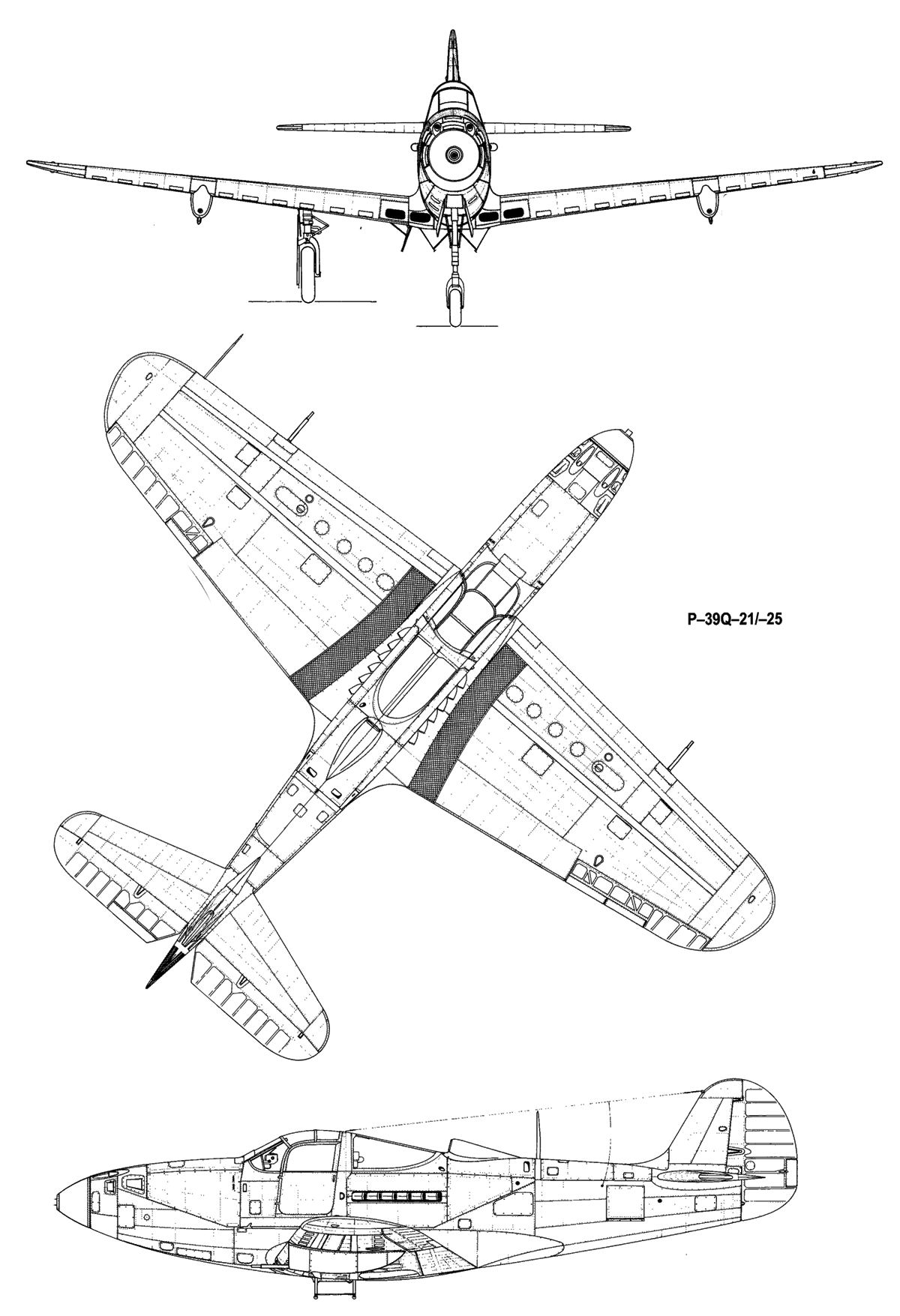
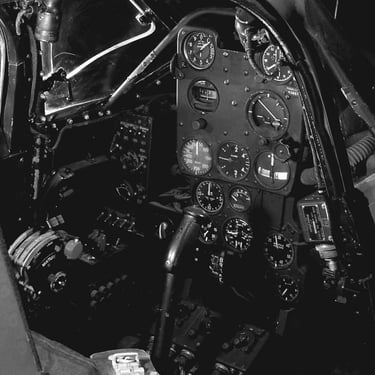
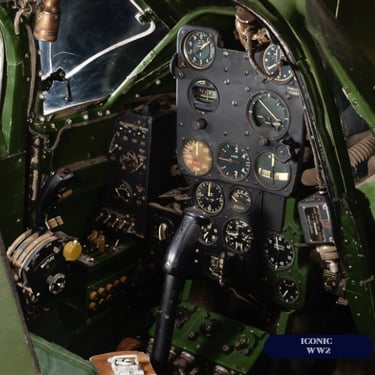
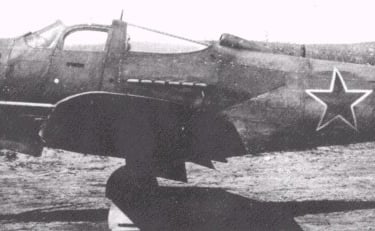
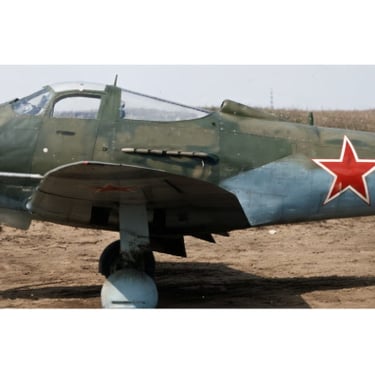
The most striking innovation was the placement of the Allison V-1710 liquid-cooled V-12 engine behind the pilot, near the aircraft’s center of gravity. This allowed for a powerful 37 mm T9 cannon to fire directly through the propeller hub without synchronization gear — a configuration that provided excellent accuracy and concentrated firepower. Power was transmitted to the propeller via a long extension shaft running beneath the cockpit floor. The design also featured tricycle landing gear, which improved ground handling and visibility for the pilot, along with a car-style door for cockpit entry.
The prototype XP-39 first flew on April 6, 1938, and early testing showed promising performance. However, production versions (beginning with the P-39C and P-39D) omitted the turbo-supercharger originally planned for high-altitude performance, largely due to weight, complexity, and reliability concerns. This decision critically limited the aircraft’s effectiveness above 15,000–20,000 feet, where power dropped off sharply. Production P-39s were armed with the 37 mm cannon, two .50 caliber machine guns in the nose, and additional .30 caliber wing guns (later often replaced or removed in Soviet service). Armor and self-sealing fuel tanks were added to later variants for combat survivability.
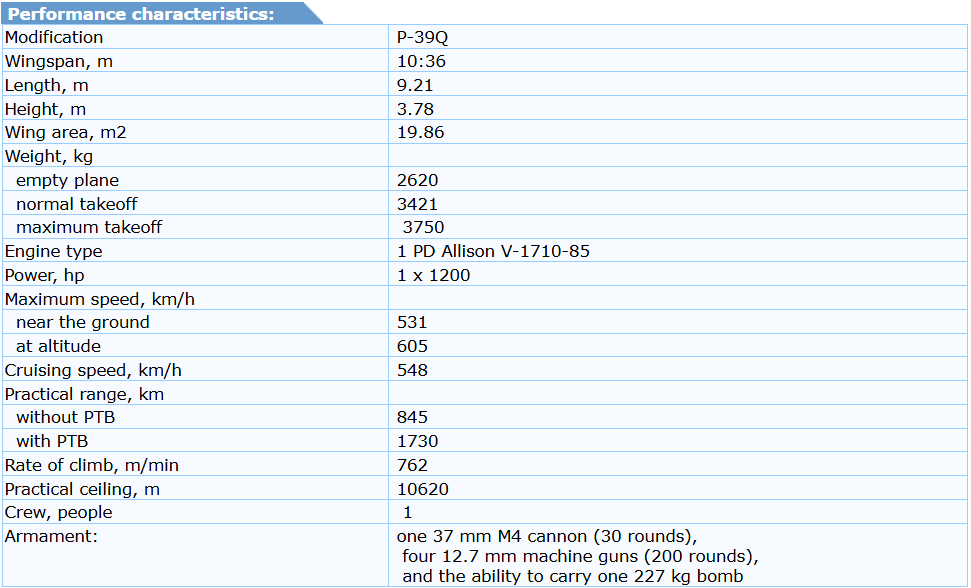
A total of 9,558 P-39 Airacobras were built between 1940 and 1944, with variants progressing from the early C and D models to the improved N and Q series, which featured more powerful Allison engines (up to the V-1710-85) and refined aerodynamics.
Early Service and Mixed Reputation in the West
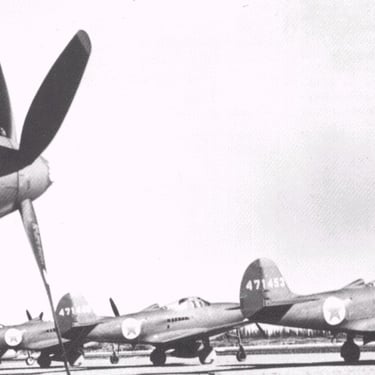
The P-39 entered USAAF service in 1941 and saw limited action in the Pacific theater, including operations from Guadalcanal. American pilots generally found it underpowered and sluggish at altitude, earning it a reputation as a “second-rate” fighter compared to the P-38 Lightning or later P-51 Mustang. In British service, the RAF evaluated a small number (primarily P-400 export variants with a 20 mm cannon) but quickly deemed them unsuitable for Western European conditions due to poor high-altitude performance. Many British-ordered Airacobras were subsequently diverted to the Soviet Union.
Service with the Soviet Union: A Different Story
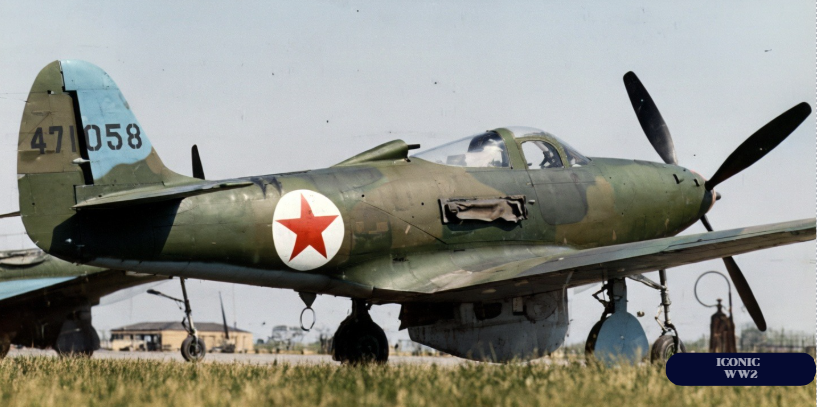
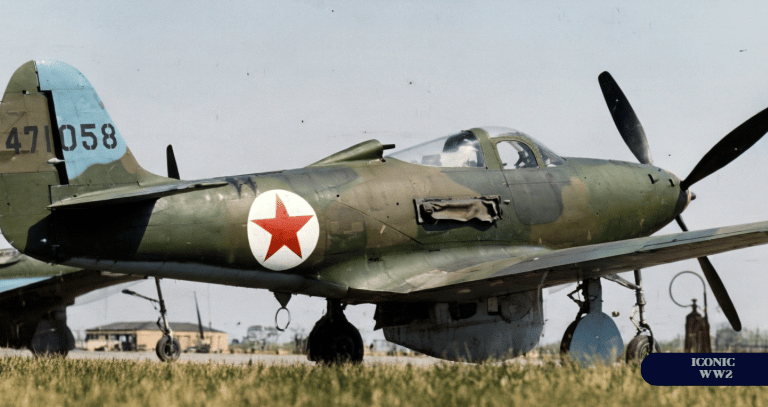
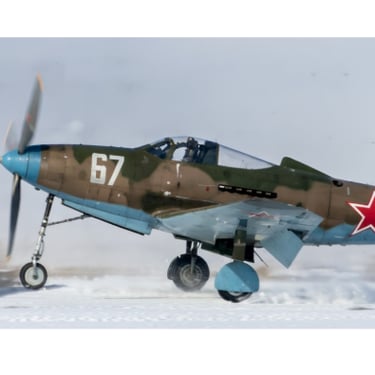
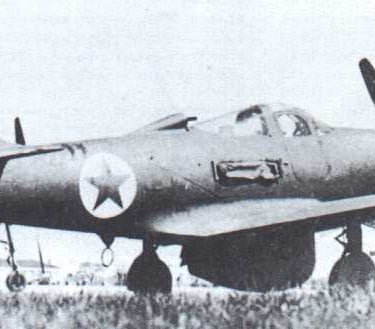
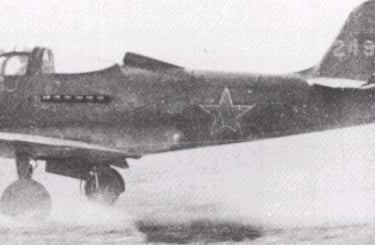
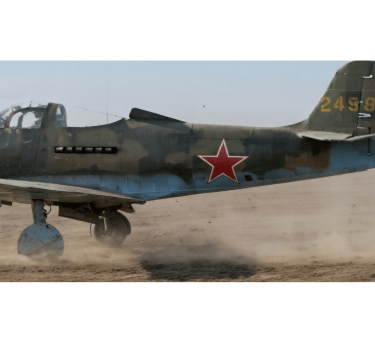
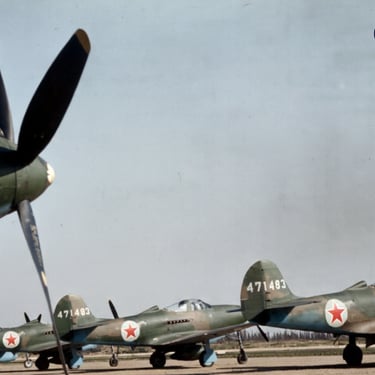
The P-39’s most significant and successful chapter unfolded under the Lend-Lease program. Between 1942 and 1944, the Soviet Union received approximately 4,719 to 4,773 P-39s (primarily N and Q variants), accounting for nearly half of all Airacobras produced and more than one-third of all American and British fighters supplied to the VVS (Voyenno-Vozdushnye Sily, the Soviet Air Force).
Soviet pilots and commanders quickly discovered that the aircraft’s weaknesses at high altitude were far less relevant on the Eastern Front, where most air combat occurred at low and medium altitudes (typically below 15,000 feet) in support of ground operations. In this environment, the P-39 excelled: it was rugged, had excellent visibility, good low-altitude maneuverability, and devastating forward firepower from the nose-mounted 37 mm cannon and .50 caliber machine guns. Many Soviet units removed the underwing .30 caliber guns to reduce weight and improve performance.
The first Soviet Airacobras arrived in 1942 and were issued to elite Guards regiments, such as the 153rd IAP (later Guards). Their combat debut was highly successful; in one early two-month period, a small group of P-39s claimed dozens of German bombers and fighters for minimal losses. The aircraft proved particularly effective as a bomber escort for Il-2 Sturmovik ground-attack planes and in dogfights against Bf 109s and Fw 190s at lower altitudes.
Soviet mechanics and pilots adapted the aircraft to local conditions, often simplifying armament and maintaining the robust airframe under harsh field conditions. The tricycle gear and car-style door were appreciated for ease of operation on rough forward airfields. While not ideal for high-altitude interception, the P-39’s heavy armament made it a formidable opponent in the swirling, low-level battles characteristic of the Eastern Front.
Soviet Aces and Combat Record
The P-39’s legacy in Soviet service is defined by its extraordinary record in the hands of skilled pilots. It enabled more individual aerial victories than any other American fighter type in any air force during the war. Five of the Soviet Union’s top ten aces scored the majority of their kills in Airacobras.
Alexander Pokryshkin, the second-highest scoring Allied ace of the war with 59 victories, achieved 47–48 of them in the P-39. He developed specialized tactics emphasizing energy management, pair formations, and aggressive low-altitude engagements.
Grigory Rechkalov scored 44 victories in the type (out of roughly 56–63 total).
Other notable aces included Dmitry Glinka, Georgy Golubev, and Nikolai Gulaev, all of whom racked up high scores flying the Cobra.
Soviet pilots occasionally employed taran (ramming) tactics with the sturdy Airacobra, and one famous incident involved a pilot using his propeller to saw off the tail of a German fighter. By war’s end, P-39s had claimed hundreds of German aircraft, contributing meaningfully to air superiority in key sectors.
Conclusion
The Bell P-39 Airacobra remains a study in contrasts. Designed as a high-altitude interceptor, it was hampered by the removal of its turbo-supercharger and found limited favor in American and British service. Yet, when supplied in large numbers to the Soviet Union via Lend-Lease, it found a perfect operational niche in the low-altitude environment of the Eastern Front. There, its innovative layout, heavy concentrated firepower, and rugged construction allowed Soviet aces to achieve some of the highest individual victory totals of the entire war.
Far from being a failure, the P-39 proved that an aircraft’s effectiveness depends as much on its operational context and the skill of its pilots as on its design specifications. In Soviet hands, the “Cobra” became a war-winning tool that helped tilt the balance of air power on the Eastern Front..
P-39 "Airacobra", Bell Fighter