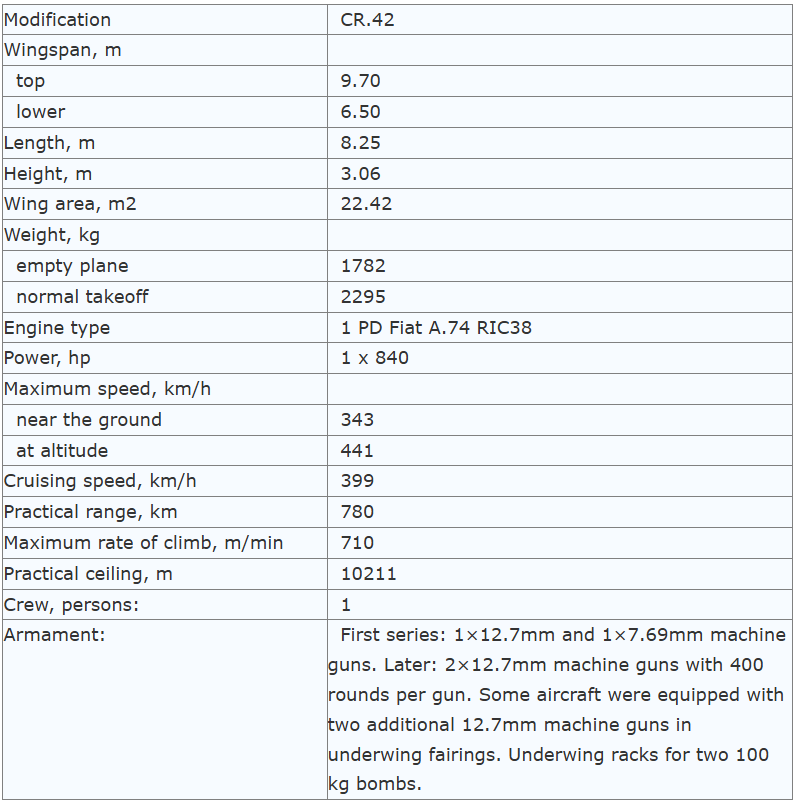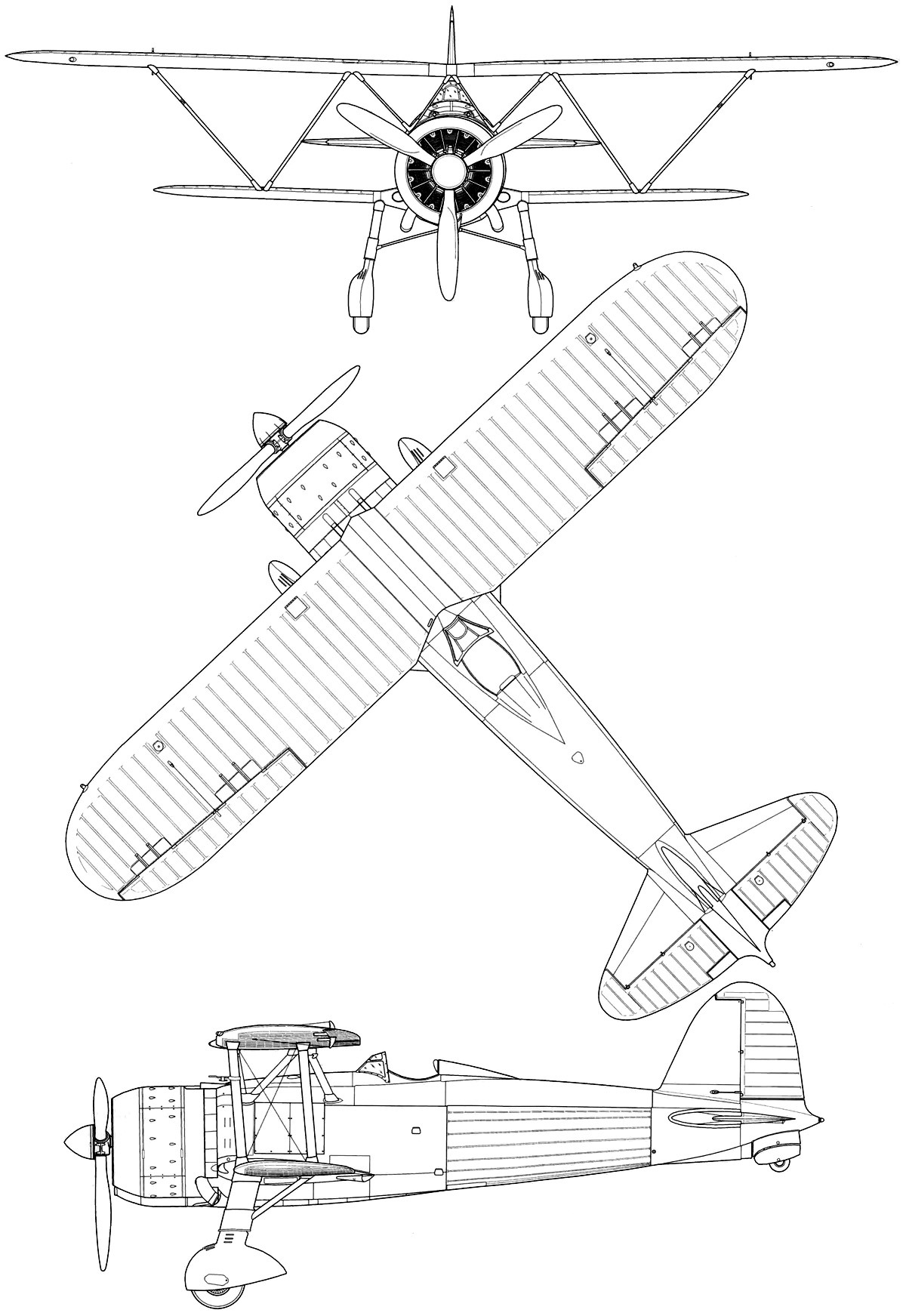
Fiat "Cr.42 Falco", Fighter
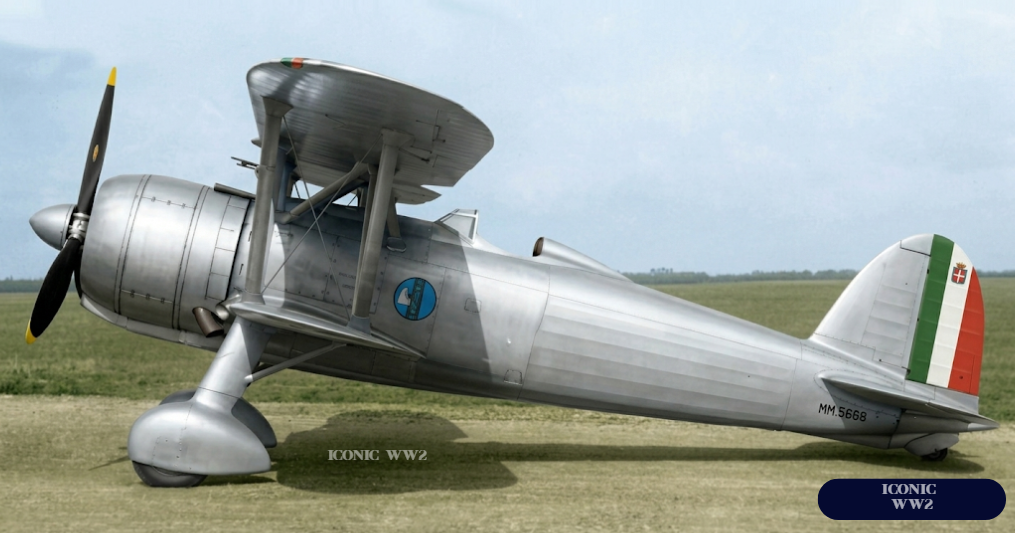
Developer: FIAT
Country: Italy
First flight: 1939
Type: Fighter aircraft
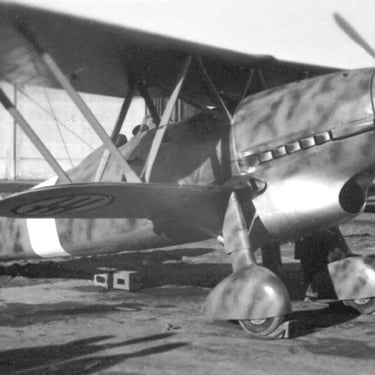
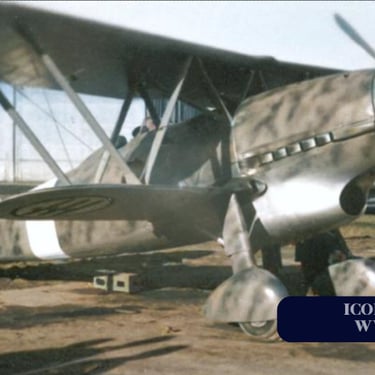
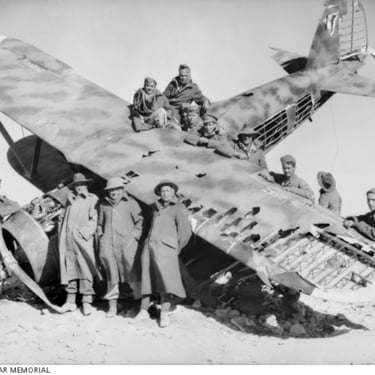
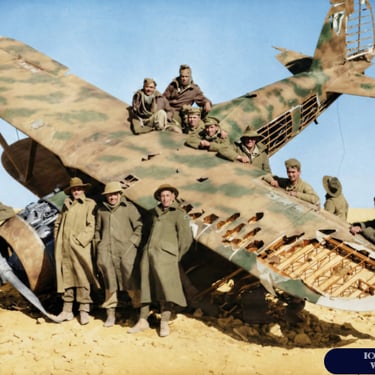
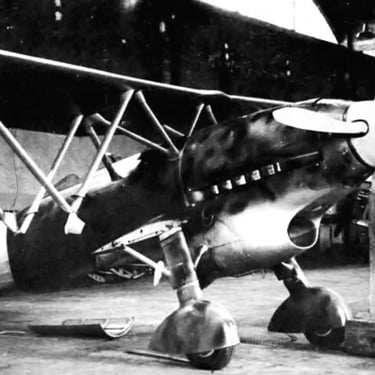
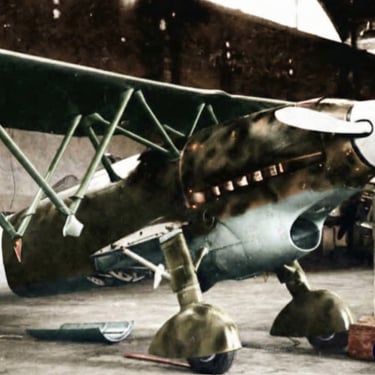
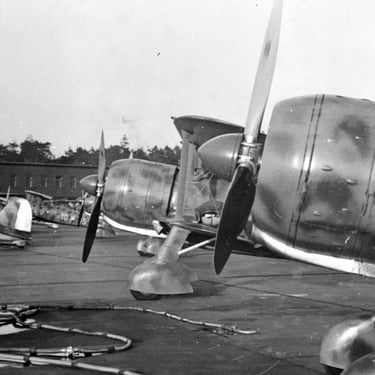
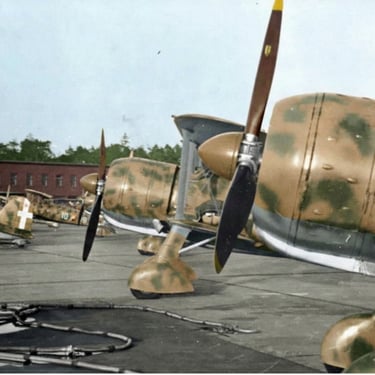
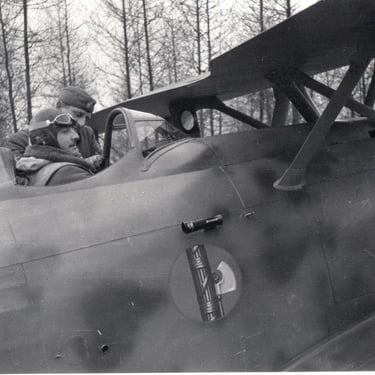
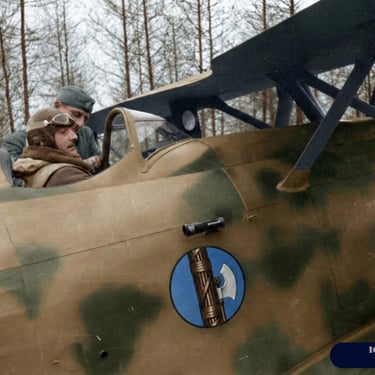
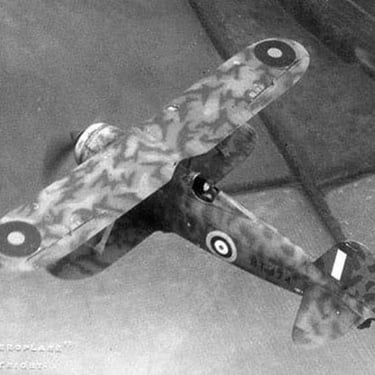
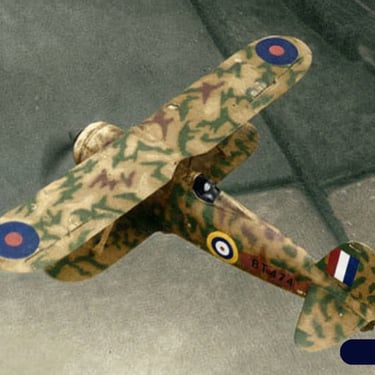
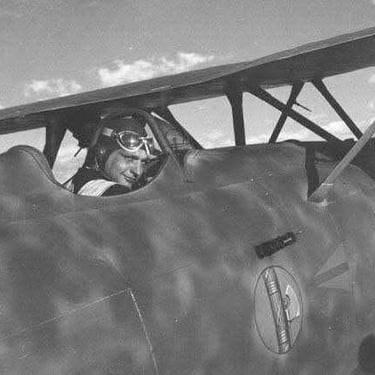
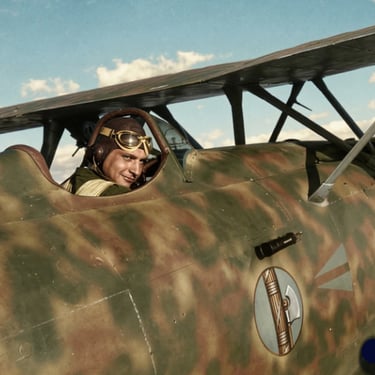
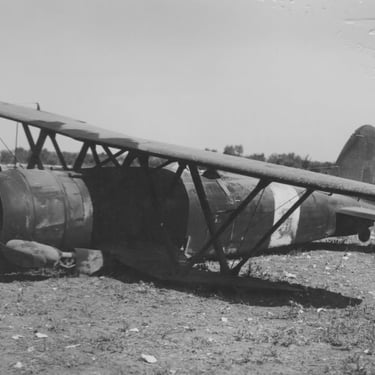
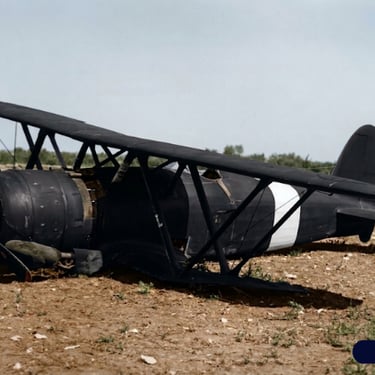
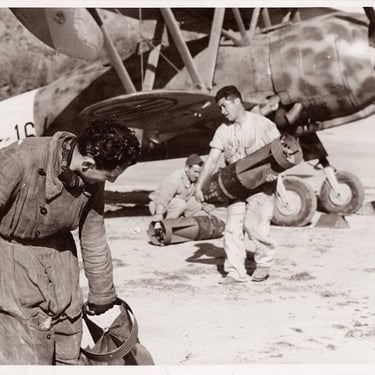
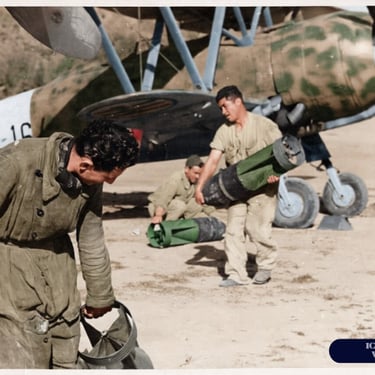
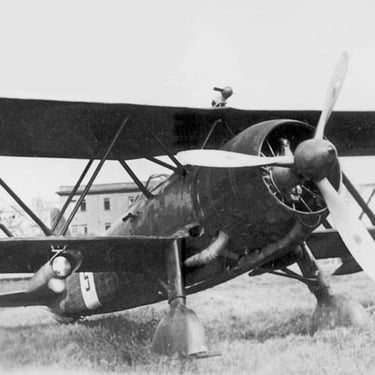
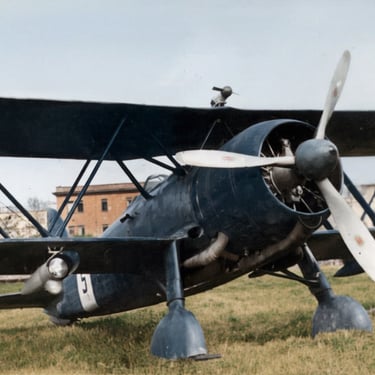
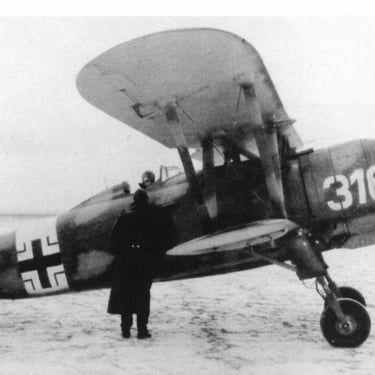
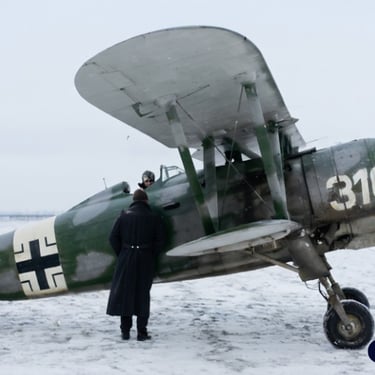
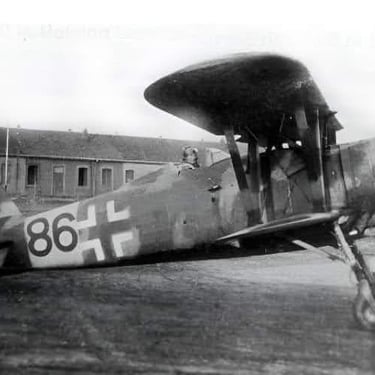
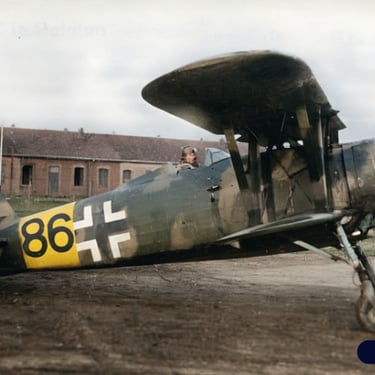
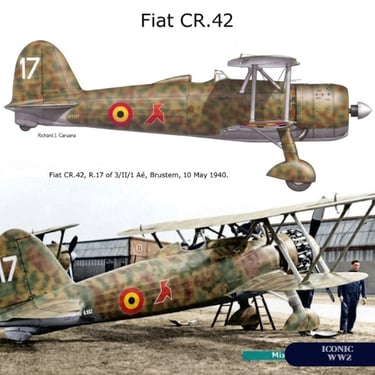
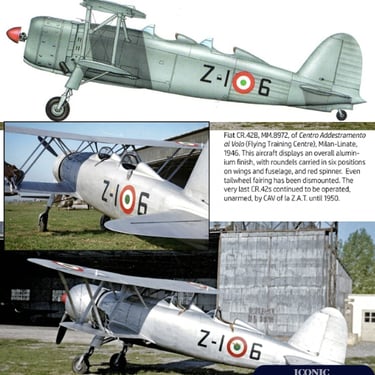
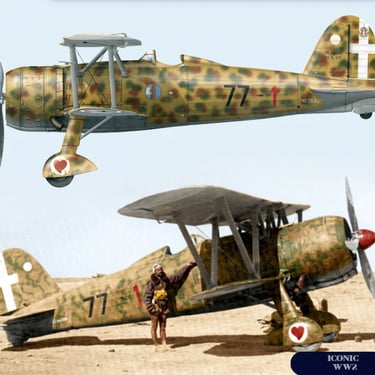
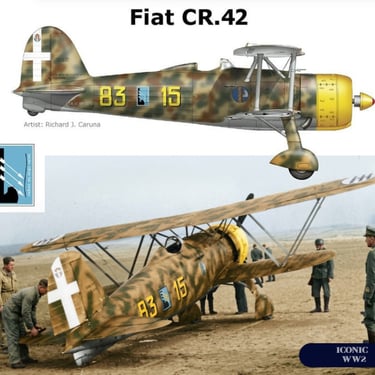
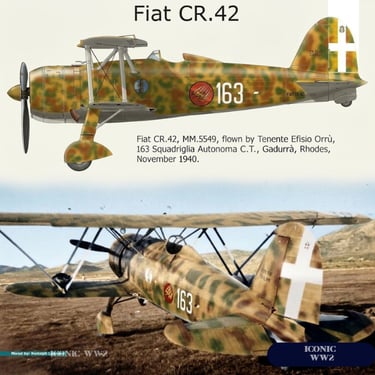
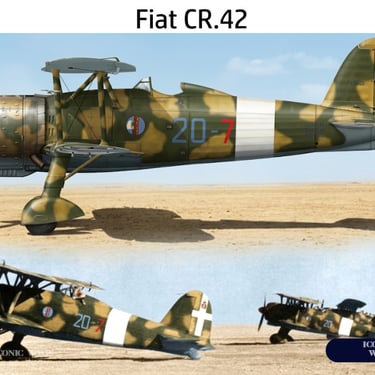
After the battles in the Spanish skies, it became clear that biplanes had already played their leading role in the theater of war. The Fiat CR.32 sesquiplane fighters, whose archaic appearance recalled the combat aircraft of World War I, were in many ways inferior to the Republican I-16, were no match for the SB-2 bombers, and were no match for the Messerschmitt Bf.109 and Fiat G.50 monoplanes. Even then, during the Spanish Civil War, the obsolete fighters (besides the CR.32, these included IMAM-Romeos) of the Aviación del Tercio, the Italian air corps in Franco's air force, began to be relegated to the ranks of support aircraft, light bombers, attack aircraft, reconnaissance aircraft, and night fighters.
Nevertheless, the staff of the Aeronautica di Italia design bureau (part of the Fiat concern), under the leadership of Celestino Rosatelli, continued to develop the once-successful CR.32-m project. This is not due to the retrograde thinking of the Air Force command, the officials of the Air Ministry, or Signor Rosatelli himself. The key to victory in aerial combat is equally the speed and maneuverability of a fighter. Since few succeeded in combining these qualities in a single aircraft in the second half of the 1930s, in many countries the trends of high-speed monoplanes and maneuverable biplanes developed in parallel.
In 1935, the Fiat CR.33, an improved version of the CR.32, entered testing. It featured a 690-horsepower Fiat A 33R C35 liquid-cooled engine with a three-bladed propeller and supercharger. Its armament consisted of two 12.7-mm machine guns in the cowling, a pair of 7.7-mm machine guns in the lower wing, and 12 two-kilogram anti-personnel bombs on an internal rack. The aircraft could reach a speed of 422 km/h. The Fiat CR.40, which made its maiden flight in March 1934, was tested alongside the three CR.33 prototypes. It differed from its predecessor in that it had a gull-wing upper wing with synchronized 12.7-mm machine guns mounted in the roots. The designers didn't go any further in their efforts to refine the aircraft's aerodynamics and didn't equip it with retractable landing gear, fearing that the design would be too complex and heavy. The air-cooled Bristol Mercury IV engine (550 hp), license-produced by Alfa Romeo, and its two-bladed propeller allowed for a top speed of no more than 377 km/h. The next experimental fighter, the CP.40bis, also flown in 1934, with a Fiat A 59R engine (a licensed Pratt & Whitney Hornet producing 690 hp at 2,000 m), achieved a top speed of 388 km/h.
On March 30, 1935, the Fiat CR.41 took to the air. Although its design retained the curved upper surfaces, the aircraft stood out from the rest of the prototypes with its increased wing and tail area and the larger size of its twin-row, 14-cylinder, air-cooled Gnome-Rhône 14Kfz "Mistral Major" engine producing 730 hp. The prototype flew with both a two-blade and a three-blade variable-pitch propeller. The caliber of the armament was increased during testing. Instead of two pairs of 12.7 mm and 7.7 mm machine guns, four 12.7 mm or two synchronized 20 mm cannons were installed. The CR.41 fighter's top speed was 405 km/h.
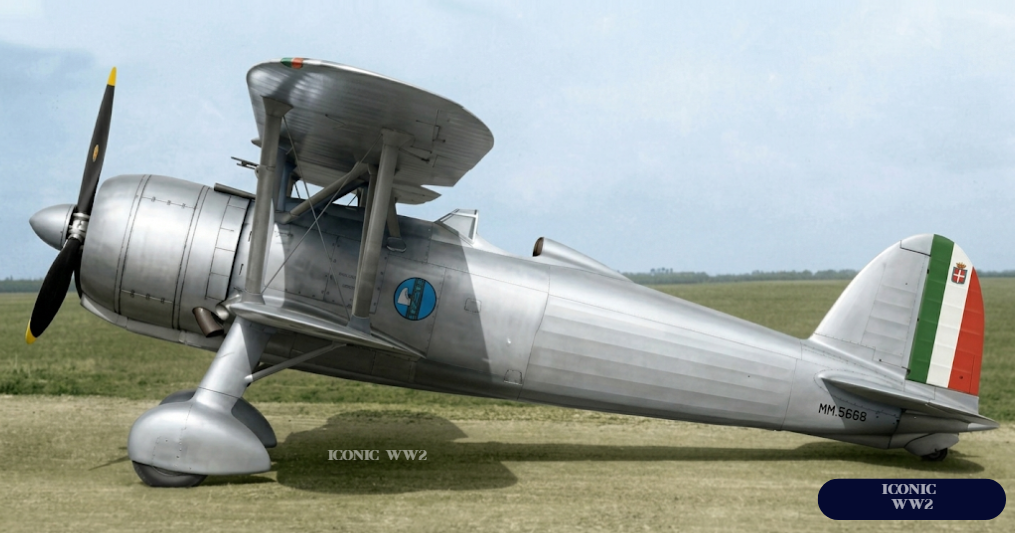
Despite all the tricks, the experimental aircraft's performance lagged far behind military requirements. Therefore, the employees of Aeronautica di Italia, on their own initiative, carried out another radical modernization of the sesquiplane fighter, essentially creating a new aircraft. On May 23, 1938, at Valentino Cus near Turin, the maiden flight of the silver machine, unmarked and unlicensed, took place. It was the prototype of the Fiat CR.42 fighter , powered by a 14-cylinder, twin-row, air-cooled Fiat A 74R1 C38 engine (840 hp) in a tightly fitted annular fairing.
The aircraft, like many products of the Italian aviation industry, was distinguished by its elegance. The designers abandoned the gull-wing design of the upper wing. The sesquiplane "box" had two pairs of struts on each side, the outer ones with web braces. The upper wing, with a shallow notch along the trailing edge (to improve visibility from the cockpit), was attached to the fuselage by N-shaped struts, mounted on a "hog" structure, slightly offset from the lower wing. The detachable wings consisted of hollow spars (perforated to reduce weight) and rectangular ribs covered with fabric. The upper wing carried ailerons.
The oval-section fuselage had a steel-tube frame and duralumin skin over its entire surface, with the exception of the section between the cockpit and the empennage (the side openings were covered with fabric to save weight). One engine oil cooler was located on each side of the fuselage. They were cooled through air intakes in the lower wing roots. The cantilever vertical stabilizer and stabilizer were all-metal. The duralumin control surface was covered with fabric. The fixed, cantilever-braced landing gear was attached to the lower wing spars. The main landing gear was fitted with "trousers," and the wheels were fitted with teardrop-shaped fairings. The landing gear was equipped with oil shock absorbers and air brakes. The first Italian monoplane fighters were far ahead of the CR.42 in their development. The experimental Fiat G.50 took to the air on February 26, 1937. The Macchi C.200 prototype made its maiden flight on December 24 of the same year. However, the Italian Air Ministry preferred the Fiat sesquiplane, even though it, unlike more advanced aircraft, was not included in the state order. The main reason for this choice was mentioned above. Mussolini's aggressive plans (the CR.42 was ideally suited for war against weak opponents in southern Europe and Africa), the combination of relative cheapness and ease of production, and the opinion of pilots (the new fighter inherited the G.32's ease of control and excellent handling qualities) also played a role. Therefore, in early summer 1938, a contract was signed for 200 CR.42s, followed later by 99 C.200s and 45 G.50s.
The first order for the CR.42 fighter, given the rather banal name "Falco" (hawk), began at the Fiat factory in February 1939. The first aircraft in the series, unlike the prototype, featured a larger-diameter, non-retractable tailwheel. In May 1939, the first CR.42s arrived at the 53rd Stormo, stationed in Caselle, near the factory.
It's worth mentioning the structure of the Italian Air Force at that time. The largest unit was the stormo (literally, a flock), a regiment of two gruppo (air groups, divisions). A gruppo consisted of three squadrons, each with 12 aircraft. Thus, an Italian air regiment had a normal strength of 72 aircraft.
Fiat "Cr.42 Falco", Fighter
Initially, Fiats were produced with the weakest armament, consisting of two machine guns: one a large-caliber BREDA SAFAT (12.7 mm) and a second 7.7 mm, both mounted under the engine hood. The next variant of the CR.42bis fighter carried a pair of large-caliber machine guns. The 163 Falcos that had previously entered service also had their rifle-caliber barrels replaced.
The installation of two additional machine guns in the lower wing root was necessary to somehow increase the fighter's overall salvo. The "forty-second" was retrofitted on assembly lines and directly at the units. CR.42s, designated "ter," were also produced with an armament of four SAFATOBs. They were intended, among other things, for battlefield support.
The Fiat was modified repeatedly, adapting the rapidly aging fighter to other forms of combat use.
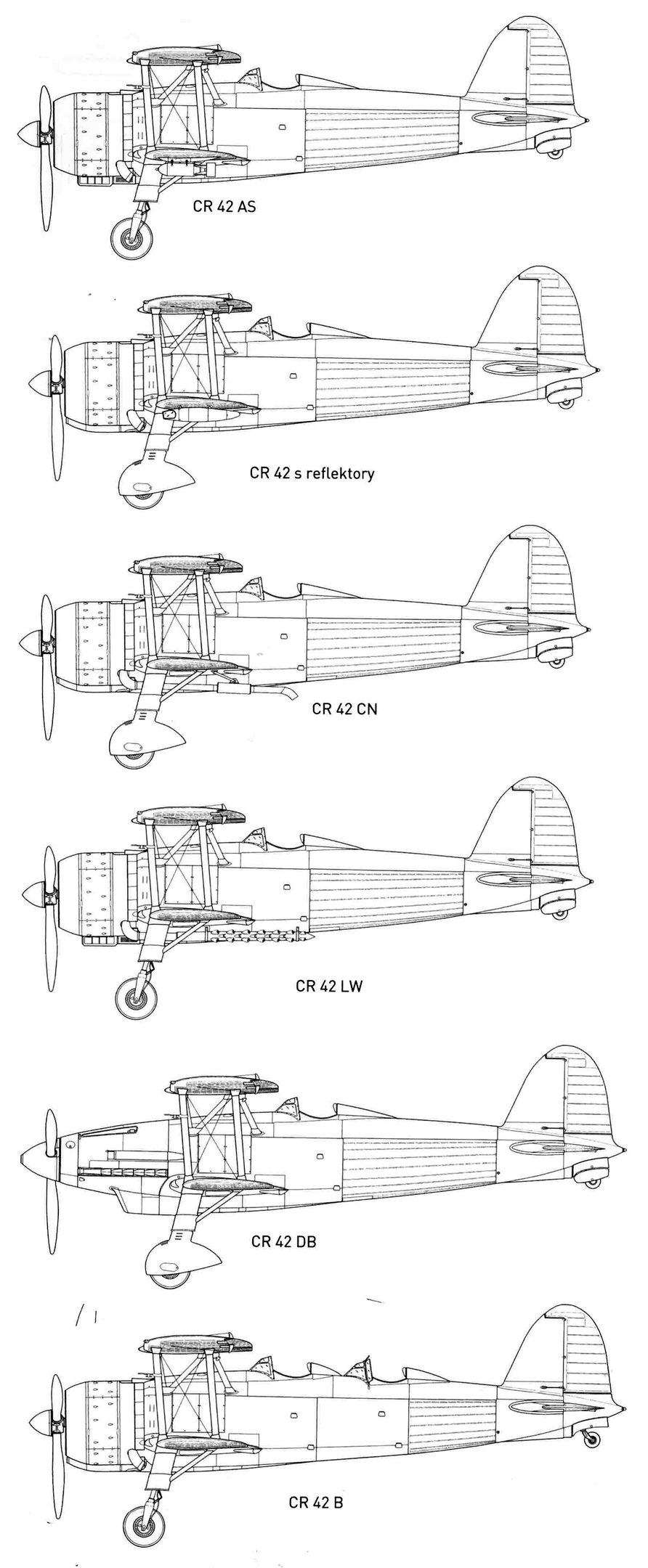
The Fiat CR.42AS fighter-bomber and attack aircraft was built specifically for operations in the African desert. It featured not only a tropical dust filter on the carburetor air intake. In addition to four 12.7mm machine guns, its armament included two 100-kilogram bombs mounted under the lower wing (its spars were reinforced). The same hardpoints were used for 100-liter fuel tanks. A long-range radio complemented the onboard equipment. The cockpit armor was also carefully considered.
The CR.42CN interceptor, a standard Falco with flame arresters on the exhaust pipes and searchlights mounted on the outer sling, was designed to repel night raids by British aircraft on Italy's industrial centers. Electricity was generated by a vane generator mounted on the upper wing.
The Fiat, with additional fuel tanks and navigation equipment, became the CR.42 Egeo long-range fighter, capable of protecting bombers and torpedo bombers over the Mediterranean.
The floatplane ICR.42, built in a single copy in 1940, could have replaced the out-of-service IMAM Ro.44 seaplane fighter (catapult and shore-based), which by the beginning of the war was still in service only with the 161st Naval Fighter Squadron in Lero on the Aegean Sea.
In March 1941, the experimental CR.42DB began testing. In an attempt to "modernize" the aircraft, the Fiat was equipped with a 1,010-horsepower Daimler-Benz DB 601E liquid-cooled engine. Its top speed reached 520 km/h, which was perhaps the limit for biplane aircraft. The project never went any further—the Daimlers were intended only for new types of fighters.
Serial production and modernization work on the Fiat was finally completed only in the summer of 1944. In total, taking into account prototypes, experimental models and machines intended for export, 1,782 CR.42 aircraft were produced (this is the maximum number cited by historians; according to other sources, slightly fewer were built, 1,710 units).
The first Fiats to enter combat weren't Italian. In January 1940, the Belgian government acquired 34 of these aircraft, arming two squadrons with them. By May, Italian fighters with Belgian cockades on their wings were engaged in combat against superior Luftwaffe forces. After Belgium was occupied, the miraculously surviving Fiats were flown to France, joining units covering the outskirts of Paris.
Almost simultaneously with Belgium, Sweden purchased the J.42, designating them J.11. Seventy-two fighters, equipped with engines from the local firm Nohab (a British licensed Bristol Mercury), continued to fly in the post-war years.
By drawing Italy into the war against France and Great Britain on June 10, 1940, Mussolini intended to join Germany's partition of Europe and its colonies. But the Duce's predatory ambitions were in no way compatible with the very modest capabilities of the Italian army. In particular, more than half of the Fascist regime's fighter force consisted of obsolete biplanes. Two-thirds of the Falco fighters were concentrated in three regiments and seven air groups in Italy itself, the rest in "African" independent squadrons and the 13th Group, based in Libya.
On June 11, Italy struck France in the back, eager to take advantage of its inevitable defeat. As Hitler remarked on this occasion, Mussolini needed at least a few dozen dead at the front to sit at the victor's table. The spearhead of the aerial aggression was the CR.42s of the 23rd Group. At dawn, Fiats strafed the airbase in Fayence, anticipating a bomber raid. The following day, airfields in Provence and the ports of Toulon and Bezerty were subjected to air strikes. On June 13, 27 Falcos from the 151st Group of the 53rd Regiment destroyed the airfield at Ireux, near Toulon. Two days later, the 150th Group of the same regiment disabled the airport at Coeur Pierrefou.
During the short two-week campaign, the CR.42s operated as ground attack aircraft, escorting bombers on raids on Corsica and Tunisia, and engaging in skirmishes with French fighters. Nazi propaganda claimed the destruction of 50 enemy aircraft on the ground and 10 in the air, understating their own aerial losses to five bombers and five fighters. The reports of French pilots are more credible. For example, Adjutant Pierre Le Gloan, flying a Dewoitine D.520 fighter, shot down two BR.20 bombers on June 13, and in the following days, four Falcos and another Fiat bomber. This is not surprising, as the combat capabilities of the CR.42 and D.520 are incomparable. The Italians soon eagerly adopted the latest types of aircraft delivered from occupied France.
There are also considerable discrepancies in the data regarding the Italian Air Force's brief participation in Operation Blitz, the air offensive against England. Trying to keep up with their German partners, the Nazis dispatched a separate air corps to the shores of the English Channel and Pas-de-Calais. The expeditionary force included two "Stormo" regiments—the 13th and 43rd Regiments, each consisting of BR.20s; the 173rd Squadron with three-engine bombers and CANT Z.10076HC reconnaissance aircraft; the 20th Regiment of G.50 fighters; and the largest, the 18th Group, which included 50 CR.42s.
On October 29, 1940, Falco fighters made their first combat sortie from Maldegem, Belgium. It was an encounter with British fighters. But on November 11, five 2.1007bis and ten BR.20s, en route to Harwich along with 24 G.50s and 40 CR.42s, were intercepted by Hurricanes. The Italians claimed nine enemy aircraft, but lost three BR.20s and three Falcos. One slightly damaged Fiat landed on British soil, and it now graces the RAF Museum in Hendon. RAF units, which claimed six bombers and three fighters in that battle, did not claim a single Hurricane! Before returning home on January 10, 1941, the Italian air corps had 15 aerial victories, with its own, clearly understated, combat losses of five bombers and five fighters.
After its defeat of France, Italy focused on seizing the Balkan Peninsula. Having annexed Albania in April 1939, it had been preparing for an attack on Greece since mid-1940. The invasion, which began on October 28, was supported by a powerful air force comprising over 160 fighter aircraft.
Along with numerous CR.32s and G.50s, there were 46 CR.42s from the 150th Group, whose squadrons were based in Tirana, Valona, and Gjirokastro. In fighters alone, the Italians had a 3.7-to-1 advantage.
The Greek Air Force could counter them with four fighter squadrons, comprising two Gloster Gladiators, 36 PZL P.24s, nine Block MB 151s, and several Avia B.534s. Of these, only 44 were combat-ready. Despite the Nazis' numerical superiority on the ground and in the air, the Greeks quickly halted their advance, and in several sectors, pushed them back into Albanian territory. Although inferior in training, numbers, and armament, the Greek air force managed to meet the enemy with dignity. Fighters thwarted Italian attempts to destroy ports and airfields on the fly. Bomber squadrons attacked airbases in Gjirokastro and Koriche, raiding Italian supply lines. The outdated support aircraft often fell prey to the Fiats. Suffering daily losses, the Greeks nevertheless prevented the enemy from gaining air superiority.
In November 1940, the British command of the African and Mediterranean forces, taking advantage of the respite from their initial victory in the Libyan desert, sent some aircraft to the Balkans. The RAF units that arrived in Greece numbered 33 fighters. On November 19, over Korić, five Gladiators of the 80th Squadron engaged an entire Nazi squadron, shooting down (according to British reports) four CR.42s and two G.50s. Subsequent "encounters" with the Italians were less successful. On November 28, in a battle between 10 British fighters and the same number of Falcos over Delphinakion, four Gladiators and five Fiats were lost. A clash between 15 Italian and 20 British biplanes, which took place at the end of December over the front line, cost eight CR.42s and nine Gladiators.
In February 1941, the Greek army launched an offensive in Albania, seeking to capture the stronghold at Tepelena. On February 9, Gladiators, flying free hunts and reconnaissance missions, repeatedly clashed with Falcos. As a result, four Fiats were shot down, and one British aircraft made an emergency landing. On the 11th, CR.42 aircraft attacked Ioannina airfield. Several Gladiators transferred to the Greeks were destroyed.
With forces relatively equal in quality and quantity, neither side enjoyed air superiority. With the arrival of the Hurricanes, the balance began to shift in favor of the RAF. On February 20, British and Greek aircraft—two Wellingtons, one Junkers Ju 52, and nine Blenheims—delivered a powerful strike on Italian positions and targets in Albania, particularly the bridge at Berat. Seventeen Gladiators and six Hurricanes escorted the bombers. Eleven PZL fighters covered the retreat. Twelve Falcos attacked on the return flight. The British shot down one CR.42, and Greek P.24s shot down the remaining four. One Blenheim and one Hurricane did not return from the raid.
On February 28, bomber groups scrambled in Italy to destroy Greek positions. They were joined by 50 fighters, mostly CR.42s. After crossing the Adriatic Sea, the armada encountered two divisions of Gladiators and Hurricanes patrolling the coast and the outskirts of Tepelena. In a battle that raged for over an hour over almost all of Albanian territory, the British shot down 27 aircraft: many Fiats, several BR.20s, and S.79s. Only one Gladiator was lost, its pilot bailed out. The Italian Air Force had never before suffered such a defeat.
But by April 1941, RAF units no longer controlled the skies over the Balkans. This was achieved not by the Falco, but by the Messerschmitts. Having captured Yugoslavia and subjugated Bulgaria, Germany reached Greece. More than 400 Luftwaffe aircraft operated from Bulgarian airfields.
The Wehrmacht offensive, launched on April 6, ended on the 23rd with the occupation of the country. Italian participation was limited to sporadic missions by CR.42s from the 162nd and 163rd Squadrons in support of German units in the Aegean Sea. The official Italian Air Force victory and loss statistics for the Greek campaign—218 versus 126—clearly did not reflect reality.
On the Soviet-German front, as in other theaters of war, Fiats quickly declined from relatively successful combat and assault strikes against retreating enemies to secondary missions, often at night. Climate also played a role: the fabric covering couldn't withstand rain and frost, machine guns rusted, and landing gear broke on muddy airfields. No reliable data on the scale of Italian Falco use in Russia survives. Only numerous CR.42s are known to have been abandoned by fleeing occupiers at airfields, such as in Stalino (Donetsk). Much more information is available about the actions of Hungarian CR.42s on the Eastern Front. The delivery of the first 50 Falcos to Hungary was completed in the summer of 1939. By June 26, 1941, the day the country entered the war against the Soviet Union, the Hungarian Air Force already had 99 Fiats among its 363 combat aircraft. Two squadrons, 2/3 and 1/3, equipped with the 42s, visited the Soviet-German front. By June 27, the former was bombing and strafing border outposts on the southwestern border of the USSR. The most successful battle for the Hungarians was on August 12. A dozen CR.42s from 1/3 Squadron and six Re.2000 Regjani escorted three Caproni Ca.135bis bombers on a bombing mission targeting the railway junction in Nikolaev and the strategically important bridge over the Bug River. Eight I-16s sent to intercept the aircraft were shot down. These engagements with the "donkeys," in which the Falcos could still capitalize on their maneuverability, marked the end of the CR.42's combat career. By November 1941, when the worn-out Fiats were withdrawn from the front lines, Squadrons 2/3 and 1/3 had claimed 22 aerial victories for the loss of four aircraft.
One of the main objectives of the Italian navy and air force in the Mediterranean was the blockade and subsequent occupation of Malta, the most powerful British naval base in the region. Air raids on Malta began at 4:30 a.m. on June 11. Forty Savoia-Marchetti S.79 bombers from the 2nd Air Squadron, flown in from Sicily and escorted by fighters from the 6th Air Group, attacked the port of Valletta, the arsenal at Barmola, the seaplane base at Calafran, and Hal Far airfield. In a matter of minutes, 25 tons of bombs fell on the island. Despite an extensive network of air-raid shelters, 70 people were killed. Gloster Gladiator fighters managed to shoot down only one S.79.
After the initial air raid, Malta was defended for several days by just three surviving Gladiators, nicknamed "Faith," "Hope," and "Mercy" by the devout Maltese. They were soon joined by five Hurricanes flown from the aircraft carrier Argus. Taking advantage of the weakness of British air defenses, the slow-moving Fiats dominated the skies over the island. On July 4, 24 CR.42s of the 4th Regiment bombed Hal Far. On July 16, two Hurricanes managed to repel an attack by 14 Falcos, destroying at least one of them. The Italians, Lieutenants M. Pinna and O. Abello, managed to shoot down a Hurricane.
With the strengthening of British air power and anti-aircraft artillery on Malta, Fiats and Savoia aircraft switched to night raids. In December 1941, they were pushed back by German Junkers fighters – the 10th Luftwaffe Corps arrived in Sicily from Russia. But Malta repelled all attacks, continuing to remain a thorn in the side of Italian-German sea lanes. At the same time, the British themselves began to employ offensive tactics. Fiats CR.42s were forced to serve as air defense fighters against Italian ports and other targets on the Mediterranean coast and islands.
On September 4, 1941, British aircraft attacked the airfield on Rhodes and the oil depot at Kalato. Eight Swordfish from the aircraft carrier HMS Illustrious were the first to engage the targets and then retreat. A dozen similar biplanes from the carrier HMS Eagle, which arrived to relieve them 15 minutes later, encountered Fiats of 163 Squadron, scrambled from the airfield at Maritsa. The interceptors shot down five British carrier-based aircraft. Two Swordfish made forced landings and were captured by the Italians.
The Fiats' long range allowed them to escort bombers and torpedo bombers hunting Allied shipping. On September 24, 1941, a convoy of ships departed Gibraltar. Nine large transports headed for Malta. The escort consisted of three battleships, an aircraft carrier, five cruisers, and eighteen destroyers. On the 25th, four groups of S.79, S.84, and CANT Z.506 aircraft, along with the 24th Group on CR.42s, departed Sardinia to attack the convoy. The Battle of La Galite, which resulted in the battleship Nelson being seriously damaged and the 12,427-ton cargo ship Imperial Star sinking, cost the Italians nine torpedo bombers and two fighters. CR.42 fighter-bombers sometimes achieved success in their support roles in naval operations. Thus, on June 14, 1942, bombs from two Fiats inflicted significant damage on the aircraft carrier Argus.
In North Africa, the Falcos operated from the first day of combat on June 11. From airfields in Benina and Castel Benito, the 10th and 13th Fiat Groups flew to the Tobruk and Tripoli areas. Initially, the CR.42 was the Italians' primary fighter type over the Libyan desert. With the rapid decline of CR.32 attack aircraft and the arrival of sufficient numbers of C.200s and G.50s, the Falcos took over the Falcos' role.
Massive Fiat attacks on British positions accompanied the offensive of Marshal Graziani's forces, which began on September 13. The push into Egypt ended with the Italians' defeat at Sidi Barrani. This was followed by the surrender of Bardia in January 1941, then the fall of Tobruk and Derna. Complete defeat was averted by committing the last reserve of 42s and S.79 bombers.
The Fiats, pushed back to the second line by the German Me 109 and Me 110 by the spring of 1941, were actively used until June 1943, when German and Italian units ceased resistance in Tunisia.
The CR.42 was most effectively used in East Africa. Its ease of operation from desert airfields, relatively long range, and payload capacity (especially in the AS variant) made the Fiat indispensable for the wars in Ethiopia and Somalia. Furthermore, the lion's share of British fighter units were composed of obsolete aircraft. In addition to the Gladiators, the CR.42's primary adversaries, there were even older Gloster Gauntlet biplanes.
On June 12, 1941, a CR.42 from the 412th Independent Squadron shot down the first Vickers Wellesley over Gura. On August 3, the 413th Squadron began flying combat missions from Diredawa airfield, becoming the most successful squadron in the Italian East African Air Force. Pilots from the 412a CT and 413a CT squadrons faced equally experienced fighters from the British 94th, 112th, and 430th Squadrons, as well as the South African 1st and 2nd Squadrons.
Given the relative equality of the opponents' equipment and personnel, success depended entirely on numerical superiority. The Italians were sorely short of fighters. Moreover, the CR.42s were constantly diverted to ground operations, such as the attack on Gedaref airfield on October 16, when Fiats of 412 Squadron destroyed 10 British bombers. The problem was partially solved by a transport operation, unique for its time, carried out by the command of the Special (Paratroop) Air Service of the Italian Air Force. From August 23, 1940, to March 28, 1941, heavy three-engine S.82s, adapted for transporting aircraft, delivered 51 CR.42s to East Africa. The Rome-Benghazi-Asmara route passed over the Sahara, bypassing Egypt. The Fiats would not have been able to withstand such a ferry.
The Italians' efforts were thwarted by the increasing number of new enemy fighters. Even in the majority, the CR.42s suffered heavy losses from Hurricanes, Curtiss Mohawks, and Kittyhawks. With air superiority, the British, together with Ethiopian forces, continued their offensive, which began in January 1941 in Eritrea and ended in November with the complete liberation of Ethiopia from the Nazis. On October 24, over the fortress of Gondar, the only remaining Italian stronghold, in the last air battle over East Africa, Lieutenant I. Malavolti's Fiat was shot down by a South African Gladiator.
The "forty-seconds" also fought over Italy itself. Night raids by British bombers on industrial centers began there in July 1940. For a long time, the Italian Air Force was powerless, owing to pre-war neglect of night fighter development. It was only in October that the first group of "night fighters" was created. They drew on the experience of several moonlit battles conducted by Fiats in Libya.
The 171st Group, based in Sicily, was hastily armed with standard Falcos, retrofitted with searchlights. In January 1941, these were replaced by special CR.42 CNs with more powerful lamps, generators, and radios. No night victories by the Fiats are known. Apparently, they were rare. A biplane with two 12.7mm machine guns, lacking precise aiming, had almost no chance of hitting a target escaping at 6,000 meters. In February 1943, some Italian night fighter units switched to the powerful Dornier Do-217J-2.
With the loss of overseas territories, the remnants of the defeated groups and squadrons returned to Italy.
Their Fiats were deployed to the air defense of industrial facilities and soon became actively involved in the fighting on the peninsula. In July 1943, 50 CR.42 fighter-bombers were deployed against the ships and vessels of the Anglo-American landing force approaching the shores of Sicily.
On the eve of the capitulation on September 7, 1943, the Italian Air Force possessed 103 Falcos, including 29 CR.42 CN and 34 day fighters. Italian units that sided with the Allies had only five combat-ready Falcos. The rest were on the other side, in the air force of the puppet state in northern Italy created by Mussolini with German assistance. In addition, 75 Fiats of the last year of production were captured by the Luftwaffe. In October 1943, the Falcos and random aircraft of other types were combined to form two night bomber groups: NS Gr 7 and 9, which were used in various combat operations, including in the Balkans. Several CR.42s became auxiliary air defense fighters in southern Germany.
Sixty-four Fiats survived the war in good condition. Some were sent to training centers for the new Italian Air Force. Two dozen were even converted into two-seaters with dual controls. The last CR.42s, the last biplane fighter in history, were retired in 1950.
Initially, the last Italian biplane fighter, the FIAT CR.42 Falco, launched in 1939, lacked a trainer variant; less modern aircraft were sufficient for training. But by mid-1942, their ranks had been greatly reduced, and, more importantly, the Falco itself was obsolete and being phased out from front-line units. In search of further use, a decision was made to develop a two-seat trainer based on it. In February 1943, one of the fighters received a second cockpit at the Augusta factory in Milan.
The aircraft, designated the CR.42/B (Biposto - with dual controls), successfully completed its testing. The modifications included moving the engine 340 mm forward, placing a second cockpit with controls and instruments behind the twelfth frame, strengthening the tail section of the aircraft (especially the tail wheel), installing an anti-cooling frame, and removing the landing gear fairings. Most aircraft also had their armament removed, although some retained a single machine gun. The modifications continued until September, affecting aircraft MM.7151, MM.9246, MM.9247, MM.9248, MM.9804, MM.9842, and MM.9905, which were then transferred to the night fighter school at Anzio. After the capitulation of Italy, work continued, and in 1944 the plant produced seven more CR.42/B aircraft (MM.7502, MM.8340, MM.8493, MM.8500, MM.8902, MM.9242 and MM.9249).
After the end of the war, the need for training aircraft production did not disappear. At the end of 1945, the Caproni plant in Trento began converting another batch of Falcos. By mid-1946, the ranks of the "biposto" had been replenished with approximately 20 more aircraft used in training units. For example, at the end of 1946, the flying school in Leccio had eleven CR.42/B (MM.4325, MM.5608, MM.6282, MM.7020, MM.7030, MM.7469, MM.8485, MM.8972, MM.8996, MM.9245, MM.9853). In 1947, the conversion of four more Falcos (MM.6986, MM.7502, MM.8956, MM.9134) was completed. The Air Force ordered five more bipostos for 1948, but later cancelled the order. This was because production of the new FIAT G.46 monoplane trainer began in late 1947, and the United States provided Italy with a sufficient number of its AT-6s. Under these circumstances, further production of the CR.42/B became pointless. The remaining training biplanes were used until their service life was exhausted. For example, fifteen CR.42/Bs were used by the 2nd Training Group in Brindisi until 1950. Several more aircraft served as liaison and courier aircraft. The last flights of these bipostos took place in mid-1951.
In total, more than 40 aircraft were converted to CR.42/B between 1942 and 1947.
The FIAT CR.42/B represents a relatively cheap and effective way to utilize aging fighter aircraft. While lacking any particular merits, these aircraft nevertheless served their purpose for nearly a decade, training pilots for the Italian Air Force.