Fairey "Firefly" Fighter
Developer: Fairey
Country: United Kingdom
First flight: 1940
Type: Multirole carrier-based fighter
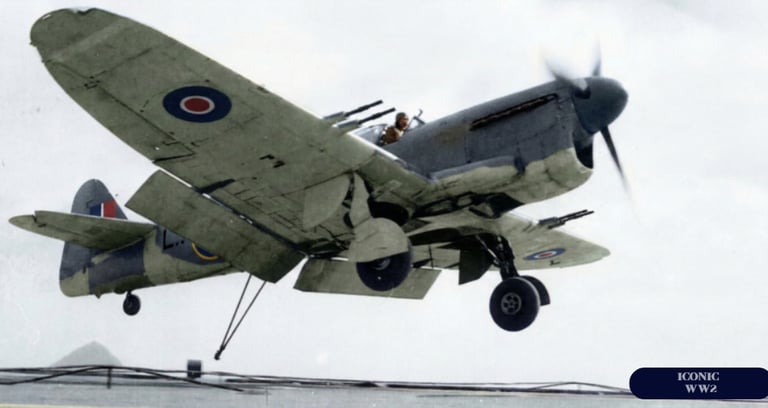
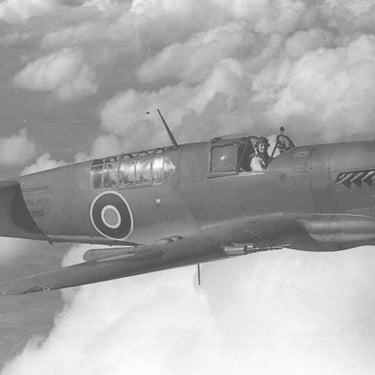
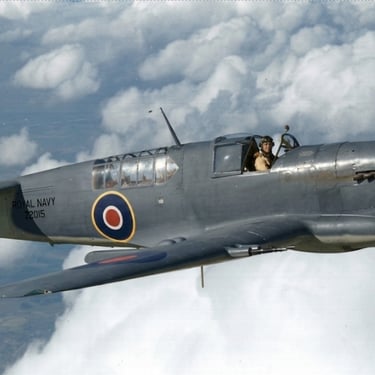
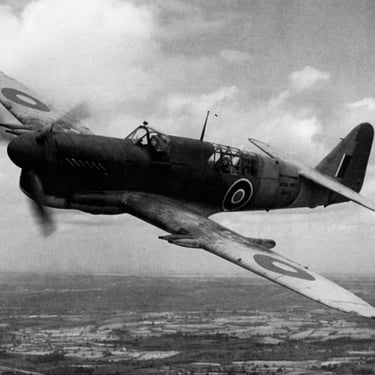
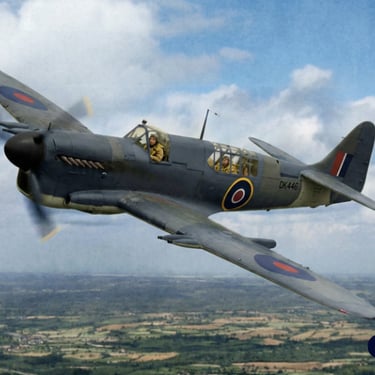
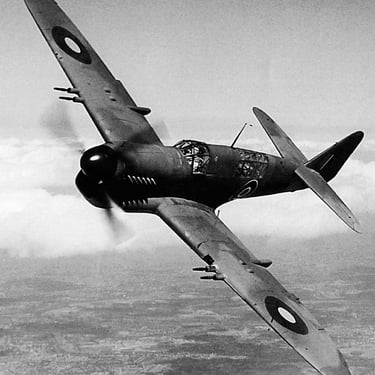
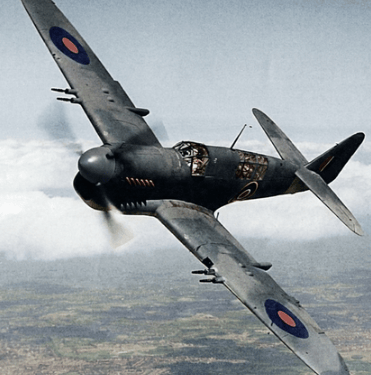
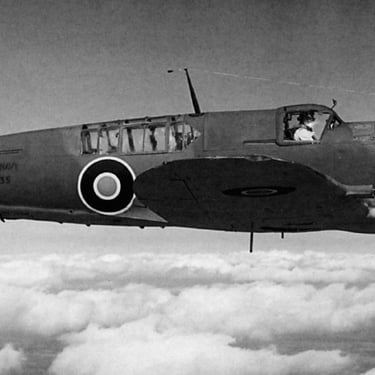
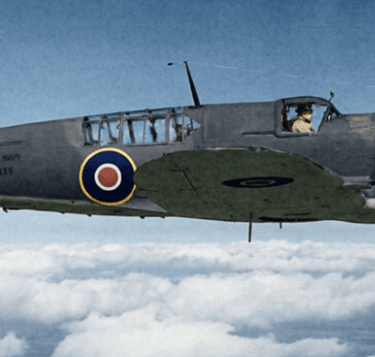
During World War II, only the British Navy retained two-seat, single-engine fighters on the decks of its aircraft carriers. All other countries possessing carrier-based aircraft had abandoned this category of aircraft in the pre-war years. In England, however, they persistently continued to refine this concept, and its pinnacle for piston-engine technology was the heavy fighter-reconnaissance aircraft, which received the rather unusual name for a combat aircraft, the " Firefly." In the summer of 1939, while Fairey was hastily preparing the heavy two-seat Fulmar fighter for the Navy, the British Admiralty drew up two new specifications for an aircraft of this class. This could be explained by the fact that the Fulmar, designed on the basis of the land-based Battle bomber, was from the outset considered nothing more than a stopgap measure, as its performance characteristics no longer met the demands of the time. Both specifications called for the use of the latest Rolls-Royce Griffon engine and differed in their armament. Technical assignment No. 8/39 required the placement of eight 7.69 mm machine guns or four 20 mm cannons in the wing, and No. 9/39 required the concentration of all weapons in a mechanized turret mount.
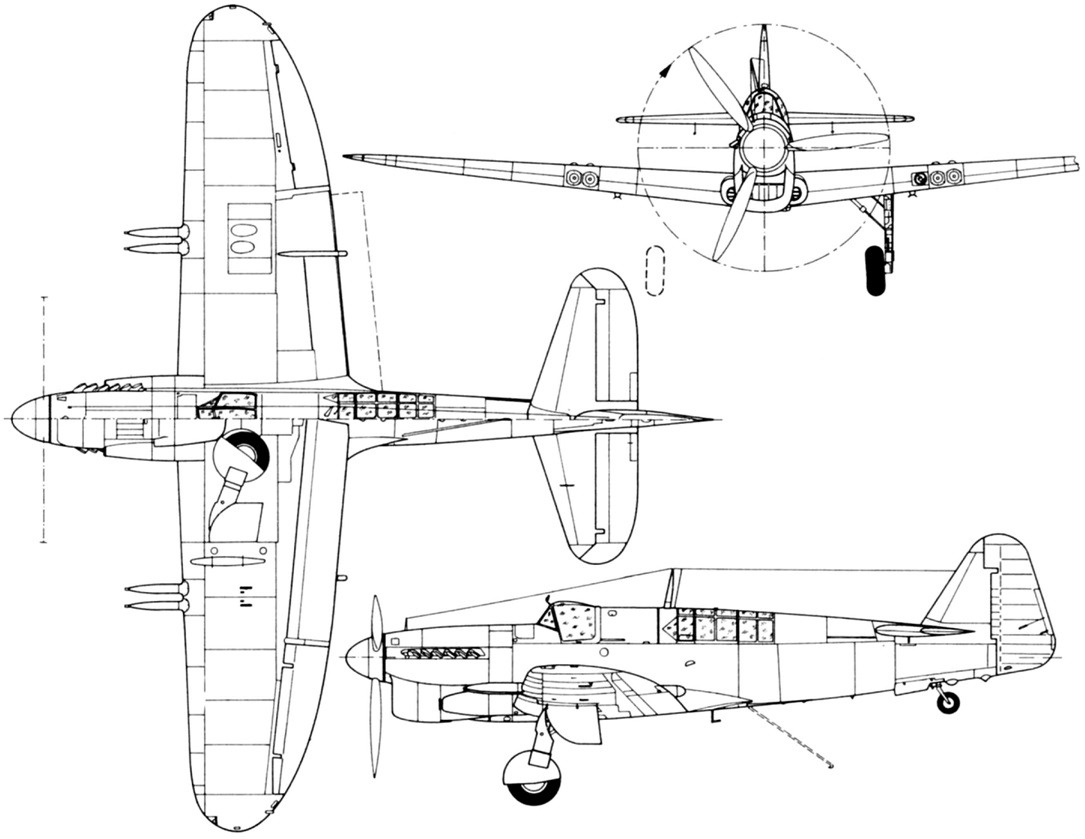
The Fairey design team, led by G. Chaplin, quickly concluded that concept #9/39 offered no benefits and, on the contrary, would seriously degrade the aircraft's performance due to its heavy and cumbersome turret. Therefore, the design bureau concentrated its efforts on task #8/39. The result was a design for a machine that retained the general layout of the Fulmar, but was somewhat smaller and significantly heavier. Calculations showed that the empty weight of the new fighter approached the gross weight of its predecessor. The design received Admiralty approval. On June 6, 1940, the commission accepted a full-scale mockup of the fighter. It was an all-metal monoplane with a cantilever low-wing. The heart of the aircraft was a powerful 12-cylinder V-shaped Griffon engine, driving a three-bladed Rotol automatic propeller. The propeller spinner blended seamlessly into the upper cowling. A liquid-cooled radiator hung beneath the engine's beard. The pilot's cabin was behind the firewall. A large fuel tank was located behind the armored back of the pilot's seat—a carrier-based fighter with a secondary mission as a reconnaissance aircraft required a long range. Behind the fuel tank was the pilot's cabin, which served as the navigator and radio operator. Interestingly, neither the Fulmar nor the Firefly had defensive armament. Apparently, it was intended that the aircraft would be able to conduct air combat like a conventional fighter, using the fixed weapons in the wing. And these were quite powerful—four 20mm Hispano cannons. Also located in the wing was an additional fuel supply—two more tanks in the leading edge. Both the fuselage and wing tanks were self-sealing. Additional drop tanks could be suspended under the wing—two "cigar" tanks with a capacity of 409 liters each.
Fairey "Firefly" Fighter
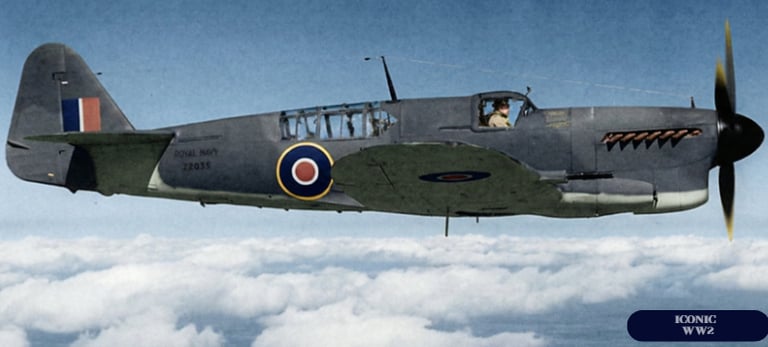
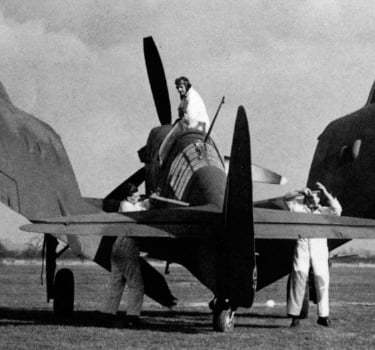
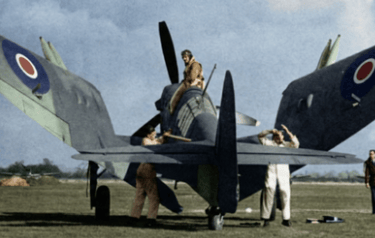
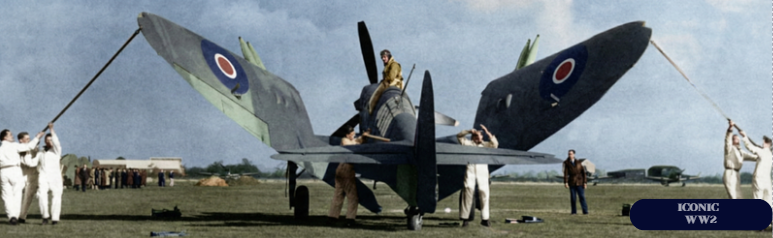
The wing itself folded, reducing the space the fighter took up in an aircraft carrier hangar or elevator deck. Moreover, it not only "broke" at the landing gear, but also pivoted on hinges, allowing it to be folded almost parallel to the fuselage. The wing was folded manually. Hydraulically operated Jungmann flaps were mounted on the trailing edge of the wing; when extended, they significantly increased the wing's area and lift. They were intended to be used not only during takeoff and landing, but also in flight. The aircraft was distinguished by excellent aerodynamics, with carefully designed cowling of all air intakes. The landing gear retracted completely after takeoff: the main landing gear folded into the center section, and the tailwheel retracted forward into a niche in the fuselage and closed with doors. Considerable attention was paid to mass production technology, dividing the aircraft into a large number of subassemblies, using numerous stamped, pressed, and cast parts. In short, the designers did a conscientious job. All that remained was to embody their ideas in metal.
This process took a rather unconventional course. Immediately after the mockup's acceptance, an order for a series of 200 aircraft followed. The changes envisaged for the production aircraft were compiled into Special Assignment No. 5/40—a kind of documentary "standard" for the series. In November 1940, the factory received the first working drawings. The first three Fireflies were assembled in the experimental workshop, but from components and assemblies manufactured using production technology, so no actual prototypes of the new aircraft existed. The first of these carried only mock-up armament and lacked a landing hook, but an anti-spin parachute was mounted in the rear fuselage. On December 22, Fairey's chief pilot, K. Staniland, took it into the air. The Firefly demonstrated good stability and control, including good spin performance, although it could not boast of speed or rate of climb. Its maximum speed did not exceed 513 km/h, but this was approximately 15 percent faster than the Fulmar. The new fighter also boasted maneuverability (which the Fulmar was simply abysmal), as well as its longer range and endurance. The use of flaps significantly contributed to improved maneuverability. At low speeds, the Firefly's turning radius approached that of single-seat fighters.
The second aircraft, now carrying real cannons, began testing in March 1942. In April, this machine was officially accepted by the Naval Air Service. It crashed on June 26. During a low-altitude flight, the tail unit collapsed; Staniland was killed. During testing, the second prototype was replaced by a third in August. In September, the fourth was sent to the RAF Research Establishment for static tests. In June 1943, the third aircraft successfully (except for one incident when the cockpit canopy was torn off during landing) completed trial operations on the aircraft carrier HMS Illustrious. The first true production Firefly was the fifth prototype, assembled in January 1943 and delivered to the Navy in March. By the end of the year, the Fairey factory in Hayes had produced a total of 57 new fighters. In December, the General Aircraft factory in Feltham also began to master Firefly production.
The aircraft assembled on the assembly line featured a new rudder without horn compensation and ailerons covered with duralumin instead of fabric. The first production aircraft had a sharply slanted windshield, on which windshield wipers were mounted. The combination of the strong frame, the windshield wipers, and the bulky gunsight seriously impaired forward visibility. This was especially dangerous during landing approaches. Therefore, the pilot's canopy was soon replaced with a new one. The canopy was installed at a much shallower angle and raised; the canopy with its narrow frames acquired a characteristic upward protrusion. All this significantly improved the pilot's visibility. To improve aerodynamics, the gun barrels were covered with fairings. The single inflatable boat in the rescue kit was replaced with two more compact single-seat ones.
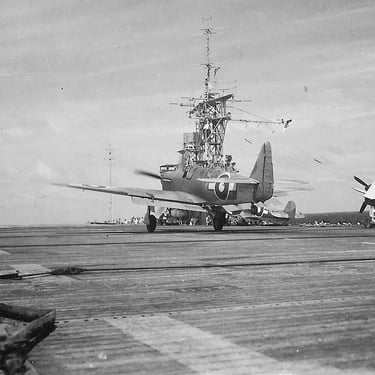
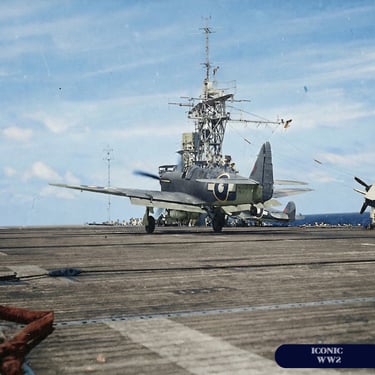
In October 1943, the first Firefly squadron, No. 1770, was formed at Yeovilton. It had 12 aircraft. In February 1944, a second squadron, No. 1771, joined it. By this time, No. 1770 had already embarked on the aircraft carrier Indefatigable to participate in Operation Mascot, a strike against the German battleship Tirpitz, undergoing repairs in Altenfjord, Norway. On July 17, a British carrier task force raided Altenfjord. The Fireflies' role was limited to reconnaissance and the suppression of ground-based air defenses. This raid, like the two that followed, yielded no significant results. The Firefly also failed to test its capabilities in aerial combat, as fog hung over the German airfields. The first patrol of the aircraft carrier Implacable, carrying 1771 Squadron and used to combat shipping off the Norwegian coast, was equally uninteresting. The Firefly's true combat test began with the Indefatigable's transfer to the Indian Ocean. Its first combat sortie in this theater took place on January 1, 1945. The destruction of the Pangkalan oil refinery on Sumatra Island was a New Year's gift to the Japanese. The Fireflies' firepower was supplemented by rockets: special twin-row Mk.8 hardpoints carried eight 60-pound rockets. On January 4, Lieutenant D. Levitt shot down his first enemy aircraft, a Ki-43 fighter. The Firefly was significantly inferior to the Japanese aircraft in maneuverability, although it had superior armament and survivability. However, it never became a fully-fledged fighter and was primarily used against ground targets. However, this didn't stop it from adding several more Japanese aircraft to its combat record.
After Sumatra, Indefatigable participated in the landing on Okinawa in March 1945. The Fireflies conducted reconnaissance, sweeping Japanese airfields with cannon fire, and occasionally also using rockets and bombs (the aircraft could carry a significant payload—up to 908 kg). In April, Squadron 1770 was deployed to strike Taiwan. In June, Implacable appeared in the Pacific theater, immediately using her Fireflies to raid Truk Island. Squadron 1771, based on this carrier, became the first to strike Japan itself. This occurred on July 10. From July 24, both carriers began sinking Japanese coastal vessels and attacking various coastal targets.
By the end of the war, another Firefly squadron, No. 1790, was based at Implacable. This was a specialized night interceptor unit. Four more squadrons were based in England, each equipped with Fireflies of various modifications. Finally, the escort carrier Windex operated two Fireflies alongside Wildcats. While Fleet Air Arm pilots were successfully mastering the new aircraft, the designers were not standing still. In March 1943, a prototype of the new Mk.II modification was built (all previously produced aircraft were designated Firefly F.Mk.I) – a dedicated carrier-based night fighter, the first in England. AJ Mk.X radar antennas were mounted in teardrop-shaped fairings on the wing's leading edge between the guns and the fuselage. To maintain center of gravity, the radar's equipment was distributed between the tail and a 380 mm-long bay in front of the cockpit. The additional aerodynamic drag and weight of the radar certainly reduced the fighter's performance, but these losses were deemed acceptable, and the Mk.II was accepted into service. Thirty-seven night fighters were assembled by January 6, 1945. However, by this time, a new ARJ 5607 radar installation in a ventral container had been developed. Two new Firefly variants were designed with this rig: the FR.Mk.I reconnaissance aircraft and the NF.Mk.I night interceptor. The latter also featured new exhaust stacks and anti-glare shields above them. The NF.Mk.I was built in the summer of 1945 as a single example and never entered production. Reconnaissance aircraft, however, began to be produced in ever-increasing quantities from late 1944. Furthermore, radar pods were installed on some previously produced fighters; these were designated F.Mk.IA.
A total of 872 aircraft of the first modification were manufactured between 1943 and 1946. In the final production runs, the 1,735 hp Griffon IIB was replaced by the 1,990 hp Griffon XII. By the summer of 1945, eight naval aviation squadrons were flying Fireflies, and by the end of 1946, 11 more had received them. This number does not include two Dutch squadrons formed in England at the end of the war and initially bearing the numbers "Fleet Air Arm" (860th and 861st). They, along with their equipment (30 F.Mk.I), were transferred to the Netherlands in 1946-1947 for service on the aircraft carrier "Karel Doorman".
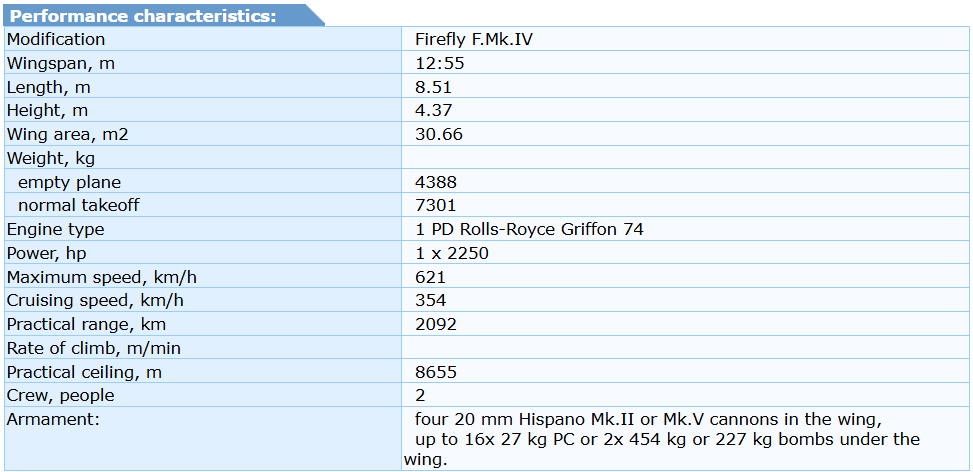
Another Firefly modification developed during the war was the Mk.III. It was equipped with a 2,035 hp Griffon 61 engine with a two-stage supercharger and a new round radiator. However, testing in the spring of 1943 revealed that the aircraft's directional stability had deteriorated significantly, and the Mk.III was not put into production. Nevertheless, work on equipping the Firefly with a more powerful engine continued. Designers proposed removing the radiator from under the aircraft's nose and placing it in the wing roots. This would allow the use of a more powerful engine without significantly affecting the aircraft's alignment or increasing aerodynamic drag. The carburetor intake pipes, previously located on either side of the radiator, were relocated just under the nose and covered by a streamlined cowling. This configuration was first tested on a former Mk.III in 1944, with the engine also replaced by a Griffon 72. Three more similar aircraft were built with a Griffon 74 (2,100 hp) as prototypes for the F.Mk.IV modification. New radiators, which created protrusions in the wing roots, increased the area. This was compensated for by shortening the wingtips, which became almost rectangular.
During testing in 1944-1945, the stability issue was addressed by introducing a new vertical tail with a larger area and a small tail fin. One of the Mk.IV prototypes was fitted with coaxial counter-rotating propellers, but a four-bladed Fairey-Read variable-pitch propeller was ultimately chosen. The "four" entered production in two variants: the FR.Mk.IV reconnaissance aircraft and the NF.Mk.IV night fighter. They differed primarily in their equipment. The radar antennas of both variants were located on the leading edges of the wings, but not near the fuselage, as on the NF.Mk.II, but closer to the wingtips. The NF.Mk.IV's engine exhaust pipes were covered by massive flame arrestor manifolds. The first production Mk.IV took to the skies on May 25, 1945, but its introduction into combat units was slow: the war was ending, and the aircraft were in short supply. It wasn't until 1947 that two squadrons, then three more, had fully transitioned to the Firefly. One of these squadrons, 825th, was transferred to Canada and operated from the carrier Warrior. Forty Mk.IVs were assembled for the Dutch Navy. They were the first Firefly to see combat. From July 1947, they, along with the F.Mk.I, began to be used to fight guerrillas in the Dutch East Indies (now Indonesia). They primarily supported marine landing operations, acting as reconnaissance and attack aircraft. Fireflies fought in Java until May 1949. During this time, the Indonesians managed to shoot down four aircraft. The Dutch subsequently deployed some of the F.Mk.I aircraft to the Antilles in the Caribbean.
In 1947, a "universal" modification, the Mk.5, was created based on the Mk.IV (after the war, Roman numerals were abandoned, and they became known as Mk.4s). It was assembled in three variants: the AS.Mk.5 anti-submarine, whose equipment included American-made dropable sonobuoys, the FR.Mk.5 reconnaissance, and the NF.Mk.5 night variant. They differed primarily in their equipment. A total of 352 Mk.5s were manufactured between January 1948 and May 1950, including 14 ordered by the Netherlands. This number is quite large, considering the post-war reduction in British aviation and the corresponding reduction in orders for new aircraft. From early 1949, the manual wing folding was replaced by a hydraulic mechanism. This new feature was also installed on earlier-produced aircraft (this was handled by Fairey's workshop in Stockport). Beginning in 1948, the Mk.5 began gradually replacing previous models in combat units. A total of nine squadrons received them. Seven Mk.5s went to the Canadian Navy (operated on the aircraft carrier HMS Magnificent), and two squadrons, equipped with a mix of Mk.4s and Mk.5s, were based on the Australian carrier HMS Sydney. In October 1949, aircraft from the carrier Triamph were deployed to counter-insurgency operations in Malaya. They supported the British offensive against guerrilla bases. Given the virtually complete lack of modern enemy air defenses, this task was not particularly difficult.
The true test for the second-generation Fireflies came during combat operations in Korea. Just a few days after the war began, the aircraft carrier Theseus appeared off the Korean coast, carrying a squadron of Fireflies. Subsequently, throughout the war, British and Australian carriers alternated there, each carrying these aircraft. A total of six Firefly squadrons served in Korea. They were used for reconnaissance, close support of troops on the battlefield, as attack aircraft and dive bombers, and over the sea for anti-shipping missions. In the latter case, in addition to bombs and missiles, they also used naval mines (weighing up to 454 kg). With the front line solid and the air defenses heavily concentrated, the vulnerability of the virtually unarmored Firefly increased significantly. They were shot down even by concentrated small arms fire. These relatively slow and less maneuverable aircraft were also easy prey for the MiG-15, so the British tried to fly beyond the range of Soviet, Chinese, and North Korean jet fighters. Only one Firefly was "caught" and shot down by a MiG. This occurred in July 1952. Meanwhile, the Firefly's combat value was rapidly declining, and it began to be repurposed for a range of support missions.
In 1949, a new series of modifications was prepared, the first of which was the AS.Mk.6 – a modernization of the AS.Mk.5 with improved equipment. The "Sixes" were built from March 1949 to September 1951 and soon became standard equipment for carrier-based anti-submarine units. A total of 133 of these aircraft entered service. However, they were considered only as a transitional version until the arrival of the Gannett turboprop aircraft, originally designed for anti-submarine warfare. However, due to the lengthy development of the Double Mamba turboprop, its production was delayed, and Fairey developed a new version of the AS.Firefly – the AS.Mk.7, with a Griffon 59 engine in a powerplant similar to the Barracuda Mk.5 (with a large rounded radiator under the nose), a three-man crew, and the tail unit of the Mk.6. The wing reverted to the Mk.I design, but with a leading edge extension and enlarged ailerons. The tailwheel was made non-retractable. The cannon armament was deemed unnecessary and removed entirely, thereby increasing the payload. Most of the innovations were initially tested on the redesigned Mk.I, and then (from May 1951) on the experimental Mk.7. Based on test results, the vertical tail area was again increased, becoming noticeably taller and more angular. In October 1951, the "Seven" entered production. 335 AS Mk.7s were ordered, but only 151 were built. Only one squadron was armed with them, as the Americans, through the military aid program, transferred a significant number of Avengers to Great Britain, which were superior to the AS Mk.7 in many respects.
Some of the already produced AS.Mk.7s were converted into T.Mk.7 trainers without a landing hook. They were intended for training navigators of naval aviation. At the end of 1951, Firefly production at the Hayes plant ceased, as they began to develop the Gannett. The last "seven" was assembled in Stockport. In 1952, six Mk.7s were transferred to the first British radio-controlled target aircraft. Based on this design, a series of 34 U.Mk.8 target aircraft with Griffon 59 engines was then produced, using a stock of Mk.7 components stored in Stockport. The first production U.Mk.8 flew on November 27, 1953. The external distinguishing feature of these machines were the containers on the wingtips. These containers housed the recording equipment. These targets were used at the Llanbedre proving ground in Wales. The last U.Mk.8 was delivered to military acceptance in April 1956. It was also the last Firefly, the 1,720th, produced since the aircraft's production began. However, after the Firefly's withdrawal, the Stockport workshop continued to modify previously manufactured aircraft. It was there that the final modification, the U.Mk.9, was developed. This was a Mk.5 converted into a target using Mk.8 equipment. The first "nine" was tested in the air on December 13, 1956. Thirty-nine more followed. From October 1957 they began to be used at the same firing range in Lanbedre, and from 1958 they began to be used in Malta - sailors fired at them with Syslag anti-aircraft missiles, and pilots fired Firestreak air-to-air missiles.
In general, starting in 1947, many previously built Fireflies were converted for various purposes. In September 1947, the first T.Mk.I, a training aircraft based on the F.Mk.I, took to the air. The instructor's cockpit was placed in place of the navigator's, raising it up like a "hump" above the fuselage. 30 of these machines were produced, 9 of which were armed with two cannons and a sight in the front cockpit. From August 1949, another 54 F.Mk.Is were converted into T.Mk.2s, also armed with two cannons, but with sights in both cockpits. Two aircraft were converted into T.Mk.2s in Canada (by the local Fairey branch) and four in the Netherlands (by the Aviolanda company). In Australia, their own T.Mk.5 trainer was created on the basis of the Mk.5 (in two copies). Since 1951, the British Navy has been armed with the T.Mk.3, based on the FR.Mk.I, designed for training observer pilots and carrying neither weapons nor a landing hook.
Target-sleeve tugs were also built based on various Firefly variants. In the early 1950s, the first such aircraft were converted from F.Mk.Is for the Swedish Air Force. They featured a windmill-powered winch (the windmill was located on the port side, in front of the observer's cockpit) and underwing target containers. A total of 18 of these aircraft were sent to Sweden. Two more were made for Denmark (plus four kits for on-site conversion) and five for India. None of these aircraft had cannons. In 1953, the British Navy accepted the TT.Mk.4 and TT.Mk.5 modifications (based on the Mk.4 and Mk.5, respectively) with an ML-type winch. Its windmill was located under the center section. A total of 25 aircraft were converted (including four for India, with a full complement of four cannons). In Australia, similar conversions of Mk.4 and Mk.5 tanks were also carried out; 8 vehicles were converted into towing vehicles in the Netherlands.
Some of the "used" Fireflies were subsequently repaired and resold to Third World countries. In 1951, the British sent 10 Mk.I and 2 T.Mk.2 to Thailand, and 8 Mk.I and 1 T.Mk.2 to Ethiopia. In March 1954, the Ethiopians purchased another 9 FR.Mk.I, 1 FR.Mk.5, 3 T.Mk.I, and 2 T.Mk.2 from Canada. The Canadians sold another 2 FR.Mk.4 and 2 Mk.5 to the Dutch Navy in 1953. In the UK, the Firefly served as a combat aircraft until 1956, and abroad until 1964 (and as a trainer and target tug until the end of the 1960s), demonstrating an enviable longevity at the turn of the century when piston technology was being replaced by jet technology.