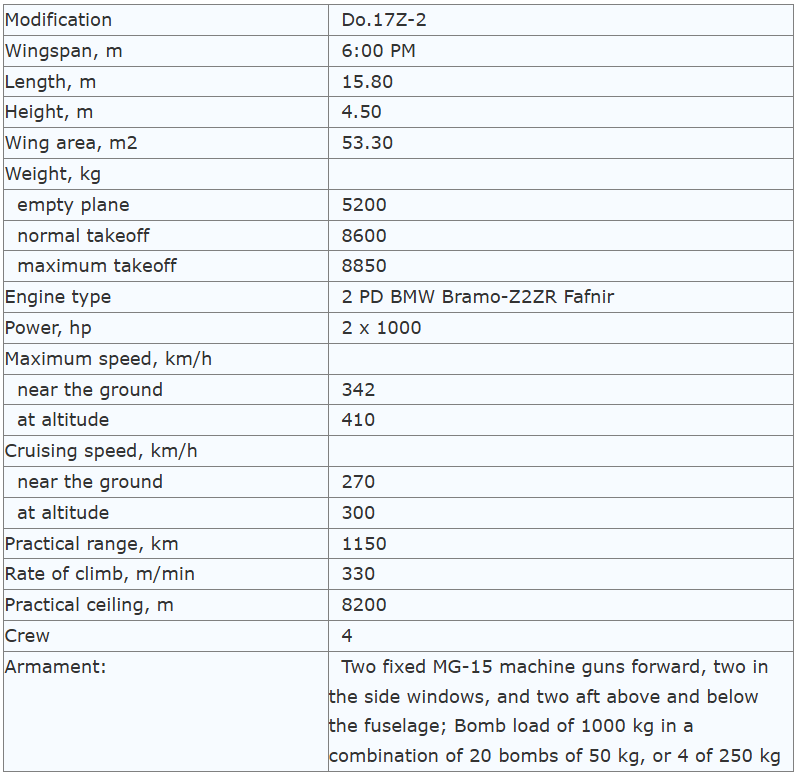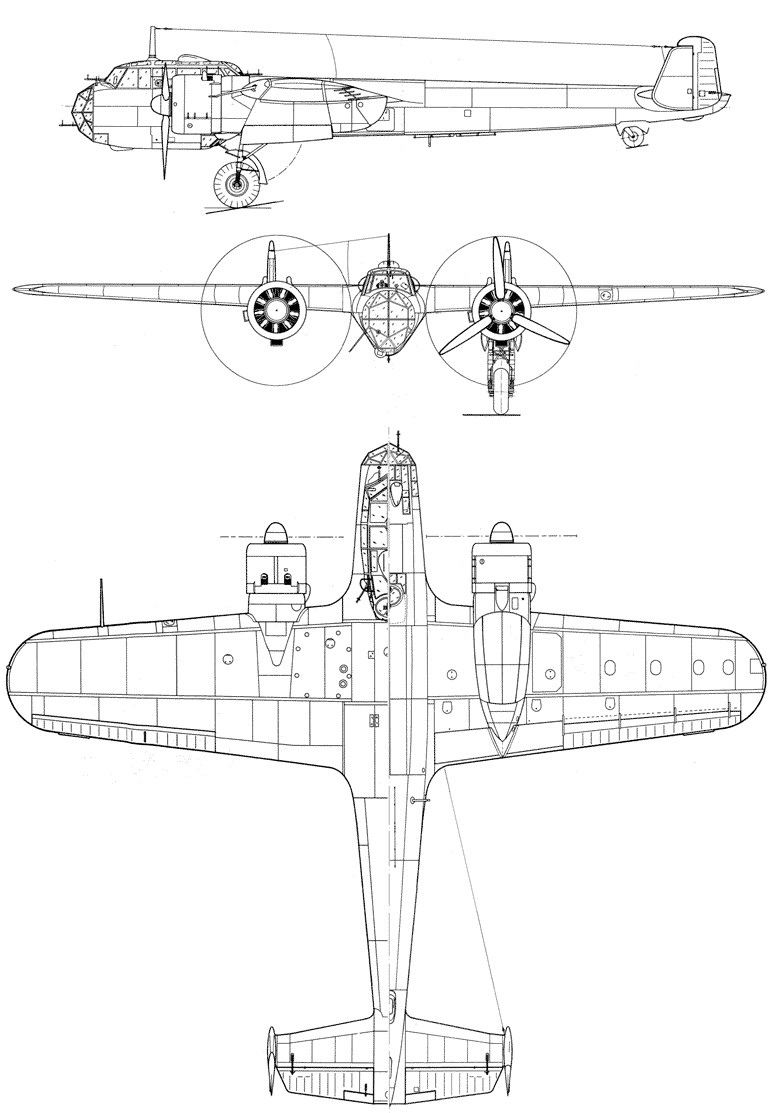
Dornier "Do-17", Bomber
Developer: Dornier
Country: Germany
First flight: 1934
Type: Bomber
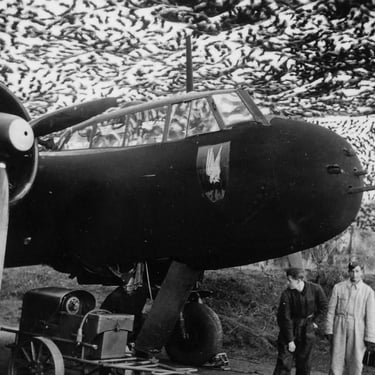
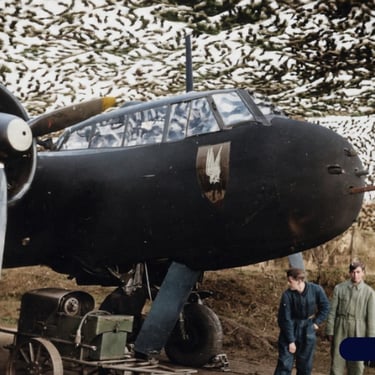
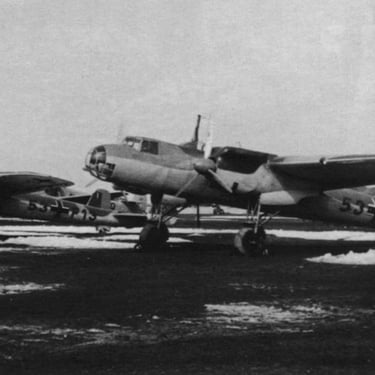
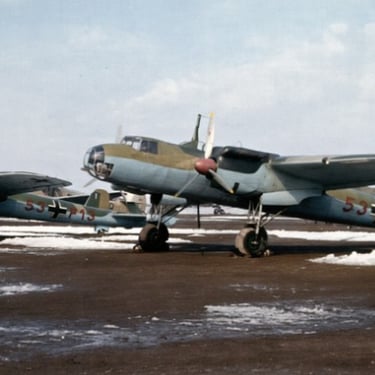
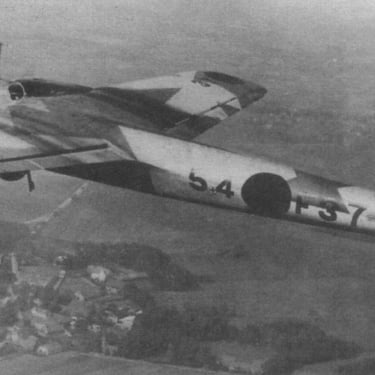
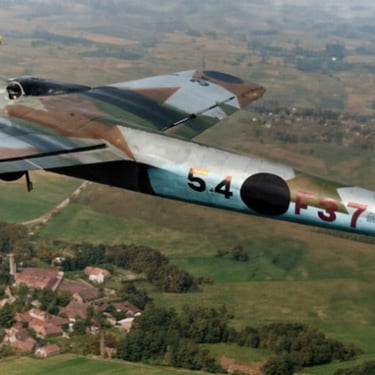
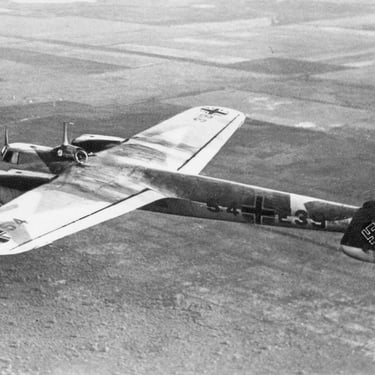
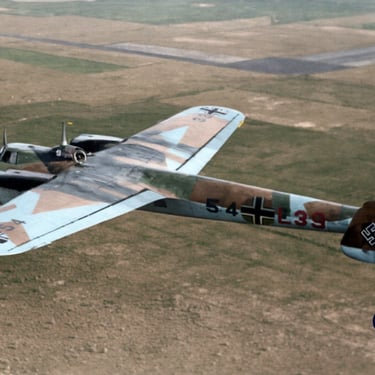
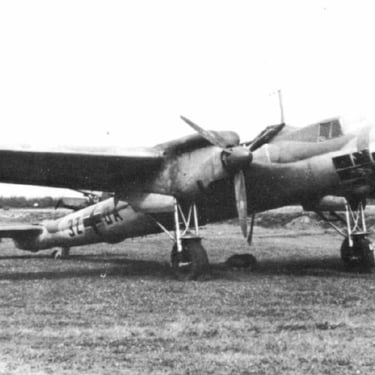
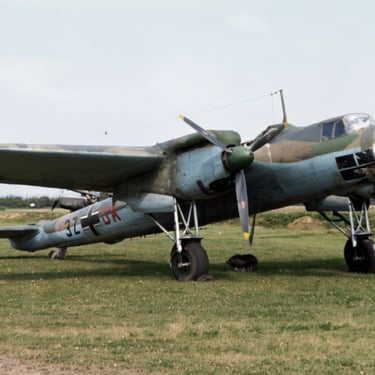
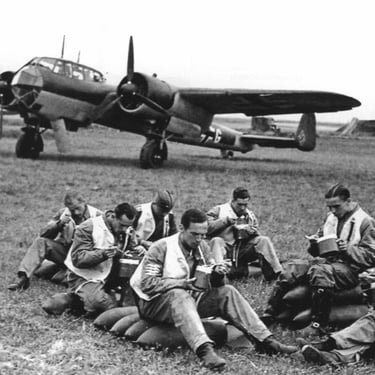
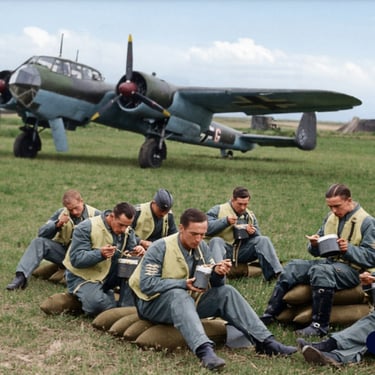
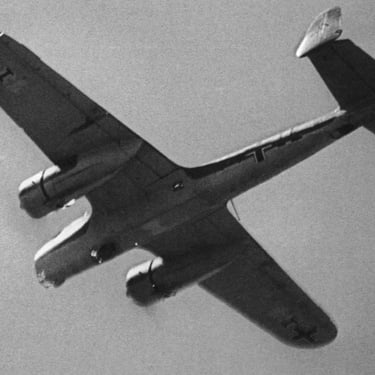
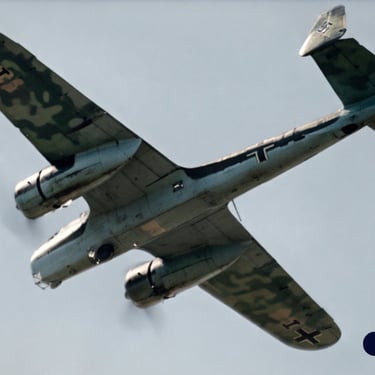
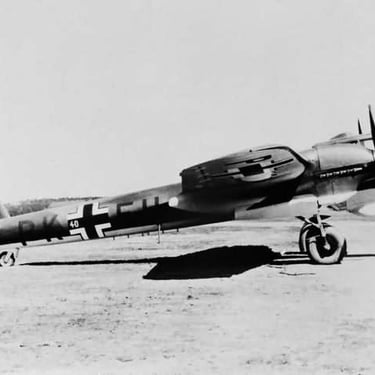
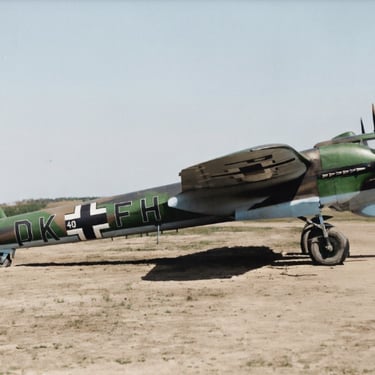
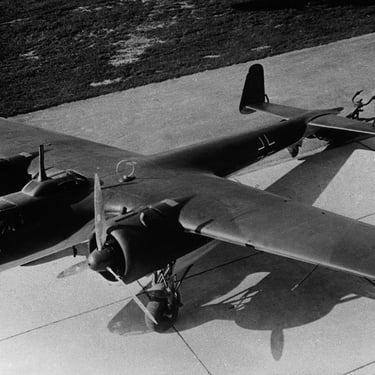
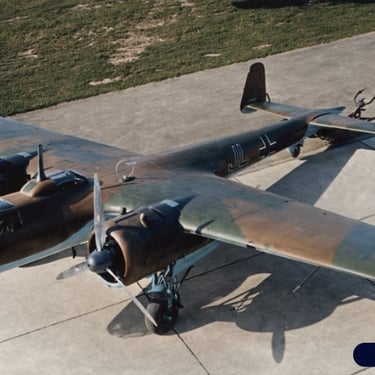
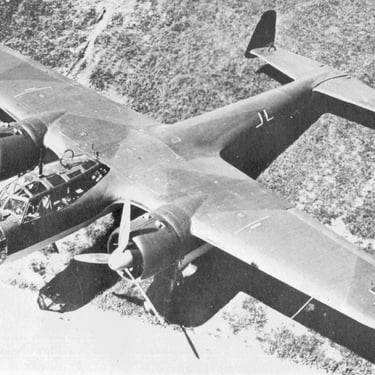
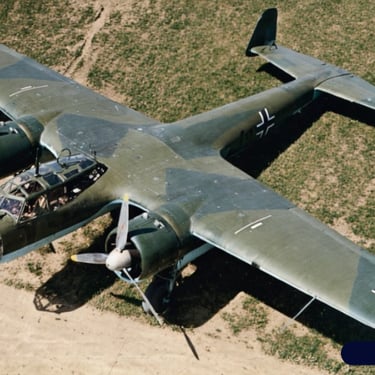
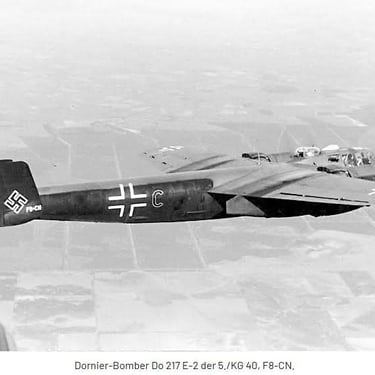
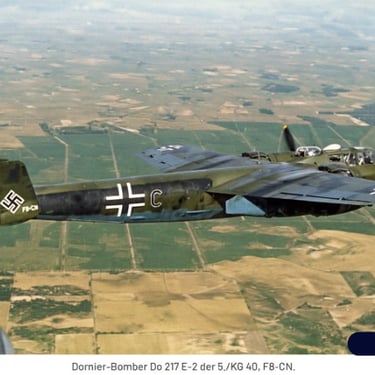
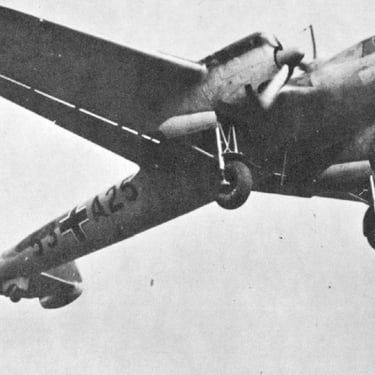
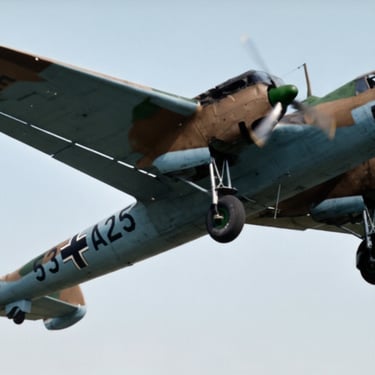
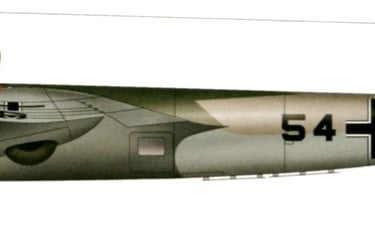
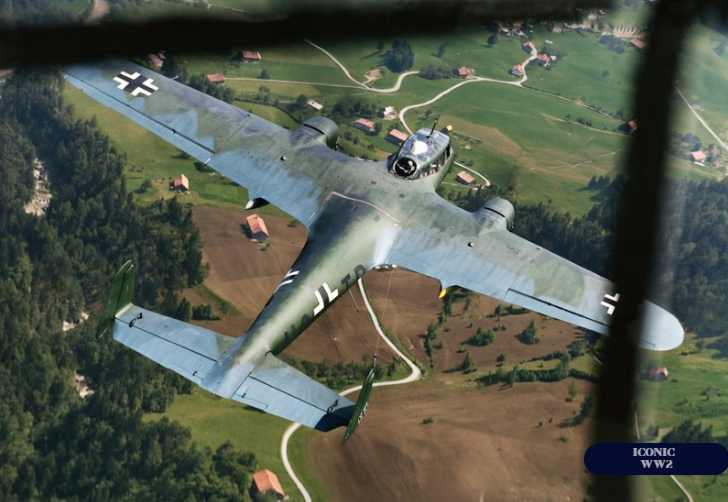
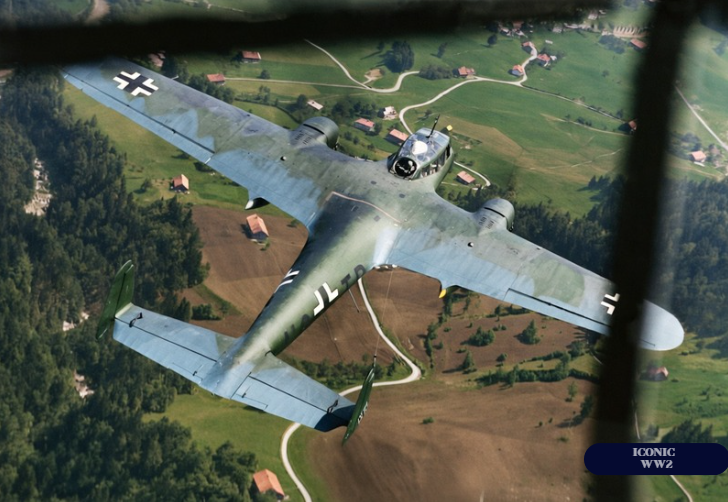
In the mid-1930s, rumors of a very fast, wing-mounted bomber, faster than existing fighters, began to filter through to the French and British Air Ministries. The existence of such an aircraft was confirmed by a demonstration of one of the prototypes at Bückeberg in October 1935. But it wasn't until July 1937, when the Do.17-V8 outscored all other fighters, winning the international military aircraft competition in Zurich—the "Circle of the Alps"—that it became clear that such an aircraft had indeed been created. The bomber had such a slender profile that it was immediately dubbed the "flying pencil." Its demonstration in Zurich had a significant international impact.
What was unknown in Zurich was the rather accidental transformation of the Do.17 into a bomber. It was also unknown that the aircraft on display had been specially refined and featured a significantly more powerful engine than the production models supplied to the Luftwaffe. The "Zurich" aircraft was purely a demonstration model, with a top speed 90 km/h higher than that of the production bomber. The Do.17 was created at a time when German air warfare theory relegated fighters to a secondary role, favoring high-speed bombers capable of evading interception. Although this theory had yet to be proven, the appearance of the Do.17 gave it further impetus. The aircraft demonstrated the German penchant for relatively small, powerful, multirole aircraft with high wing loadings. The Germans adhered to this concept throughout the war. The most remarkable feature of the Do.17's development history was that, unlike the He.111, which was designed from the outset as a bomber, the aircraft was developed exclusively as a commercial aircraft!
For use in its European express service, Lufthansa ordered a high-speed mail plane capable of carrying mail and six passengers. To meet these requirements, Dornier designed an aircraft utilizing the latest advances in aerodynamics and the most powerful German engines—the BMW VI, with a takeoff power of 660 hp. The design's most distinctive feature was its extremely elongated fuselage profile, surmounted by an equally long nose. The Do.17 had a very slender profile, but its center section was very wide. The forward fuselage section transitioned from an oval shape to an inverted triangle twice as wide at the top in the central section. The fuselage then transitioned back to an oval cross-section. The fuselage was constructed from frames connected by stringer channels and covered with light alloy sheets. The wing, a two-spar structure, was partially metal and partially fabric-covered. The spars were of asymmetrical profile and made of thin duralumin. The main ribs were made of duralumin channels, while the additional ribs had a tubular frame. Fabric covering was used between the spars on the lower surface of the wing. Slotted flaps extended from the ailerons to the fuselage. All fuel was located between the spars of the center section near the fuselage. The main landing gear retracted rearward into the engine nacelles. The tailwheel was also retractable. The first prototype, the Do.17-V1, was completed and flew in the fall of 1934, and by the end of the year, the V2 and V3 had joined the test program. All three aircraft were delivered to Lufthansa for testing in 1935. Although the aircraft's flight characteristics fully met Lufthansa's requirements, it was unsuitable for practical use due to insufficient passenger capacity. The narrow fuselage contained two very cramped cabins. The first, a two-seater, was located immediately behind the two-seater cockpit, while the second, a four-seater, was located behind the wing. Unfortunately, passengers had to perform remarkable acrobatics to enter these tiny compartments, and exceptional dexterity was required to find their seats. Lufthansa reasoned that such service would immediately affect the company's commercial reputation. As a result, three prototype aircraft were returned to Dornier. It's likely that this would have been the end of the Do.17's career, if not for a chance visit to the Löwenthal factory by a former Dornier employee, Fliegkapitän Unticht. After leaving Dornier, Unticht joined Lufthansa and served there as a pilot and also as a liaison officer between the airline and the Air Ministry. He decided to fly one of the prototype Do.17s.
Positive impressions of the aircraft's handling and high performance led Unticht to propose installing an additional vertical stabilizer for greater stability and using the aircraft as a bomber. Although Dornier personnel were skeptical of this idea, the RLM Technical Department found Unticht's proposal acceptable. After preliminary tests of the aircraft by an RLM pilot, the company received a proposal to produce a fourth prototype with minimal modifications for combat use. Thus, in late summer 1935, the Do.17-V4 was born, differing externally from its predecessors only in the closing of the windows and the installation of a split tail to eliminate yaw. Internal changes included the installation of a compartment behind the first wing spar. Compared to the transport variants, the V4's length was reduced to 17.15 meters. The BMW-VI engines were retained. The next two prototypes, the Do.17-V5 and V6, were built in parallel with the V4. They began testing in the fall of 1935. The V6 was identical to the V4, while the V5 was powered by two 12-cylinder Hispano-Suiza 12Ybrs water-cooled engines producing 775 hp at sea level and 860 hp at 4,000 m. With these engines, the aircraft reached a speed of 389 km/h (245 mph), while the Ganlet fighter, which had just entered service with the RAF, only reached 370 km/h (230 mph). The Do.17 lacked defensive armament, as the Luftwaffe believed that its speed alone was sufficient to defend against fighters. The next prototype, the Do.17-V7, was armed, but only with a single MG-15 machine gun mounted in a movable mount in the rear of the fuselage. It was fired by the radio operator. It also received a rounded, glazed nose. The V8 remained at Dornier as a prototype, and the V9, which appeared in the spring of 1936, was considered in all respects to be the prototype of the production Do.17E-1 bomber.
The Do.17-V9 (D-AHAK) differed from its predecessors in several respects. The fuselage was shortened to 16.2 m (53 ft) at the expense of the nose section. The glazed nose section was widened and received optically flat glazing panels for the bombardier's cockpit. The machine gun blister was aerodynamically refined, and the vertical tail was enlarged. A full combat equipment was installed. Two years later, the Do.17-V9 was adapted as a high-speed liaison aircraft and served in this capacity until 1944. V10 (D-AKUZ) was used for engine testing and lacked the glazed nose and defensive armament. Initially, it flew with BMW-VI-7.3 engines instead of the BMW-VI-6.0 of the first prototypes. With a higher compression ratio, the BMW IV-7.3 produced a maximum power of 750 hp instead of the 660 hp of its predecessor, but the nominal power was only 500 hp.
Serial Do.17E and Do.17F
Preparations for series production at factories in Allmannsweiler, Löwenthal, and Manzell began in 1936. The first production models were the Do.17E-1 bomber and the Do.17F-1 long-range reconnaissance aircraft. Produced in parallel, these two models were virtually identical. The latter lacked a bombsight or bomb release mechanism. An additional fuel tank was installed in the fuselage, and a pair of cameras were located in the bomb bay. Both variants were equipped with BMW VI-7.3 engines. Defensive armament consisted of a single MG-15 machine gun, although provision was soon made for mounting a second MG-15 in the floor for downward firing through the hatch. The Do.17E-1's bomb bay could accommodate 500 kg of bombs on horizontal slings. Typical loadouts were 10 x 50 kg bombs, 4 x 100 kg bombs, or 2 x 250 kg bombs. With a reduced range, the payload could be increased to 750 kg. Soon after the Technical Department expressed interest in a bomber based on the Do.17, Dornier began developing a more technologically advanced design, breaking down its components into individual components to facilitate the work of subcontractors. Furthermore, significant repairs could be carried out in the field. As a result, the decision was made to accept the Do.17 into full production as the first serious program in the German aviation industry to utilize extensive cooperation and become a model for all subsequent similar programs. As a result, the first production aircraft rolled off the assembly line before the end of 1936. Some initial difficulties with subcontractors did not affect the rapid acceleration of production, and by early 1937, a significant number of aircraft had already been delivered to the Luftwaffe for military testing.
At the beginning of 1937, I/KG.153 in Merseburg and I/KG.155 in Giebelstadt began to re-equip with the Do.17E-1. Almost simultaneously, the 1st Long Range Reconnaissance Regiment Aufkl.Gr.(F)/122 began to receive the Do.17F-1. This unit, which became Aufkl.Gr.(F)/22 in October, was completely re-equipped by April 1937, having received 36 aircraft. During 1937, the 2nd and 3rd Regiments of KG.153 in Finsterwalde and Altenburg were re-equipped with the Do.17E-1, along with the 2nd and 3rd Regiments of KG.155. The latter squadron became KG.158 in October 1937 (KG.155 was later reformed with the He.111). That same month, IV/KG.153 was rearmed with the Do.17E-1 in Leignitz, becoming the core of KG.252. The regiment itself received the designation II/KG.252. I/KG.252 was formed in Cottbus in November of the same year. The fourth squadron, KG.255, began to form on the basis of the Do.17E-1 before the end of 1937. By this time, it had been decided to test Luftwaffe aircraft in combat conditions in Spain. The importance that Luftwaffe headquarters attached to this combat experience can be seen in the fact that already in the spring of 1937, one of the squadrons, Aufkl.Gr.(F)/122, was sent to Spain with 15 Do.17F-1. In the Condor Legion, the squadron received the designation 1.A/88. Dornier aircraft replaced the He.70F-2s transferred to the Spanish Falangists. The Do.17s quickly demonstrated their ability to evade interception by Republican fighters, proving theories previously formulated by the high command. The virtually complete invulnerability demonstrated by the Do.17F-1 in the skies over Spain impressed the Luftwaffe so much that it was decided to urgently re-equip all reconnaissance squadrons with this aircraft, and the He.70F was quickly withdrawn from combat units during 1937-38. Aircraft from Aufkl.Gr.(F)/122 were stationed at Prenzlau airfield and were soon supplemented by five more long-range reconnaissance regiments: Aufkl.Gr.(F)/121 in Neuhausen, /123 in Grossenhain, /124 in Kassel, /125 in Würzburg, and /127 in Goslar.
Meanwhile, in Spain, 20 Do.17E-1 bombers joined the reconnaissance aircraft of 1.A/88, supplementing the He.111Bs in 1.A/88 and 2.K/88. Like the reconnaissance aircraft, the bombers operated with near-impunity, but with the increasing number of modern Soviet fighters in the Republican air force, the situation changed. By August 1938, the remaining Do.17Es and Fs, along with a small number of Do.17Ps (10 aircraft were delivered to 1.A/88), were handed over to the Spanish Falangists. At their base in La Senia, Grupo 8-G-27 was formed with a mixed Spanish-German staff. In Spanish service, the Do.17s were known as Bacalaos. When the civil war ended, 8-G-27 had 13 Do.17E and Do.17P in Logrono, which remained in service for several years.
Serial Do.17M and Do.17P
Even before the first production Do.17 was built, Dornier had already switched to further modernization of the basic design. The Do.17-V8, also known as the Do.17M-V1, which had so successfully demonstrated its merits in July 1937 in Zurich, was powered by Daimler-Benz DB-600a engines – 12-cylinder liquid-cooled engines with a takeoff power of 1,000 hp and equipped with three-bladed variable-pitch propellers. It demonstrated a top speed of 422 km/h. It was planned to begin delivering Do.17Ms with DB-600a engines to the Luftwaffe, but priority in the supply of these engines was given to fighters. Dornier was forced to consider the possibility of installing a different engine. The choice fell on the Bramo-323A-1 "Fafnir" – a 9-cylinder radial with a takeoff power of 900 hp and a maximum of 1,000 hp. The transition from a liquid-cooled to an air-cooled engine was not a problem. The Do.17 was equally suitable for both engine types, and thus, at the end of 1937, the assembly lines switched to the Do.17M and Do.17P. These were a bomber and a reconnaissance aircraft, respectively, developed in parallel. Since it was impossible to achieve the required range for the reconnaissance aircraft with the Fafnir engines, Dornier chose a different engine for the Do.17P – the 9-cylinder air-cooled BMW-132N, which was lower in power (865 hp at takeoff and 665 hp at 4,500 m), but had better fuel economy.
The series was preceded by two experimental aircraft with Bramo engines – the Do.17M-V2 and V3 (V13 and V14 within the overall Do.17 program) – and one aircraft with a BMW-132N – the Do.17P-V1 (V15). Apart from some structural reinforcements associated with the increased engine power and heavier payload, the new aircraft was no different from its predecessor. Changes were made to the defensive armament, which now consisted of at least three MG-15s – one machine gun, usually fixed, was added forward. The pilot fired it using a ring sight. This machine gun could also be used by the navigator as a mobile gun, but its firing angles were severely limited. The Do.17M and P, serving with the Luftwaffe, received an additional pair of MG-15s after the first months of World War II, which were installed by field repair units. The Do.17M's bomb bay was extended forward, accommodating a maximum of 1,000 kg of bombs. Toward the end of production, a compartment for an inflatable dinghy was added in front of the dorsal machine gun mount. This variant of the aircraft was designated the Do.17M-1/U1. The installation of dust filters and desert equipment transformed the aircraft into the Do.17M-1/Trop or P-1/Trop. The reconnaissance version featured a pair of Rb-50/30 or 75/30 cameras in the bomb bay and the removal of the bombsight.
In 1938, the Do.17M and P began replacing the E and F modifications in combat units. As mentioned above, the first 10 production Do.17P-1s were sent to Spain to form 1.A/88 of the Condor Legion. According to OKL data, as of September 19, 1938, the Luftwaffe had 479 Do.17s (E, F, M, and P) out of 580 aircraft delivered by that time. Production of the improved Do.17Z had already begun. Thus, the Do.17M did not remain in production for long, and in Luftwaffe combat units, it was outsold by the reconnaissance variant, the Do.17P.
Dornier Do-17 bomber