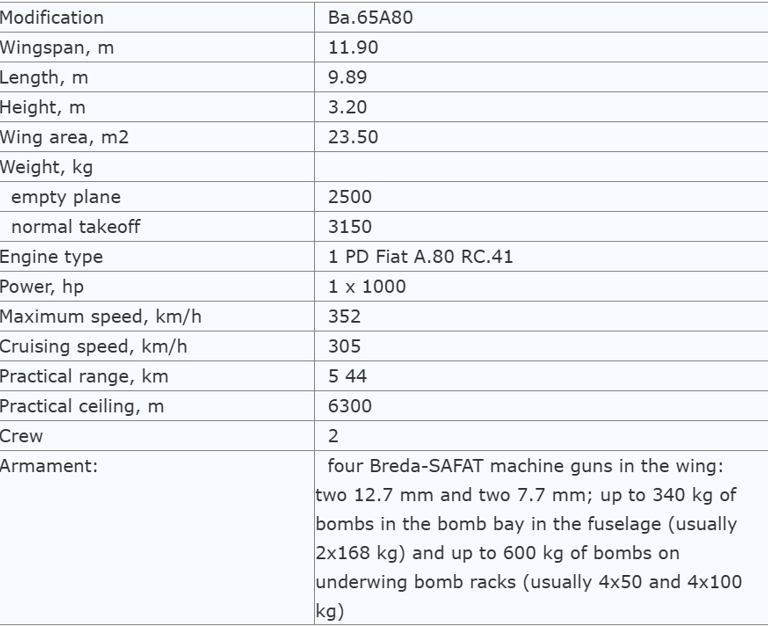
Breda "Ba.65", Bomber
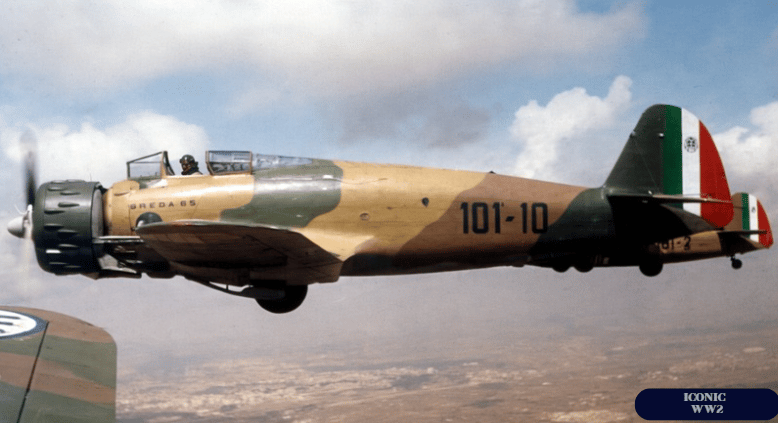
Developer: Breda
Country: Italy
First flight: 1935
Type: Attack aircraft
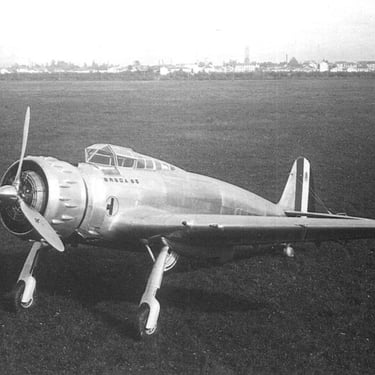
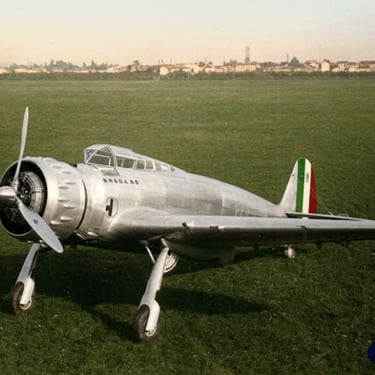
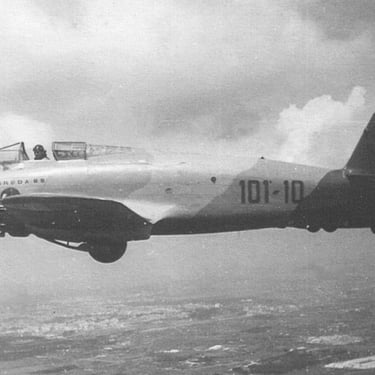
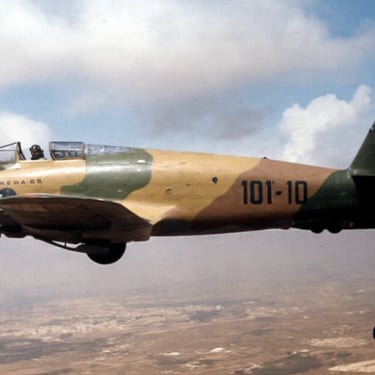
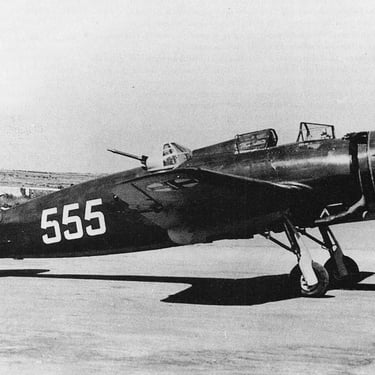
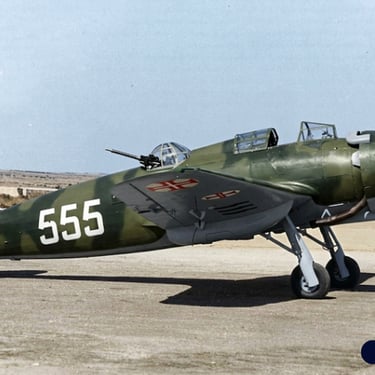
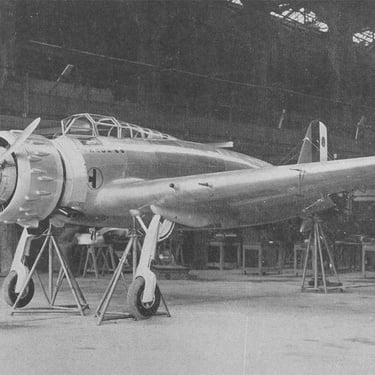
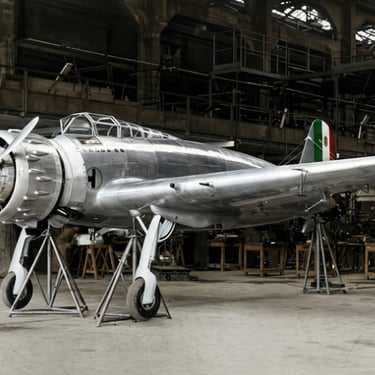
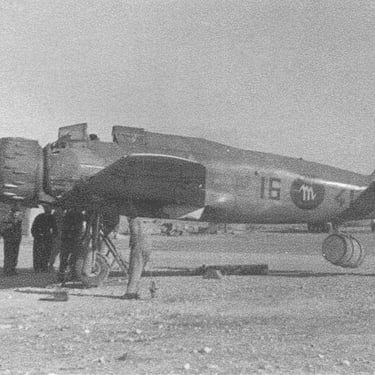
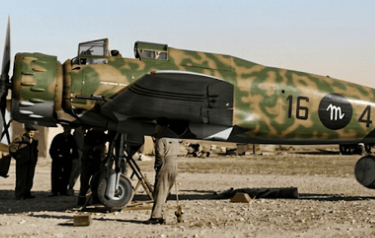
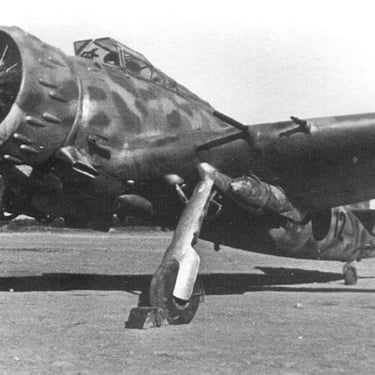
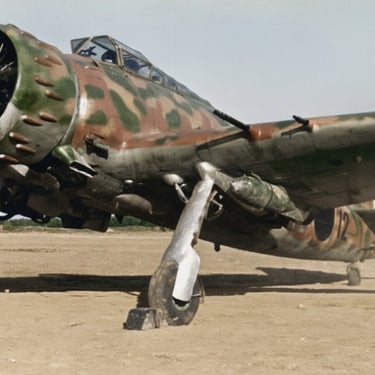
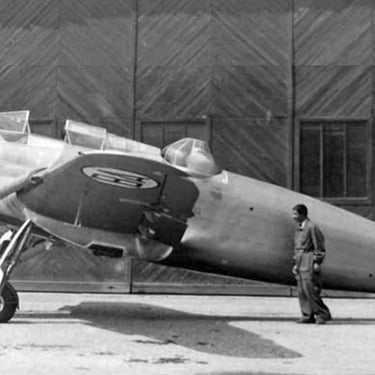
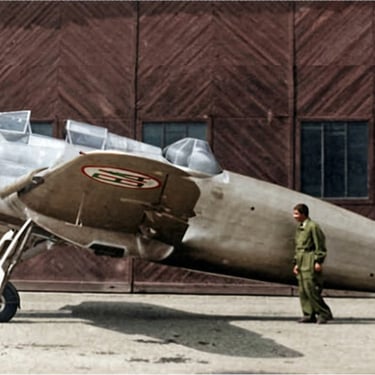
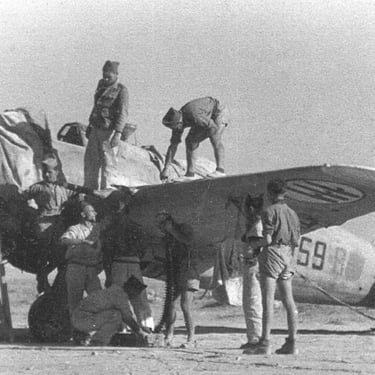
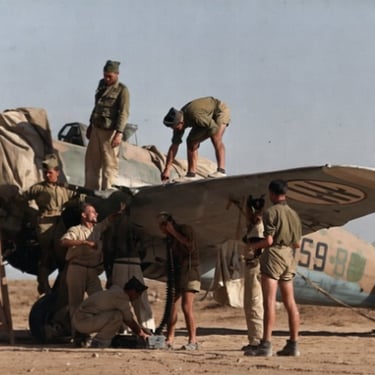
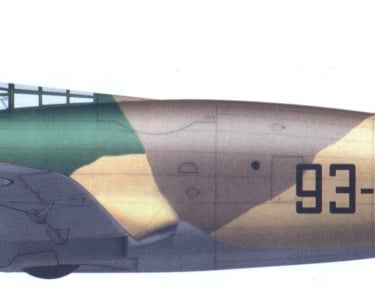
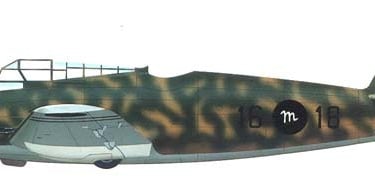
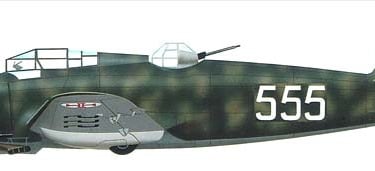
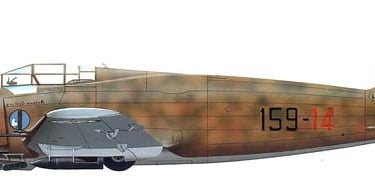
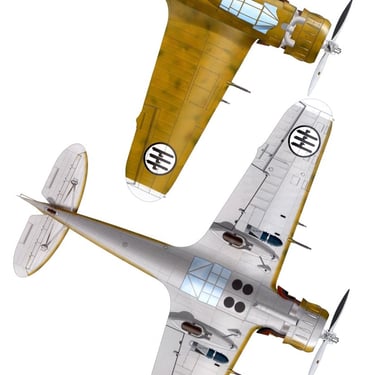
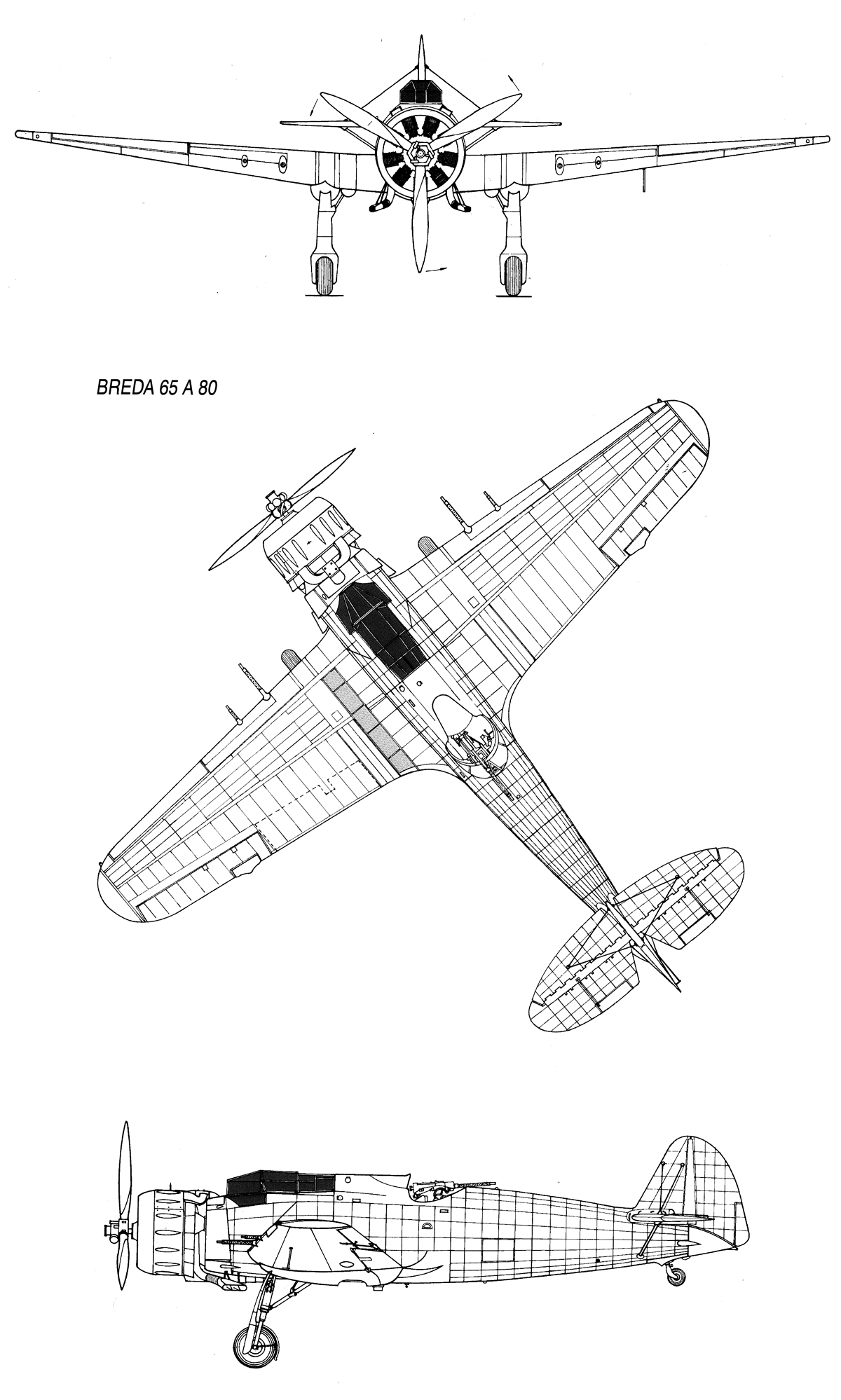
In the early 1930s, Italian aviator Colonel Amedeo Mecozzi developed a concept for a ground-attack aircraft designed to strike enemy targets up to 300 km behind front lines. Such an aircraft was to have good speed and maneuverability, capable of independently fending off enemy fighters if necessary. It was envisioned that this would allow ground-attack aircraft to operate without fighter cover.
Mecozzi's concept was tested on the Caproni AR.1 and Breda Ba.64, both of which appeared in 1933-34. Both of these types were fairly modern-looking monoplanes (the Ba.64 even had retractable landing gear), but their speed was deemed insufficient for future development (both types reached speeds of approximately 350 km/h). Therefore, neither the AR.1 nor the Ba.64 were built in significant numbers, and the need for a more advanced aircraft became urgent.
The requirements called for the creation of a two-seat combat aircraft with fixed offensive small arms and a defensive turret, capable of being used as a high-speed bomber, and without a gunner-observer, as a single-seat fighter.
The design team at Breda, headquartered in Sesto San Giovanni near Milan, decided to take an evolutionary approach, making the necessary changes to the Ba.64 design, which was considered quite successful. The same designers who had designed the Ba.64—Antonio Parano and Giuseppe Panzeri—led the development. The first step was to increase the aircraft's power output, or, simply put, install a more powerful engine. The Alfa Romeo AR.125 RC35 engine used on the Ba.64 produced 650 horsepower, but the new aircraft required at least 200 more horsepower.
Unable to find a suitable engine among the proposals from Italian companies, Breda designers settled on the French 14-cylinder air-cooled Gnome-Rhône GR 14K engine, producing 880 hp. This powerplant was used on the prototype of the new aircraft, designated Ba.65 and given the military registration number MM.325.
The prototype first took to the air in September 1935, piloted by Breda chief pilot Ambrogio Colombo. On October 27, after a short factory test program, the MM.325 was handed over to the military. The aircraft was ferried from Milan to Rome's Guidonia Montecelio airfield, where the Ba.65 demonstrated outstanding performance, covering the distance at an average speed of 412 km/h.
During military trials, given the aircraft's excellent performance, the primary objective was to determine the Ba.65's capabilities as a fighter. A series of experimental battles between the Ba.65 and a Fiat CR.32 biplane fighter were conducted in Guidonia, the outcome of which was entirely predictable: although the Ba.65 significantly outperformed the Fiat in speed, the biplane proved superior in the maneuvers.
Ultimately, it was concluded that the new Breda aircraft was suitable for use as an interceptor of high-speed, non-maneuverable targets. Later, when the decision was being made to send the Ba.65s to Spain, their functional role was defined as "anti-Martin bombers," that is, aircraft designed to intercept SB bombers.
Testing also revealed a negative aspect of the Breda: its poor controllability. While this quality was tolerable when the Ba.65 was flown by experienced test pilots, when the aircraft fell into the hands of ordinary combat pilots, it led to several serious accidents and disasters. And each time, the commissions investigating the flight accidents pointed to the aircraft's abysmal controllability. The company even had to send its test pilots to combat units to train combat pilots in the "correct" and safe handling of the Ba.65.
But let's not get ahead of ourselves. The results of military trials were deemed quite acceptable, and the Breda received an order for serial production. At the same time, a request was expressed to replace the prototype's M1 turret with a more advanced one—one with a wider firing angle, to improve the reliability of the landing gear retraction mechanism, and, most importantly, to install an even more powerful engine. However, the first series of Ba.65s were equipped with the same Gnome-Rhone engines, manufactured under license by Isota-Fraschini under the designation K14.
By mid-1936, the Regia Aeronautica's (Italian Air Force's) ground attack aviation was consolidated into the 5th Air Brigade, which comprised two regiments (Stormo)—the 5th and 50th. In total, they comprised 12 squadrons equipped with AP.1 and Ba.64 aircraft, though their complement was significantly lower than standard.
In June 1936, one of these squadrons, the 160th, received its first Ba.65. It was a prototype, but the first production Ba.65, number MM.75081, joined the 167th Squadron. The attack unit's flight crews initially welcomed the new aircraft with enthusiasm, but after closer encounters with the high-speed monoplane's "stubborn" nature, their enthusiasm waned.
Interestingly, Italian sources note another characteristic reason for the high accident rate of the Ba.65 (besides poor controllability): the personnel of the attack air units were largely made up of young, self-confident pilots who fancied themselves "aces" and were not at all inclined to listen carefully to the advice of instructors and senior colleagues.
In short, only the very slow production rate prevented even greater losses in equipment and pilots. By the end of 1937, a year and a half after its acceptance into service, only two dozen Ba.65s were in service with the ground attack aviation (approximately the same number of Ba.64s). And the following year, 1938, the Air Force began receiving a new modification of the Ba.65, equipped with 18-cylinder Fiat A80 engines producing 1,000 hp. The Gnome-Rhône-equipped aircraft were transferred to the 2nd Fighter Regiment, whose pilots were far from enthusiastic about these aircraft, which had already acquired a bad reputation.
Deliveries of the Ba.65 with A80 engines proceeded at a relatively rapid pace, and on May 8, 1938, the 50th Regiment was able to field 18 of these aircraft, which participated in demonstration flights at Furbara Airfield. These exercises, timed to coincide with Hitler's visit, were also attended by Benito Mussolini and the King of Italy. Eighteen Ba.65s, along with seven AR.1s, demonstrated an assault raid using small arms and small-caliber bombs. One of the Ba.65s also tested the maximum bomb load specified in the documentation—320 kg (the aircraft's total payload was 1,135 kg).
The result was unsatisfactory: Lieutenant Colonel Savarino, the pilot, declared it "completely unflyable." Ultimately, the payload was limited to 900 kg, which, naturally, did not enhance the aircraft's combat potential.
In July 1938, the assault regiments, previously stationed in the vicinity of Rome, were transferred to northern Italy, closer to the expected combat area. The smell of war was already in the air...
The 5th Regiment was now based at Lonate Pozzolo airfield, and the 50th at a new airbase in Treviso. But the combat value of the Ba.65 remained low, and the accident rate high. After eight pilots died in crashes in these aircraft within six months, all Ba.65 flights were banned in October 1938. The ban was lifted only at the end of January 1939. Consequently, by the end of 1938, the ground attack units were considered to be of limited combat readiness. The inspection report noted that the average monthly flight time per pilot was only 7.3 hours, enough only to maintain basic flying skills.
The unsatisfactory performance of the Ba.65 forced the military to suspend acceptance of these aircraft, and 33 attack aircraft remained at the factory "awaiting a decision on their further assignment," as stated in the official order. Thus, the Ba.65's career was derailed before it had even truly begun.
In 1939, twin-engine Ba.88 "Linz" aircraft began to be deployed with ground attack air units. Although they subsequently proved as unsuccessful as their predecessors, they were used to re-equip the 5th Air Regiment. The 5th Regiment's crews last flew the Ba.65 during army summer maneuvers in the Po Valley.
The 50th Regiment, after spending nine months in Treviso, was transferred to Benghazi airfield in Libya in early 1939. The redeployment disrupted training, which had begun to return to normal. Furthermore, the A80 engines fared poorly in North African conditions. At low altitudes, dust quickly caused them to fail. Flight accidents resumed, leading Marshal Balbo to order the decommissioning of the Ba.65.
On the eve of war, the 50th Air Regiment found itself virtually without combat aircraft, receiving as a temporary replacement light twin-engine Caproni Ca.310 Libeccio monoplanes—bomber trainers, ill-suited for combat use. As we can see, the Ba.65 proved to be an exceptionally unlucky aircraft. Nevertheless, it still saw combat. And the first combat episode in its career, like that of many other aircraft developed in the 1930s, was the war in Spain.
In addition to combat units, several Ba.65s served briefly at the flight school in Foggia. Here, these aircraft, along with several Ba.64s and AP.1s, were used to train attack pilots. However, when the flight school was transferred to Rimini in November 1939, its Ba.65s remained in Foggia awaiting decommissioning.
A total of 218 Ba.65s were delivered to Regia Aeronautica, including 81 aircraft with K14 engines (numbers MM.75081-75161) and 137 with A80 engines. Of the last 80 aircraft, Breda delivered (MM.75163-75242), and another 57 were assembled under license by Caproni-Vizzola (MM.75243-75299). The last aircraft of this type were produced in July 1939.
Among the 700 Italian aircraft sent to Spain during the civil war were the Ba.65, equipped with K14 engines. The first aircraft of this type arrived in Seville in April 1937, but their introduction into combat was delayed due to the need for refinements to the design of this still-unfinished aircraft. Ultimately, the "Breda" made its combat debut only in August. Thirteen Ba.65s were organized into a squadron designated "65" and sent to the front near Santander.
Initially, the 65th Squadron, under the command of Captain Desiderio, was stationed at Soria Airfield. Here, they attempted to use the Ba.65 as an interceptor, although the aircraft lacked the necessary rate of climb. To compensate for this, they organized airborne patrols, but this exhausted the crews, who were forced to fly long flights at high altitude in unheated cabins and without oxygen masks. The Ba.65's success as a fighter was negligible—only Sergeant dell'Acqua managed to shoot down one SB bomber in the immediate vicinity of his airfield.
Later, the 65th Squadron was relocated to Tudela. Flying from this base, the Ba.65s took part in the Battle of Teruel as ground attack aircraft. Led by the new squadron commander, the daring Captain Fanalli, the ground attack aircraft crews operated with extreme aggression and daring, carrying out precision strikes on targets in close proximity to the front lines. Moreover, in the vast majority of combat missions, the Ba.65s flew with only a pilot; only on a few reconnaissance missions did they carry a gunner/observer.
The standard arrangement of large-caliber bombs on internal racks was abandoned almost immediately, as this made dive release impossible. Furthermore, the early Ba.65 bomb bays could not accommodate bombs larger than 50 kg. The standard configuration carried a pair of 100 kg bombs on underwing racks, releasing them in a dive at an angle of 30-35 degrees.
Another common bomb loadout option was 2-kg fragmentation bombs. The aircraft carried up to 168 of these munitions in four cassettes installed in the bomb bay. In this case, the "peas" were released upon exiting a dive while gaining altitude. On the second pass, the pilot "worked" the target with fire from four wing machine guns.
In July 1938, the Republican offensive began on the Ebro River. In this battle, which lasted 115 days, the 65th Squadron operated from Puy Moreno airfield under the command of Captain Miotto. The Battle of the Ebro became a turning point in the Spanish Civil War: the Republicans lost approximately 80,000 men and most of their aircraft, but failed to achieve a decisive victory.
In this battle, the Ba.65 was used successfully against pontoon bridges. Conventional bombers, operating from medium altitudes, failed to score a single hit, while ground attack aircraft managed to destroy three bridges at the cost of damaging three aircraft.
From December 1938 to January 1939, the Bredas fought in the Barcelona area, participating in the operation to capture the city, which was successful on January 26. In the final months of the war, the 65th Squadron successively changed airfields to Logrono, Olmedo, Madrid, and finally San Juan, from where the Ba.65s carried out their final combat sorties.
A total of 23 Ba.65s were delivered to Spain, 17 of which had K14 engines and six with A80 engines. By the end of the fighting, 11 aircraft remained in service and were transferred to the Francoist Air Force.
Of the dozen aircraft lost, only three were combat losses, while the rest were lost in accidents and disasters. In Spain, the attack aircraft crews, like their colleagues back home, experienced the Breda's capricious nature firsthand. One of the pilots killed in action from the 65th Squadron, Sergeant Cioppini, whose aircraft was shot down by anti-aircraft guns on March 30, 1938, was posthumously awarded the Gold Medal for Military Distinction. The pilots who returned from Spain brought their valuable experience to the attack regiments, helping to improve their combat readiness.
By the time Italy entered World War II on June 10, 1940, not a single Ba.65 remained in service with the Regia Aeronautica's ground attack units. All of these aircraft had been stored, awaiting decommissioning, some in Libya (aircraft previously flown by the 5th Regiment), some in Italy. Only the 2nd Fighter Regiment continued to operate a few Ba.65s, including the oldest ones, those with K14 engines. But the war gave this aircraft a new chance.
According to pre-war plans, the 50th Attack Aviation Regiment, based in Sorman near Tripoli, was supposed to counter a possible attack from Tunisia. But the threat posed by British armored units on Libya's eastern border proved more pressing, so the regiment was ordered to redeploy to airfield T2 near Tobruk. However, the regiment, which had four squadrons (on paper), was only able to field one squadron—the 159th, with seven Ca.310Bs. The remaining crews were "horseless"—their old Ba.65s had been taken away, and the new aircraft had not yet arrived.
In this situation, General Porro, the commander of the Libyan Air Force, ordered Captains del Oro and Fanalli (both veterans of the Spanish War) to immediately restore all possible Ba.65s to airworthy condition and fly them to the T2 airstrip. While the "Bred" was being repaired, 159 Squadron desperately tried to stop the British forces, losing all its Ca.310s in two sorties on June 13.
The unit was replenished with two dozen Ca.310s ordered by Hungary and confiscated at the outbreak of war, but these too were short-lived. Finally, on June 21, the first Ba.65s and several Fiat CR.32 fighters equipped with bomb racks arrived. The 12th Air Group, consisting of two squadrons, operated at airstrip T2, of which the 159th was equipped with Bredas and the 160th with Fiats. By the end of the month, the 12th Group had only ten combat-ready aircraft—an equal number of Ba.65s and CR.32s.
But deliveries of repaired aircraft continued, and by July 20, the group had seven attack aircraft and 10 fighters. By then, the second group of the 50th Regiment, the 16th, also of mixed composition, had arrived at T2. Its 167th Squadron had ten CR.32s, and the 168th had five Ba.65s (these were aircraft with K14 engines, transferred from the 2nd Air Regiment). Thus, the 50th Attack Air Regiment was concentrated in its entirety at a single airbase.
Among the most significant operations of the second half of the summer were the regiment's entire raids on July 25 and 27 against British columns at Sidi Rezegh, inflicting heavy losses on the enemy. And on August 4, six Ba.65s from 159 Squadron destroyed a British forward supply base. While attempting to intercept the attack aircraft, three Gladiators were shot down by escort fighters.
In September 1940, Italian forces under General Graziani launched an offensive on Sidi Barrani. The 50th Regiment's ground attack aircraft actively supported ground units, losing four aircraft. By the end of the brief offensive, the regiment had 28 combat-ready aircraft—10 Bredas and 18 Fiats. On October 8, the 50th Regiment suffered a heavy loss: during a raid on a British tank column south of Barrani, Captain dell'Oro, one of the most experienced attack aircraft pilots, was shot down and killed. He was posthumously awarded the Gold Medal for Military Distinction.
In mid-October, the 16th Group was redeployed to Bir el-Kuask. On October 18, its aircraft—six Ba.65s and seven CR.32s—carried out a long-range raid against the British airbase at Siwa Oasis. On November 7, the raid was repeated, this time involving six Ba.65s from 159 Squadron, supported by 18 Fiats.
Heavy fighting in November left the 12th Group without a single combat-ready aircraft, and the unit was withdrawn for rest. Meanwhile, the 16th Group participated in desperate attempts to halt the advance of the British 7th Armored Division that had begun on December 9th. In the fierce fighting, it lost its last Bredas, and, handing over the few surviving Fiats to the 12th Group that had returned to the battle zone, it departed for Italy on January 2, 1941, to be re-equipped with Macchi MC.200 fighter-bombers. Along with the 16th Group, the headquarters of the 50th Regiment also departed, making the 12th Group independent. At the beginning of January, it had 10 aircraft remaining—six Fiats and four Bredas—of which only four were combat-ready.
Naturally, they couldn't last long. The last combat sortie, involving four Fiats and a single Breda, took place on January 28th. The aircraft attacked enemy units in the area east of Umazi Selinas. By January 30th, not a single serviceable aircraft remained in the 12th Group. In early February, it was withdrawn to Italy and re-equipped with Fiat G.50 fighter-bombers.
During eight months of fighting in North Africa, the 12th Group lost six Ba.65s and six CR.32s in combat, with another seven Bredas and six Fiats written off for other reasons. The 50th Regiment's achievements were recognized by the award of the Silver Medal to the attack aircraft.
In the 1930s, Italian-made aircraft enjoyed considerable popularity on the international market and served in the air forces of many countries. This success was due to numerous Italian aviation records, accompanied by a robust advertising campaign and a well-thought-out export policy. For example, when Iraq, traditionally under British control, attempted to break free from the United Kingdom's strict "tutelage," Italy was one of the first countries to extend a helping hand.
In early 1937, Colonel Jawad, Chief of Staff of the Iraqi Air Force, visited Italy. Negotiations brokered by AEROCONS, the Aircraft Export Committee, resulted in a contract for six twin-engine SM.79B bombers and fifteen Ba.65 attack aircraft. The contract stipulated that two of the Bredas were to be equipped with dual controls. Ten spare A80 engines were also to be sold.
The aircraft were delivered by sea to Basra, assembled by a team of Breda specialists, flight-tested, and delivered to the customer by November 1937. Thus, the Iraqi Air Force received the Ba.65 with A80 engines even before the Regia Aeronautica. The aircraft were assigned to the 5th Squadron. The Iraqi pilots had a fairly high level of training, noted even by the Italian instructor, Lieutenant Guza. Therefore, they managed to master this difficult aircraft without any problems, although a tragic incident did occur: one pilot made a mistake, went into a spin, and died.
In the spring of 1941, personnel from No. 5 Squadron took part in the Rashid Ali mutiny. The attack aircraft carried out several sorties against British forces, suffering heavy losses—only two Ba.65s remained in No. 5 Squadron. No information has been found about the subsequent fate of these aircraft.
Chile became the next buyer of Breda attack aircraft. In the summer of 1937, this Latin American country ordered nine Nardi FN.305 trainers and 20 Ba.65:17 single-seat fighter variants from Italy, along with three two-seat combat trainers. The Chilean version was equipped with Piaggio P.XI engines. This 14-cylinder engine produced 1,000 hp—the same as the A80—but weighed a hundred kilograms less.
Reggia Aeronautica specialists tested the Ba.65 with a Piaggio engine, leading to a proposal to replace the K14 engines on early production aircraft with them. However, due to the discrepancy between the achieved performance improvement and the relatively high cost of the project, the replacement was abandoned. Thus, the P.XI was installed only on export aircraft. Another difference from the Italian original was the replacement of the two 12.7mm Breda SAFAT machine guns with Madsen machine guns of the same caliber.
The batch of Ba.65s ordered by Chile arrived at their destination by sea on December 14, 1938. As with the Iraqi order, some time was required for assembly and flight testing of the aircraft, so the 4th Air Group (El Bosque Air Base), designated to equip them, was only able to begin operating the Ba.65s in March 1939.
The "Italians'" careers in the Chilean Air Force proved short. Their introduction to the aircraft was marred by a series of accidents and two fatal crashes, which sparked a wave of criticism in the press. Although most of the incidents were attributed to the pilots' poor training, Air Force leadership, seeking to deflect accusations of poor flight training, shifted the blame to the manufacturer, claiming it had sold defective aircraft.
There was some discussion of returning the Ba.65s to Italy, receiving in exchange a batch of Fiat CR.32 fighters, which had been successfully operated by several Latin American countries and had performed well in the Spanish Civil War, but this never came to fruition. Ultimately, the Ba.65s flew with the 4th Air Group until the end of 1941, and then officially remained part of it until 1946, but they never flew. The group flew American-made North American NA-74 light attack aircraft.
The third foreign buyer of the Ba.65, the Portuguese Air Force, took a rather deliberate approach to mastering the new attack aircraft. Having ordered 10 aircraft with A80 engines in 1937, the Portuguese Air Force command decided not to bother with mastering the aircraft at home, but sent a group of pilots to Italy. At the 5th Air Regiment of the Regia Aeronáutica, the Portuguese pilots not only mastered the Ba.65's flying techniques but also completed combat training.
In Portugal, the Bredas armed a group of daytime bombers at the Sintra airbase, but they didn't serve long in that country either. The culprit was nature: a hurricane struck Sintra on February 15, 1941, collapsing the hangar roof, burying the entire group. Ultimately, not a single Ba.65 was recovered.
China also had a chance to acquire the Ba.65, and the Chinese military expressed interest in the aircraft even earlier than other countries. As early as 1935, an agreement was signed to establish a joint company, SINAW (Sino-Italian National Aircraft Work), to produce Italian-designed aircraft at a plant in Nanchang.
The first project selected for implementation was the assembly of 30 Ba.65s. At the insistence of the Chinese, they were to be equipped with American Twin Wasp engines. However, work was delayed because the Italians insisted on retaining their own engines—first the K14, then the A80. Ultimately, Ba.65 assembly did not begin until October 20, 1937, when Japanese bombers raided the Nanchang plant. Although the plant sustained only minimal damage, the Italian government hastened to recall all its specialists. Thus, the protracted saga of the "Chinese" Ba.65s was brought to an end.