B6N Nakajima Bomber
Developer: Nakajima
Country: Japan
First flight: 1941
Type: Carrier-based Torpedo bomber
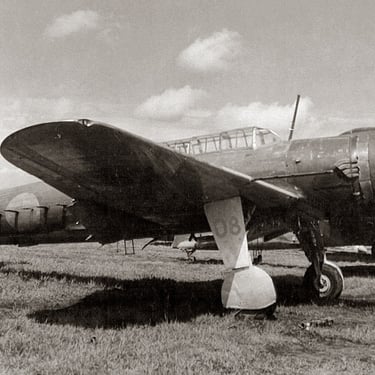
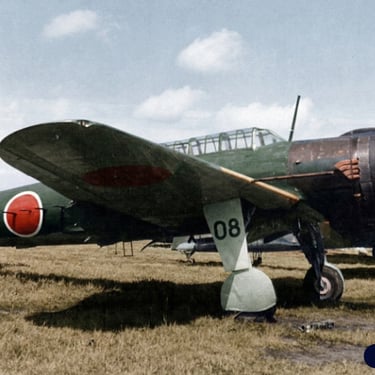
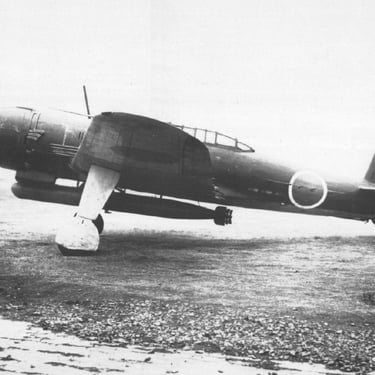
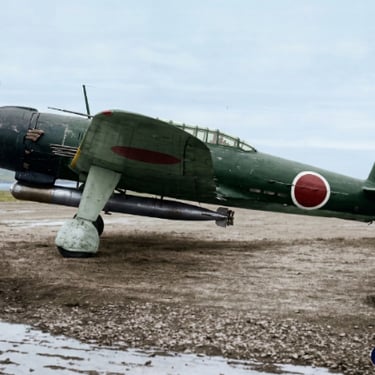
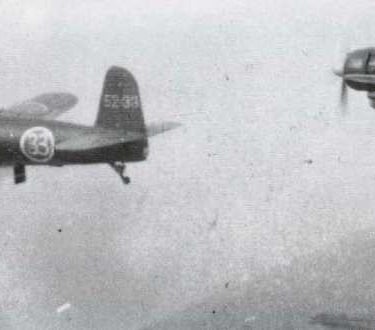
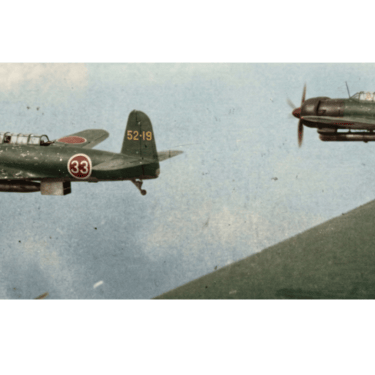
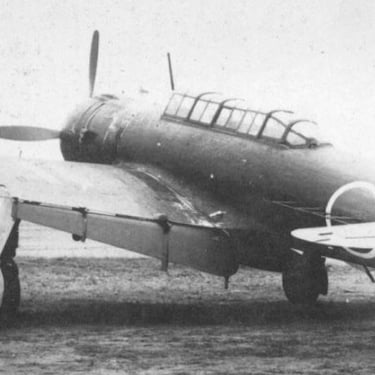
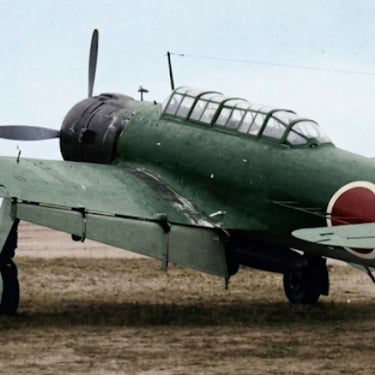
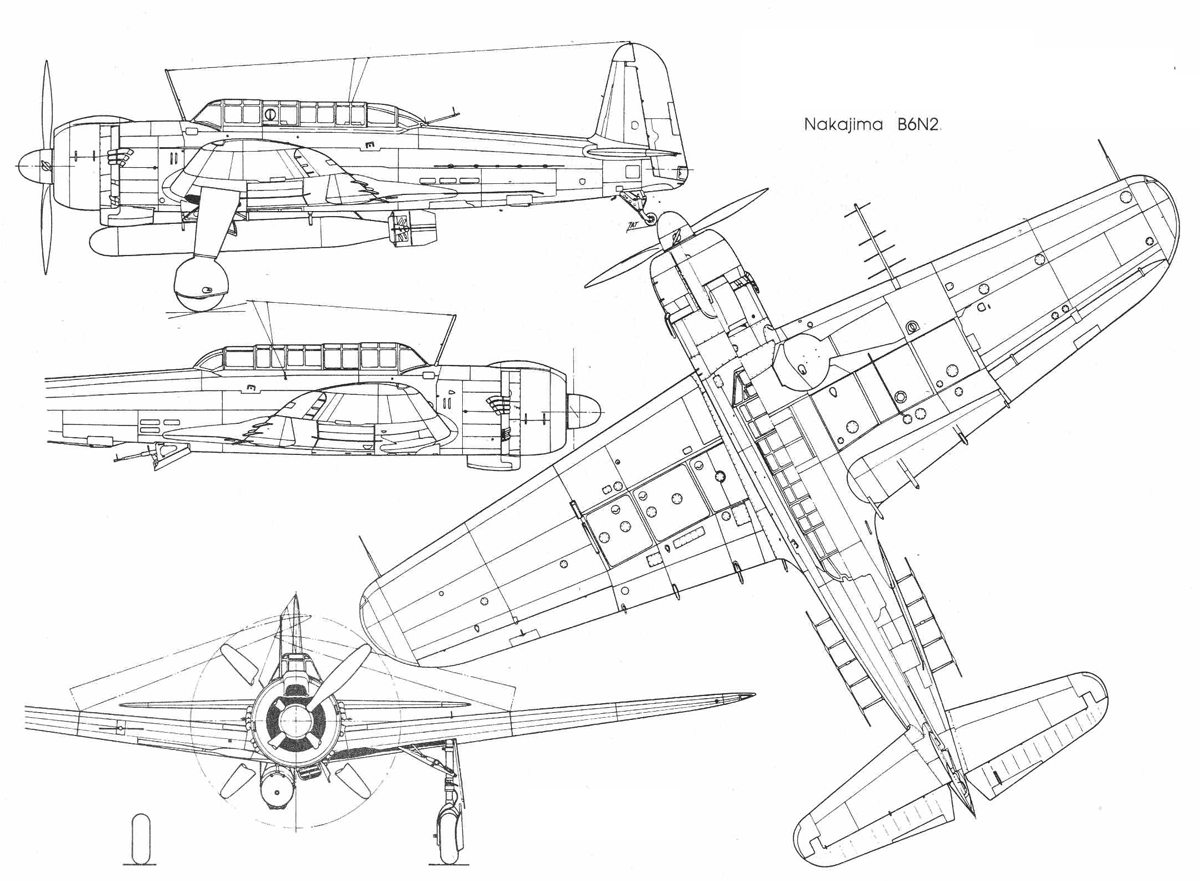
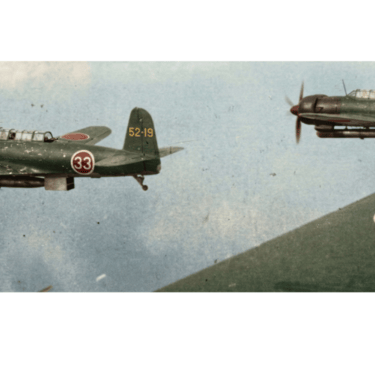
Designed as a replacement for its famed predecessor, the B5N Kate, the Tenzan never achieved even a tenth of its fame. It entered service in the second half of 1943 but saw little use until June 1944, when the Japanese command committed all its forces to the air and naval battle in the Philippine Sea near the Mariana Islands. It would later be used in Taiwan, the Philippines, Iwo Jima, and Okinawa, both as a kamikaze aircraft and for its intended purpose—which, by then, was little more than suicidal raids by Special Attack pilots. The loss of air superiority, the loss of most carriers, and the loss of experienced crews meant that the Tenzan, despite the relatively large number of aircraft built, never fully realized its intended role. Tenzan squadrons never achieved any real success, but nevertheless, this aircraft was undoubtedly one of the best carrier-based torpedo bombers of World War II, almost equal to its famous American opponent, the Grumman Avanger, in everything except survivability.
In December 1939, two years after the first flight of the Nakajima B5N1 and shortly before the first B5N2 prototype took off, the Kaigun Koku Hombu (IJNAF Naval Air Headquarters) developed a set of technical and tactical parameters for a new carrier-based torpedo bomber, known as the "14-Shi" or "14-Shi Kanko" specification. Their goal was to replace the aging B5N torpedo bomber within two years, while maintaining a steady supply of modern torpedo bombers for the IJNAF without reducing their production rate.
The requirements outlined in the 14-Shi specification were as follows: retaining the three-man crew of the B5N, a low-wing design, and aircraft dimensions consistent with the elevators on existing Japanese aircraft carriers. A maximum speed of 463 km/h (280 mph), a cruising speed of 370 km/h (230 mph), and a range of 1,852 km (1,150 mi) with a maximum bomb load of 800 kg (1,750 lb) and a ferry range of 3,300 km (2,150 mi). External weapons load was to include the latest 450 mm Type 91 Kai3 torpedo weighing over 858 kg (1,950 lb) or bombs of the same total weight. Defensive armament was traditionally weak for this class of Japanese aircraft, consisting of only a single 7.7 mm Type 92 (Shiki) machine gun in the rear of the cockpit. In essence, the 14-Shi specification did not include any significant changes compared to the B5N2 model, and only called for an increase in maximum speed of 85 km/h in cruising mode and 110 km/h with full armament.
Kaigun Koku Hombu decided against using a competitive bidding process for the project, and development of the 14-Shi was transferred directly to Nakajima Hikoki Kabushiki Kaisha. It was assumed that the design team that had worked on the successful B5N could continue work on this project for its replacement. Engineer Ken-ichi Matsumura was appointed to lead the team that would work on the project, designated 3K (N-10). The 3K (N-10) design was based on the airframe of its predecessor, while the radial engine would be nearly twice as powerful as the Nakajima "Sakae" 11 used on the B5N2 to ensure the required speed. The Kaigun Koku Hombu recommended the Mitsubishi Kasei 14-cylinder radial engine, but Nakajima's management, for political reasons, insisted on using "their own" Nakajima Mamori 11, producing 1,870 horsepower. The Nakajima Mamori Model 11 (also known as the Mamori 11-Gata or NK7A) was a completely new, original design, and the 3K bomber would be one of the first aircraft to use it.
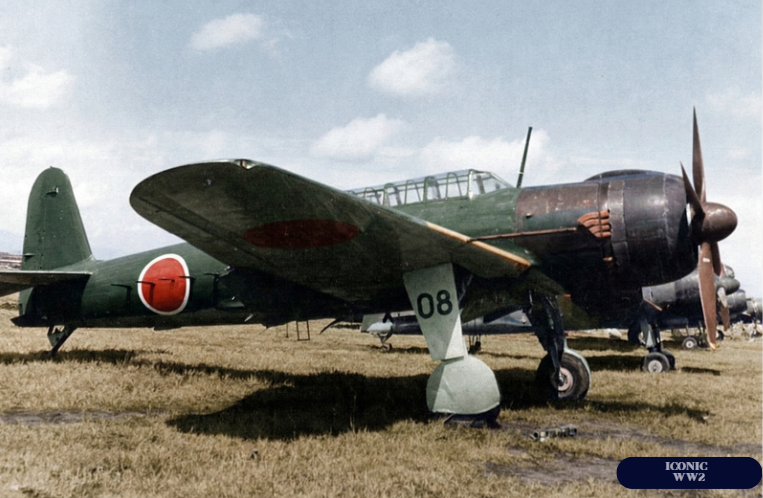
Work on the project continued throughout 1940, and the first B6N1 prototype was completed in March 1941. It was an all-metal aircraft with an elegantly shaped low-wing, covered in duralumin except for the control surfaces, which were fabric-covered. The wings, with a dihedral angle of 6.5°, folded for storage in aircraft carrier hangars. The wingspan and area were close to those of the B5N, but the increased overall weight of the new powerplant dictated a higher wing loading. To compensate, the designers used Fowler flaps on the B6N instead of the standard B5N flaps. The Fowler flaps were positioned beyond the wing's trailing edge and lowered 20° on takeoff and 38° on landing. Although the flaps somewhat offset the weight difference, the stall speed was still significantly higher than that of the B5N. The new aircraft's vertical tail had a distinctive, easily recognizable shape, slightly inclined forward, which was due to the requirement to fit the aircraft's length into the limited dimensions of the elevators on pre-war aircraft carriers.
The B6N had hydraulically retractable landing gear with a tailwheel. The main landing gear retracted into the underside of the wing toward the fuselage, while the tailwheel retracted upward into the tail. The landing hook, located forward of the tailwheel, was also retractable. The crew consisted of a pilot, a navigator/bombardier, and a gunner/radio operator. As with the B5N, the crew shared a single cockpit, the canopy of which was divided into seven sections. The torpedo racks were mounted on the lower fuselage, offset 30 cm to the starboard side of the aircraft's centerline, unlike the B5N, which had theirs centered. The oil cooler was mounted on the lower fuselage under the cowling, aligned with the aircraft's centerline. The four-bladed propeller had a diameter of 3.5 m.
The B6N1 prototype's maiden flight took place on March 14, 1941. Soon after, test flights were continued by pilots from the Yokosuka Hiko Jikkenbu Naval Arsenal and the Yokosuka Kokutai squadron, which revealed a number of serious problems. The first was a tendency to stall in flight due to the aircraft's powerful tail torque. To correct this, the vertical stabilizer was angled 2°6' relative to the tailplane axis. Carrier deck tests conducted in late 1942 on the Ryuho and Zuikaku revealed insufficient strength of the landing hook, which was quickly corrected. The engineers' greatest challenge was presented by the Mamori engine, which proved to be finicky and underdeveloped. Under certain conditions, it caused significant vibrations, overheated, and never achieved the planned power. The engine was not accepted into service until late 1942 and underwent extensive modifications. Nearly two years after the prototype's maiden flight, the B6N1 was finally officially accepted by the Kaigun Koku Hombu for production as the "Kanko Tenzan Ichi-Ichi-Gata," or Tenzan Model 11 Fleet Carrier-Based Attack Aircraft. The word "Tenzan" literally means "Heavenly Mountain" and is the Japanese name for the Tian Shan mountain range in China.
The B6N1 Model 11 differed slightly from the prototype as a result of further modifications made during the initial production phase. It was equipped with a second, movable 7.7mm Type 92 machine gun, mounted in a ventral position in the rear of the cockpit. It was also fired by the radio operator/gunner through a special tunnel in the cockpit and a hinged hatch in the lower fuselage. When stowed, the machine gun retracted into the fuselage, and the hatch closed flush with the fuselage contours. Another 7.7mm Type 97 machine gun with 400 rounds of ammunition was mounted in the center section of the port wing, outside the propeller sweep. The effectiveness of this armament was questionable, as small arms of this caliber were useless against any surface target or enemy aircraft, and it was removed beginning with the seventy-first production aircraft. The main landing gear was reinforced, the torpedo racks on the starboard side were mounted so that the torpedo mounted on them was angled 2° downrange, and the rocket stacks were eliminated to save weight, replaced by two large exhaust manifolds on either side of the lower cowling. Tests were conducted on several B6N1s using a pair of rocket boosters to evaluate the feasibility of using the new torpedo bomber from small aircraft carriers, which were converted in large numbers from transport vessels during the war. However, the concept was deemed too complex and dangerous from an operational standpoint. Furthermore, no solution was found for landing the significantly heavier aircraft on carriers with short flight decks. Therefore, the Tenzan was used only from purpose-built attack carriers until the end of the war, while the Japanese Navy's small and escort carriers continued to use the veteran B5N. To improve the aircraft's survivability, the designers proposed using self-sealing fuel tanks, but since this reduced their capacity by 30%, the IJNAF insisted on the original tanks, sacrificing survivability for the sake of maintaining operational range. A total of 133 B6N1 model 11s were built at the Nakajima plant in Koizumi between February and July 1943.
The planned replacement of the older B5Ns with the B6N in front-line units was scheduled for mid-1941. However, delays in the development of the new aircraft forced Kaigun Koku Hombu to resume production of the B5N2 in 1942. Meanwhile, problems with the new bomber continued. Shortly after production of the B6N1 Model 11 began, Kaigun Koku Hombu ordered the discontinuation of the Mamori engine. This decision was driven by a desire to standardize engines used by naval aviation, increasing production of some by eliminating others. Among the engines with similar parameters selected for production were the Mitsubishi Kasei, a very reliable and widely used engine, and the new Nakajima Homare, a very promising engine that used the same pistons as the mass-produced Sakae. Kaigun Koku Hombu ordered the B6N1 to be adapted to use the Homare. This engine would be used on many aircraft developed at the time, including the Nakajima C6N "Saiun" carrier-based reconnaissance aircraft, the Kawanishi N1K-J "Shiden" fighter, and the Kugisho P1Y "Ginga" bomber.
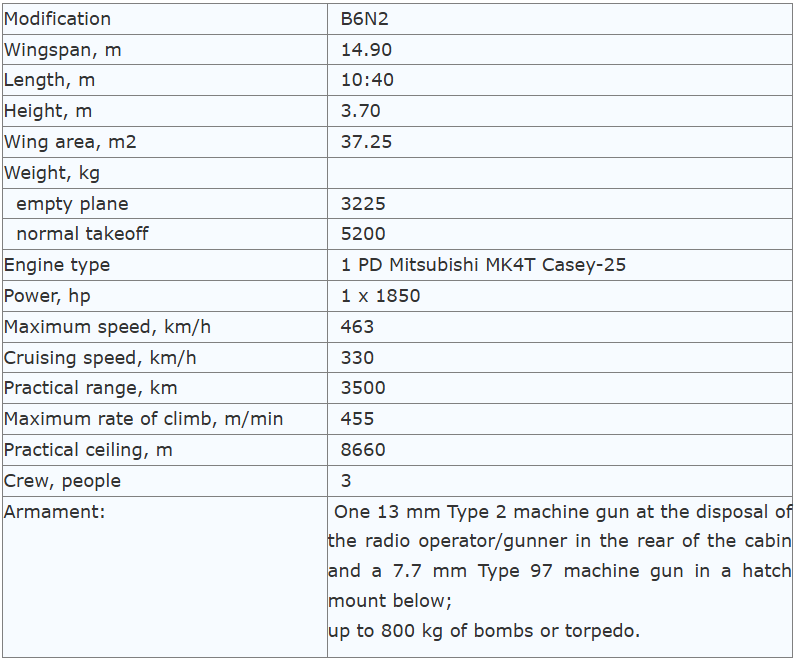
Since the Homare engine was just entering production and was primarily needed to power basic bombers, Nakajima's designers attempted to adapt the B6N to use the more readily available Mitsubishi Kasei engine. The fourteen-cylinder Mitsubishi Kasei Model 25 (Kasei 25-Gata or MK4T), producing 1,850 hp (1,250 kW) for takeoff, was nearly identical in size to the Mamori, making its installation relatively straightforward. However, the Kasei weighed more than 100 kg (220 lb) less than the Mamori, forcing the designers to lengthen the nose to restore the center of gravity. This necessitated other changes, such as relocating the oil cooler, modifying the engine cowling, and modifying the air intake. A new four-bladed propeller with a smaller (3.4 m) diameter and wider, shorter blades was used. Overall, the Kasei-powered Tenzan was slightly longer and lighter than the B6N1.
Additionally, the exhaust manifolds were replaced with individual exhaust pipes for each cylinder. This was intended to eliminate the flames that often blinded pilots during night flights and also provide additional thrust to the engine. The oil tank capacity was reduced from 90 to 70 liters, and the fuel capacity was increased by 10 liters. The tail wheel was fixed in the extended position, but the tail wheel strut and wheel well were left unchanged. At the time, a retractable tail wheel was considered too much of a luxury, and the minor gain in aerodynamics was not offset by the weight of the hydraulic retraction drive and the complexity of the design. The overall weight of the aircraft was reduced by 140 kg, and even with a weaker engine, the aircraft reached a top speed of 482 km/h and an improved rate of climb. The armament was unchanged.
The Kaigun Koku Hombu named the new aircraft the Kanko Tenzan Jōchi-Ni-Gata, or Naval Carrier-Based Attack Aircraft Tenzan Model 12 (B6N2 Model 12). Production of the new model began in June 1943. In November 1944, armament changes were made based on the requirements of combat units operating the Tenzan. The rear Type 92 7.7 mm machine gun was replaced by a 13 mm Type 2 (2-Shiki) machine gun, and the ventral machine gun was replaced by a 1-Shiki (Type 1), 7.92 mm caliber (a copy of the German MG-81), which, despite being of similar caliber, had significantly better ballistic characteristics, a higher rate of fire, and a belt feed instead of the magazine of the Type 92. A new Model 96-Gata Ku-3-Go 4-Gata radio was installed. This model was designated the Kanko Tenzan Ichi-Ni-Ko-Gata, or Naval Carrier-Based Attack Aircraft Tenzan Model 12A (B6N2a Model 12A), and remained in production until the end of the war in August 1945. Total production was 1,133 B6N2 and B6N2a aircraft at the Nakajima plant in Okawa, Gumma Prefecture, and Handa, Aichi Prefecture. Factory records indicate a total of 1,268 B6Ns were built, including the prototypes, B6N1, B6N2, and B6N2a: 298 at Koziumi and 970 at Handa. According to IJNAF records, 1,262 aircraft were built.
Production slowly ramped up; by October 1943, only 18 B6N2s had been delivered, and the maximum production rate ever achieved was just 90 aircraft per month. Beginning in the fall of 1943, about a third of the B6Ns leaving the factory were equipped with the 3-Shiki Type 3 anti-ship search radar, with Yaga antennas mounted on the wing leading edge and on the sides of the aft fuselage. Aircraft equipped with the radar were not marked in any special way, but were designated according to the base model.
B6N Nakajima Bomber
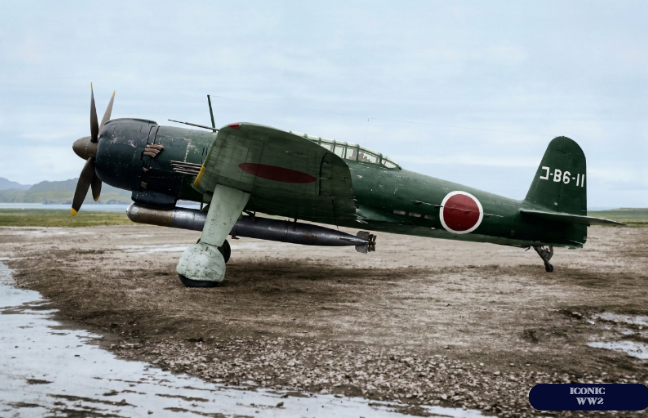
By the end of the war, a design for a "land-based" version of the Tenzan was being developed. By that time, the Imperial Navy had lost virtually all of its aircraft carriers, and the B6Ns that had survived the chaos of battle were forced to operate from coastal airfields. Two production aircraft, numbered 751 and 752, taken straight from the assembly line, were used as prototypes. They were refitted and (unofficially) designated Tenzan Ichi-San-Gata (Tenzan Model 13) or B6N3 Model 13. The main changes were made to the powerplant. The Model 13 was equipped with a Mitsubishi "Kasei" Model 25C (Kasei 25 Hei-Gata, MK4T-C) engine of the same power. The cowling and canopy were slightly modified to make them more aerodynamic. The retractable tailwheel was restored, and the landing hook was removed as unnecessary. The changes had little effect on the aircraft's performance, and the B6N3 Model 13 was not put into serial production, mainly due to the fact that by that time a more advanced aircraft for the same purpose, the Aichi B7A Ryusei, was already in serial production.
The first Tenzan Model 11s reached the front lines in August 1943. Plans called for the new bombers to be used to re-equip the carrier-based squadrons of the 3rd Fleet (Dai-San-Kan-tai) stationed at Truk Atoll in the Caroline Islands. However, the situation in the Solomon Islands in the fall of 1943 forced the Third Fleet to enter combat, although none of the new squadrons reached operational readiness.
When the US Navy increased its activity around the Solomon Islands in preparation for the planned landing on Bougainville, the Japanese command decided to implement Operation Ro (Ro-Go Sakusen). Part of this plan called for the air forces stationed at Rabaul to be reinforced by 173 aircraft from the Third Fleet's Dai-Ichi Koku Sentai (First Carrier Division), including 82 A6M2 Zero fighters, 45 D3A2 Val dive bombers, 40 new B6N1 Tenzan torpedo bombers, and six D4Y1-C Suisei reconnaissance aircraft. The aircraft were assigned to the carriers Zuikaku, Shokaku, and Zuiho and were transferred from Truk to Rabaul between October 28 and November 1, 1943. American forces landed on November 1 at Cape Torokina in Empress Augusta Bay, Bougainville, and on November 5, Tenzan underwent its baptism of fire. On that day, fourteen B6N1s, escorted by four Zeros, attacked American ships anchored south of Bougainville. According to greatly exaggerated Japanese reports, their successes amounted to the following: the sinking of one large and one medium aircraft carrier, two large cruisers, and two additional light cruisers or large destroyers. The loss of four B6N1s from the Zuikaku, commanded by Lieutenant Commander (Taii) Kiyomiya, was reported. In reality, the Americans, with only two large landing ships and one destroyer escort at the site, suffered no losses.
The next episode involving the Tenzans occurred on November 8 and 11 near Bougainville. The Japanese crews' achievements were modest, to say the least, and losses were high, due to American attacks on Japanese air bases on Rabaul. When the 1st Carrier Division returned to Truk on November 13, a total of 121 aircraft had been lost. Of the 52 surviving aircraft, only six were Tenzans. Paradoxically, the Japanese command was pleased with the results and considered the Tenzans' debut to be remarkably successful. It's difficult to say where such sincere optimism came from among the Japanese admirals, but it likely stemmed from unverified reports of victory from surviving crews. Citing them is pointless, as during this period the Allies did not lose a single ship, not only sunk but even damaged, to Japanese air attacks.
By late 1943, more and more new B6Ns were arriving to replace the aging B5N, both in carrier squadrons and at naval bases. For a long time, the two aircraft were used alongside each other due to limited production capacity and the time needed to train crews for the new aircraft. Although production of the B6N2 Model 12 began in mid-1943, only a few of the new bombers reached the front by March 1944. The first to be equipped with Tenzans were 531 Kokutai (Rabaul), 551 Kokutai, and 582 Kokutai (Truk). When American aircraft from TF-58 carried out their raids on Truk on February 17 and 18, 1944, 582 Kokutai had only two Tenzans and seven B5Ns, while 551 Kokutai had twenty-six Tenzans. The raids resulted in heavy losses for Japanese troops, and the naval base was virtually destroyed. The only Japanese air success during these days was a torpedo hit on the aircraft carrier Intrepid, for which various crews claim credit, but most likely it was a G4M "Betty" bomber from the 582nd Kokutai. The heavy losses at Bougainville led to a complete reassessment of naval aviation and a restructuring of the Imperial Japanese Navy in late 1943. Forces under the command of the Dai-San Kantai (3rd Fleet) were organized into three Kokutai, one for each carrier division. The 601st Kokutai was based on the ships of the Dai-Ichi Koku Sentai (First Carrier Division) – Taiho, Zuikaku, and Shokaku. The division was completed in February 1944, after which the ships were sent to Singapore for training, and in May they were sent to the Sulu Islands and based around Tawi-Tawi.
The Dai-Ni Koku Sentai (Second Carrier Division), which included Junyo, Hiyo, and Ryuho, was created in late February, and its 652nd Kokutai began forming in early April. In early February, the 653rd Kokutai was created, joining the Dai-San Koku Sentai (Third Carrier Division) with Chitose, Chiyoda, and Zuiho. The Second and Third Carrier Divisions trained in Japan and, in mid-May, joined the First at Tawi-Tawi in anticipation of Operation A (A-go Sakusen), the large-scale attack on the American fleet.
When the Americans landed on Saipan, Mariana Islands, on June 15, 1944, the Japanese Third Fleet had 439 aircraft, including sixty-eight Tenzan aircraft: forty-four from the 601st Kokutai, fifteen from the 652nd Kokutai, and nine from the 653rd Kokutai. That same day, the American forces were attacked by eleven Tenzan aircraft from the 551st Kokutai from Truk Atoll. According to crew reports, two torpedoes achieved direct hits. One struck an aircraft carrier, the other a large transport, which, according to the report, caught fire and sank. Six Tenzan aircraft were lost during the mission, and the remaining five landed on Guam.
Four days later, on June 19, a major naval battle took place, known as the Battle of the Philippine Sea or the "Marianas Turkey Hunt." This was the first engagement in which Tenzans were used on a large scale, although they constituted only about 15% of the Japanese aircraft. It was during this battle that Tenzans would be officially designated by the Americans as "Jill."
The Battle of the Philippine Sea has been well documented elsewhere, so there's no point in describing it here; it's enough to provide a few facts from Japanese sources concerning the B6N alone. According to these sources, the first wave of attacking Japanese aircraft consisted of three groups: 128 aircraft from the 601st Kokutai under Lieutenant Commander (Shosa) Tarui (including 29 Tenzan), 33 from the 652nd Kokutai under Lieutenant Commander (Shosa) Ishimi (including 1 Tenzan), and 64 aircraft from the 653rd Kokutai under Lieutenant Commander (Taii) Nakamoto (including 7 Tenzan). A total of 37 Tenzan aircraft were present out of the 225 aircraft that took part in the first wave. The next two groups launched the attack in the second wave, a total of 69 aircraft. Among them were 601 Kokutai with 19 aircraft under the command of Lieutenant Commander (Taii) Chiba (including 4 Tenzan) and 652 Kokutai with 50 aircraft under the command of Lieutenant Commander (Taii) Abe (including 3 Tenzan).
The Japanese attacks were thwarted by a powerful American air defense system of radar-guided fighters and antiaircraft artillery. Of the thirty-seven Tenzans in the first attack, only ten returned to the carriers, and only three of the seven in the second wave. All their torpedoes missed their targets, and the only successful B6N was the suicidal ramming of one of the Tenzans shot down by antiaircraft guns into the deck of the battleship Indiana. American counterattacks continued until June 20, resulting in the loss of three Japanese carriers—the Taiho and Shokaku to submarines, and the Hiyo to carrier-based aircraft. Many other ships were heavily damaged, including the last of the large carriers, the Zuikaku. After two days of battle, the retreating remnants of the Japanese 3rd Fleet were reduced to just thirty-five aircraft, including only two surviving Tenzans! The result of the Marianas Turkey Hunt was that Japanese carrier-based aviation no longer existed as a real fighting force.
On June 26, 1944, two Tenzan 551 Kokutai from Truk, along with 13 Mitsubishi G4M bombers, attacked American Marines assaulting Aslite Airfield on Saipan. On July 3, three Tenzan from the same 551 Kokutai repeated the attack on American targets on Saipan. One of the six Tenzan from the 551st Kokutai, which landed on Guam on June 11 after the American fleet's attack, attacked an American transport convoy on June 21, miraculously survived, and took off again to attack Saipan on June 27. Fourteen Tenzan 752 Kokutai were deployed to Iwo Jima on June 18, and on June 20, they were joined by seven more Tenzan from the Yokosuka Kokutai. Later, the combined force of these aircraft began raiding American positions in the Mariana Islands from airfields on Iwo Jima. Many of these aircraft were destroyed when TF-58 aircraft carried out devastating raids on Iwo Jima on June 24 and July 3.
The next time B6N bombers saw combat was on October 12, 1944, in Taiwan. American carrier strike group TF-58 attacked targets on Formosa in preparation for the invasion of the Philippines. The main force stationed on the island was the T-Kogeki Butai, later reinforced by aircraft from the 262nd Hikotai and 601st Kokutai.
On October 12, twenty-three Tenzan, under the command of Taii (Senior Lieutenant) Ono, left Kyushu, refueled at Okinawa, and carried out (without much success) a series of night torpedo attacks on American ships.
Between October 14 and 16, 1944, the Dai-Ni Koku Kantai (2nd Air Fleet), along with the 51st Koku Sentai (Air Flotilla) and the 3rd and 4th Koku Sentai (Carrier Divisions), concentrated approximately 380 aircraft to attack the American fleet. Most of the group never made contact with the enemy, with a few exceptions; seventeen Tenzan aircraft from the 252nd Hikotai and 701st Kokutai, under the command of Senior Lieutenant (taii) Nagasogabe, encountered the American ships on the morning of October 14 near Ishigakijima Island and immediately attacked with torpedoes. The sole surviving crew reported several direct hits on two cruisers. In reality, some of the ships suffered light damage, mostly from their own antiaircraft fire. The Japanese's only success was the heavily damaged light cruiser Renault, when one of the Tenzans, carrying a torpedo, dive-bombed its deck. The explosion completely destroyed the No. 6 stern turret, along with its crew. This became the pretext for Japanese military propaganda to trumpet the Imperial Navy's great victory the following day.
On October 20, American forces began landing on Leyte Island in the Philippines. The Japanese immediately responded, activating Plan Sho-1 (Sho-ichi-Go Sakusan). This resulted in the largest air and naval battle in the Pacific Ocean, known as the Second Battle of the Philippine Sea. It also became the last battle involving the Japanese Mobile Fleet. Part of the combined fleet force, the so-called "Northern Force," included the last four carriers of the 3rd Fleet that survived the Battle of the Marianas: Zuikaku, Zuiho, Chitose, and Chiyoda, which were combined into the 1st and 3rd Koku Sentai. They carried only 116 aircraft, which were barely manned by crews with any experience in deck takeoffs. They made up 653 Kokutai, including twenty-five Tenzan; Fourteen aboard Zuikaku, five on Zuiho, and six on Chitose. The 634th Kokutai was supposed to be part of the 4th Koku Sentai, but due to a lack of crews, it remained only on paper. As early as October 24, several Tenzan aircraft from Zuikaku and Zuiho were sent to reconnoiter American ships. Later, fifty-eight aircraft (including eight Tenzan aircraft, one from Zuikaku, four from Zuiho (two returned shortly after takeoff due to a malfunction), and three from Chitose) went in search of enemy ships. However, they never found the American ships, but American fighters did. Of the six Tenzan aircraft that took part in the action, two were able to land in the Philippines, and only one was able to return to the aircraft carriers.
Twenty-four Tenzans from units based in the Philippines took part in the attacks on American ships in Leyte Gulf, primarily from the 653rd and 761st Kokutai. Six Tenzans from the 263rd Hikotai and 653rd Kokutai formed the so-called Dai-Ichi Tokubetsu Kogekitai (First Special Attack Group) and took off on their final suicide mission from their base at Mabalacat early in the morning of October 24, 1944. These six kamikazes were intercepted approximately 180 km from Manila by a large group of Hellcats and were quickly shot down. On the afternoon of October 24, three Tenzans took off from Clark Field to scout targets for the attack planned for that evening. Twenty minutes later, six more Tenzans followed. Four of them carried torpedoes, two incendiary bombs. Reconnaissance aircraft found the burning tanker, but the strike group was unable to locate it and returned to base safely, but unsuccessfully.
On October 25, 1944, Admiral Ozawa's Northern Force (which included the carriers Dai-San Kantai) was attacked by aircraft from TF-58 in an engagement known as the Battle of Cape Engagne. The Japanese lost all four of their carriers, which by that time were completely depleted of aircraft. All surviving aircraft from 653 Kokutai had evacuated to the Philippines. This was the last operation of the IJNAF, once the pride of the Imperial Navy. After this, Japanese naval aviation, like its army counterparts, would be forced to rely primarily on Tokkotai tactics—"special attack units," colloquially known as kamikaze—especially during the defense of Mindoro and Luzon in the Philippines. During the Battle of the Philippines, the US Navy suffered significant losses due to kamikaze attacks, but it is impossible to say what role the Tenzan crews played in this. Japanese documents are silent on this matter, and American data also failed to record a single hit on their ships by aircraft identified as "Jills." However, after the capture of the Philippines, not a single intact "Jill" was found among the abandoned Japanese aircraft at airfields. Following the defeat in the Philippines, what remained of the former Third Fleet's aircraft was sent to a base near Tokyo for reformation to defend the homeland.
On February 16, 1945, a few days before the American landings on Iwo Jima, two Tenzans stationed there took off to reconnoiter American forces. On February 18, two Tenzans from 903 Kokutai on Chichijima, along with two Army Mitsubishi Ki-67 Hiryu, attacked unprotected U.S. Navy ships near Iwo Jima. Early on the morning of February 21, a large group of aircraft from Katori, Japan, was dispatched on a suicide mission called Mitate 2 Tokubetsu Kogekitai. It consisted of pilots from 601 Kokutai: nine Zero fighters, eleven Suisei dive bombers, and eight Tenzans. The group used a staging airfield to refuel on the tiny island of Hachijo Jima, where one of the B6Ns, attempting to land with a heavy bomb, collapsed its landing gear, while the second, due to technical problems, was forced to return after takeoff and crashed during landing. The group, reduced by two aircraft, continued on to Chichijima without incident and successfully attacked the American ships. Three Tenzans, armed with 800-kg bombs, attacked and hit a target identified as a large transport ship (possibly the Keokuk, a Henry M. Flagler-class transport that, despite severe damage, managed to stay afloat), and three Tenzans, armed with torpedoes, damaged the aircraft carrier Saratoga.
The last major battle in which the Tenzan participated was the defense of Okinawa, which began with the American invasion of the island on March 26, 1945, and lasted for several months. American carrier-based aircraft struck targets on Okinawa and other islands of the Ryukyu archipelago several times.
In October 1944, as diversionary strikes in anticipation of the landings on Leyte, in January 1945, during the fighting on the island of Luzon, on March 1, at the height of the Battle of Iwo Jima. The 1st, 3rd, and 5th Koku Kentai took part in the long and bloody defense of Okinawa. Tenzan were used by the following naval units: the 254th and 256th Kogeki Hikotai of the 131st Kokutai; the entire 210th Kokutai; 253rd Kogeki Hikotai of the 331st Kokutai; 601st Kokutai; 251st Kogeki Hikotai of the 701st Kokutai; 252nd Kogeki Hikotai of the 765th Kokutai; 931st Kokutai and "Kushira" Kokutai. B6Ns were used for day and night reconnaissance, torpedo and bombing attacks, night attacks on Yontan and Kadena airfields, and suicide kamikaze attacks on British and American ships off Okinawa. Most suicide crews were organized into small units, usually bearing catchy names such as "Tennō," "Raiō," "Mitate," and "Kiichi."
The largest number of Tenzan-Tokkotai were consolidated into the Hyakurigahara Kokutai, which merged with the remnants of the Kushira Kokutai at the airbase of the same name. Most of the Tenzan units there were formerly assigned to the 131st Kokutai. They were part of the attack squadrons Tokiwa-Chuka, Koka, and Seiki. During the massive kamikaze attacks known as Operation Kikusui (Floating Chrysanthemum) in April-May 1945, these units ceased to exist, having completed their mission.
On 06.04.45, a kamikaze group, which included Tenzan, sank the destroyer Bush, on 12.04.45, the destroyer Zellars was seriously damaged, and on 16.04.45, the aircraft carrier Intrepid was damaged.
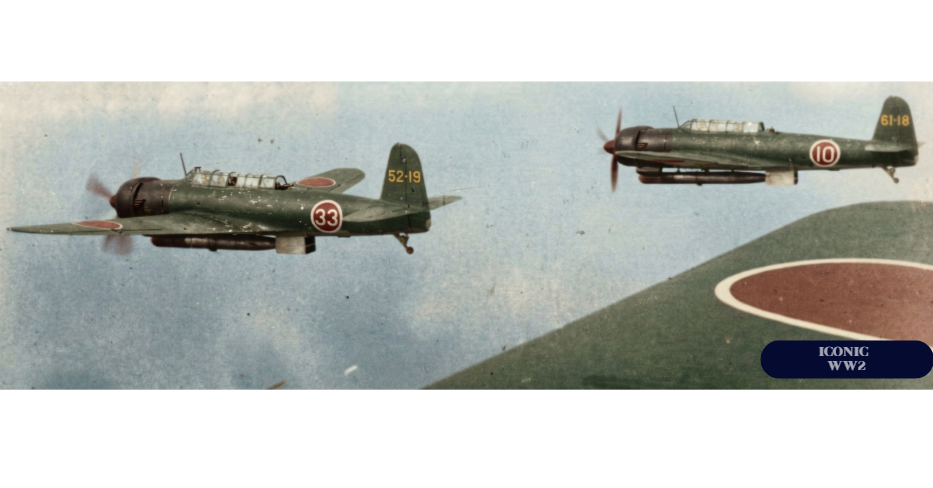
On the evening of June 16, around 8:30 p.m., a lone Tenzan, carrying a torpedo, approached just above the water and attacked the radar patrol destroyer USS Twiggs (DD-591). The torpedo struck the ship, causing an explosion in the magazines of the second turret. The torpedo hit was, in principle, sufficient damage—the force of the explosion was such that it left the destroyer no chance. However, the Japanese torpedo bomber, ignoring antiaircraft fire, circled above the ship and crashed into the ship's superstructure. Less than an hour later, the Twiggs sank. 152 men, including the ship's commander, perished. 188 crew members were saved.
There were B6Ns in the 553rd Kokutai, which formed the northwestern defense sector and was stationed on Paramushir Island in the Kuril Islands. It operated Tenzan torpedo bombers from April 1943. By October 1944, only one Tenzan remained in the 553rd Kokutai, along with four B5N Keitai. Some time later, the Kokutai was transferred to the Philippines, and the last Tenzan was lost in an accident en route.
In addition, Tenzan was widely used in the Kudo Kantai (task forces), particularly the Dai-Ichi Goei Kantai (First Escort Fleet), established in 1944 as part of the Kaijyo Goei Sotai (Main Escort Command). The First Escort Fleet was responsible for protecting the sea lanes between Japan and Singapore, as well as other occupied territories in the south of the country, including escorting convoys and conducting anti-submarine patrols. Tenzan were deployed in this capacity in the 901st, 931st, and 951st Kokutais.
IJNAF units that used B6N Tenzan torpedo bombers were: Yokosuka, Tateyama (Tachiyama), Suzuka, Usa, Hyakurigahara, Susaki, Himeji, Kushira, and Taura Kokutai, 131, 210, 331, 501, 531, 551, 553, 582, 601, 634, 652, 653, 701, 705, 752, 761, 762, 765, 901, 903, 931, 951, and 1001 Kokutai. They were used for experimental purposes by Dai-Ichi Kaigun Koku Gijutsusho.
Only one B6N2 "Tenzan" is known to survive, located in the United States. It was brought to the United States after the war, along with more than 100 other Japanese aircraft, where it underwent postwar evaluation testing at Willow Grove Naval Air Station in Pennsylvania. It remained there until 1981, after which it was transferred to the National Air and Space Museum (NASM) in Washington, D.C., where it remains in poor condition in the museum's storage facilities.