Avro 652 "Anson", Patrol Aircraft
Developer: Avro
Country: United Kingdom
First flight: 1935
Type: Patrol Aircraft
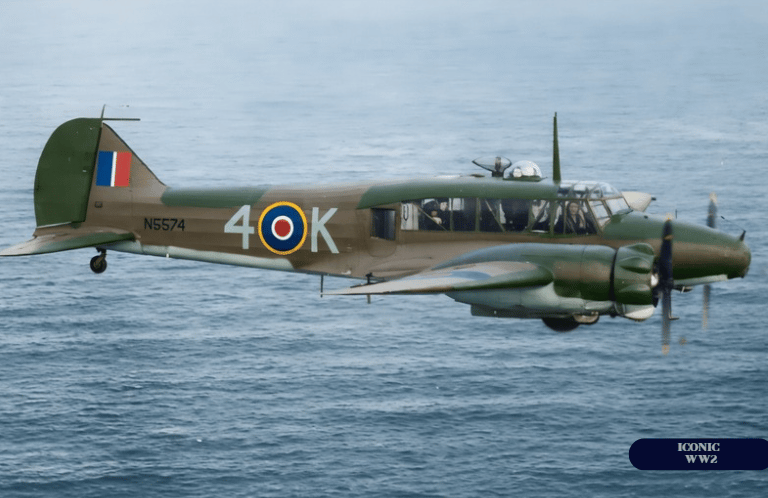
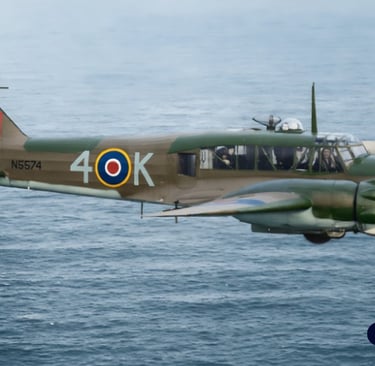
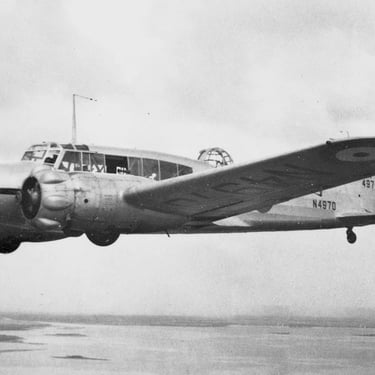
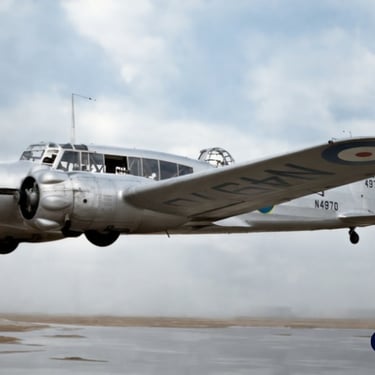
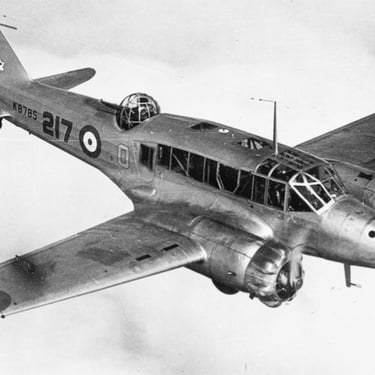
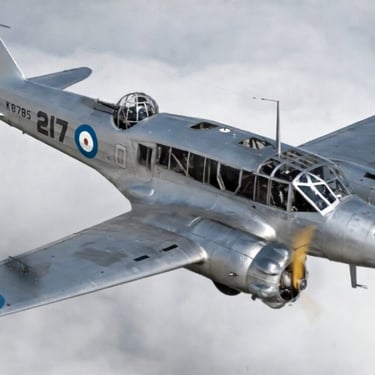
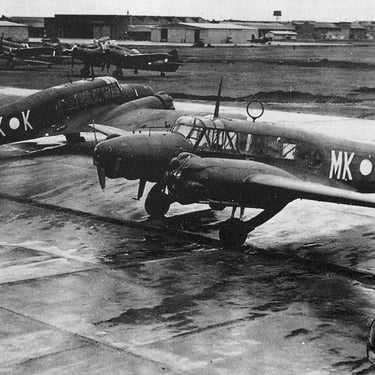
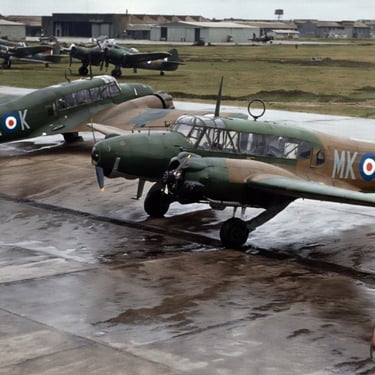
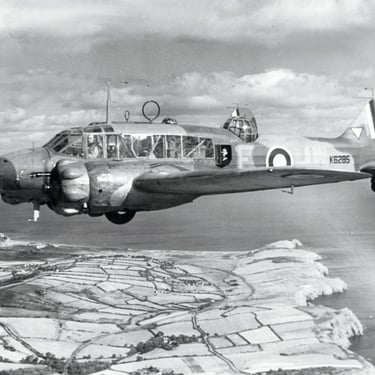
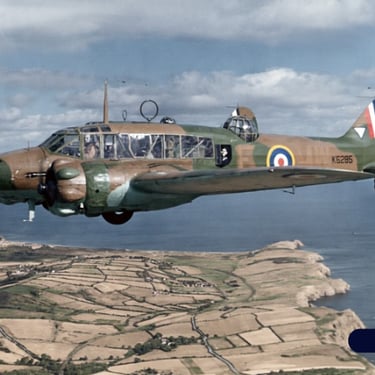
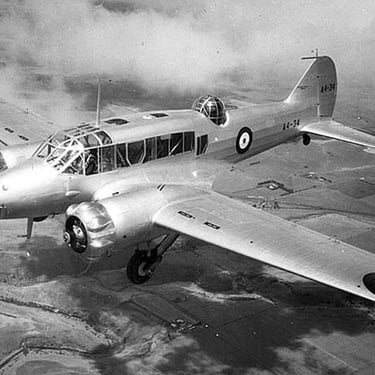
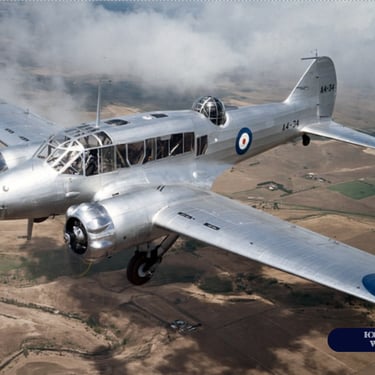
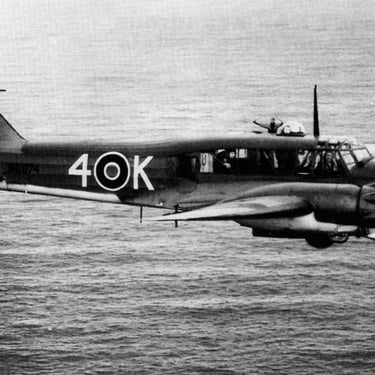
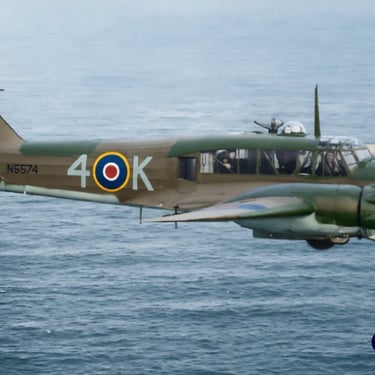
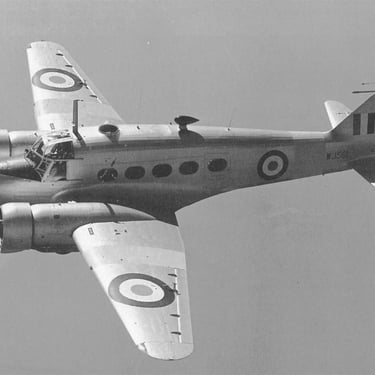
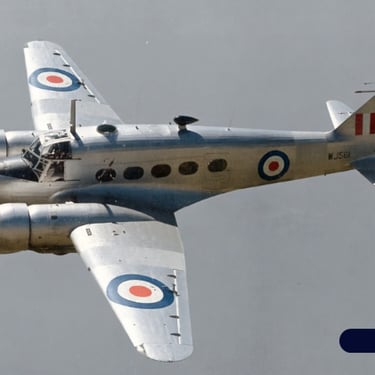
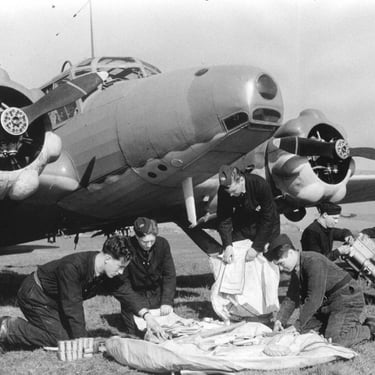
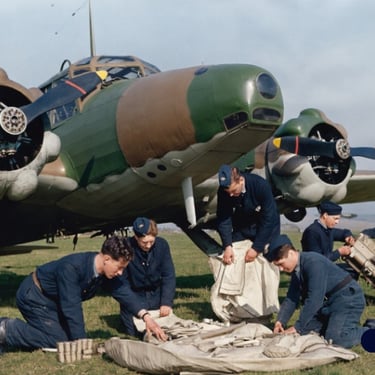
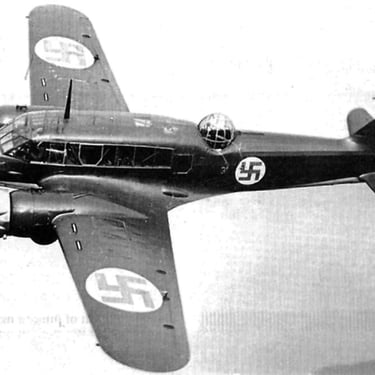
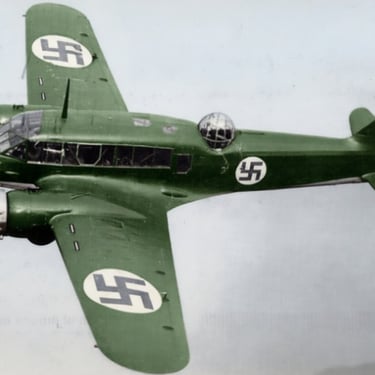
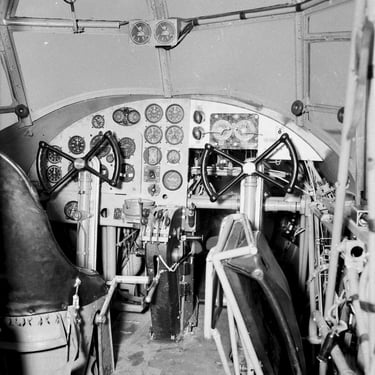
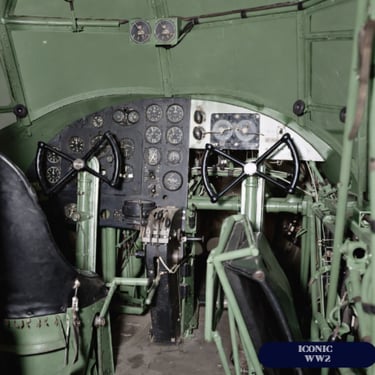
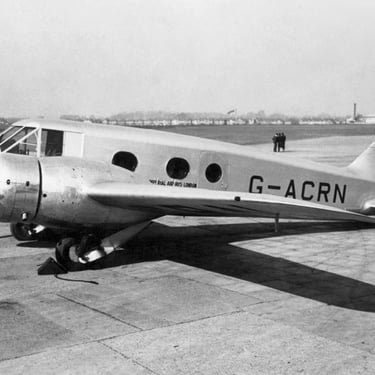
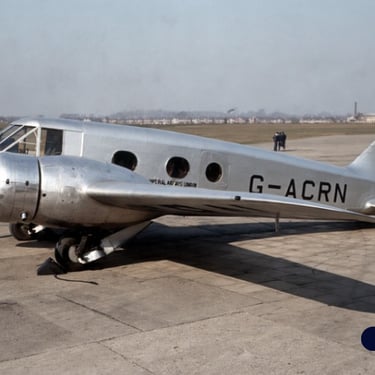
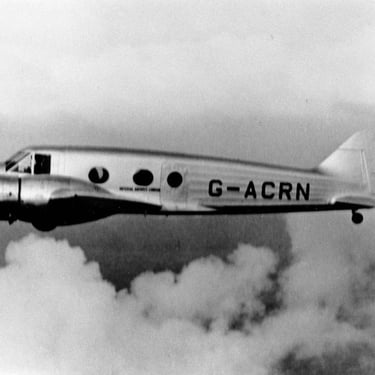
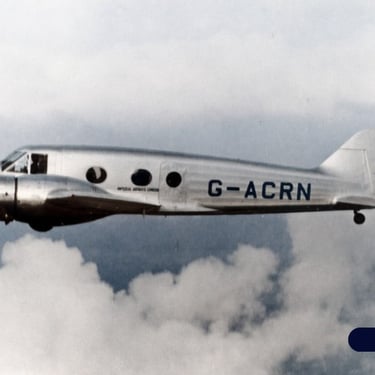
Adopted in 1935, retired in 1968! The British Anson aircraft enjoyed an enviable longevity and illustrious fate, serving in air forces around the world for over 30 years. Like several other famous combat aircraft of the 1930s, the Anson was not initially conceived as a military aircraft. This was a period of rapid development in aircraft manufacturing: the cantilever monoplane concept was gradually becoming universally accepted in both military and civil aviation. Passenger aircraft based on this design were also appearing in various countries.
In May 1933, Imperial Airways commissioned A.V. Roe & Co. (better known by its brand name, Avro) to design a small, high-speed aircraft for charter flights. In August of that year, chief designer Roy Chadwick began work on the order at the Avro design bureau in Manchester.
The result was the Avro 652 project – a twin-engine aircraft of mixed construction. Its wings and horizontal tail were wooden, and the fuselage was based on a steel tube truss. Two Armstrong Siddeley "Cheetah" V engines, producing 270 hp each, drove two-bladed Fairey-Reed constant-pitch metal propellers. The main wheels were retracted into the engine nacelles forward of the aircraft using a hand winch, using a chain drive and a low-pitch propeller pair. Fully retracting the landing gear required 140 turns of the handle! The aircraft carried only four passengers (each with their own "personal" round window) and two crew members; the cockpit was equipped with dual controls.
In early 1934, the British Air Ministry announced a competition to create a patrol aircraft for the Royal Air Force. The performance requirements for such a design were not particularly high. A simple and reliable aircraft was needed, capable of leisurely surveying coastal waters at low altitude, remaining in a designated patrol area for extended periods. Competitors submitted a number of designs, including, on May 19, the Avro 652A, a militarized version of a planned civilian aircraft with more powerful Cheetah VI engines (295 hp), armament of two 7.69 mm machine guns, and a small bomb load (127 kg). After reviewing the designs, the ministry ordered the construction of two prototypes: the Avro 652A and the de Havilland DH-89M. The latter was also a conversion of the DH89M Dragon Rapid passenger biplane. Both aircraft were scheduled for completion in March 1935. Meanwhile, the first Avro 652 took to the air at Woodford Airfield on January 1, 1935, piloted by test pilot F. Tomkins. The pilot noted the aircraft's good handling and stability. Following the first aircraft, designated G-ACRM and given the name "Avalon," a second one was soon assembled—G-ACRN "Avatar" (later simply "Ava"). On March 11, they were officially delivered to Imperial Airways, which deployed them on the Croydon-Brindisi route, where they flew until 1939. "Avalon" and "Ava" were then sold to Air Service Training as training aircraft for civil aviation pilots. In February 1941, already during the war, they were requisitioned by the Royal Air Force. The aircraft served in several flight schools and even spent some time in a combat unit – the 811th Squadron of the Coastal Command.
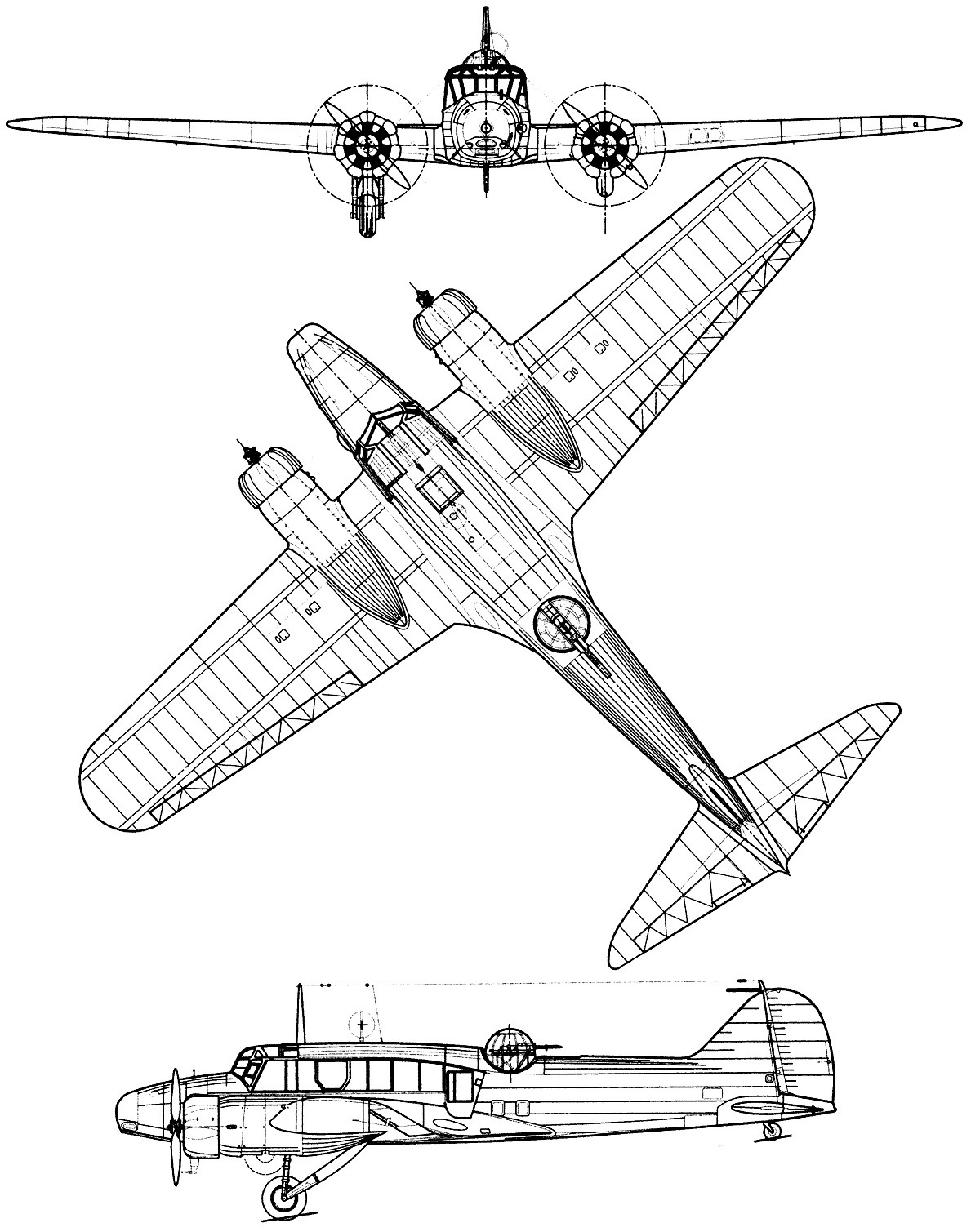
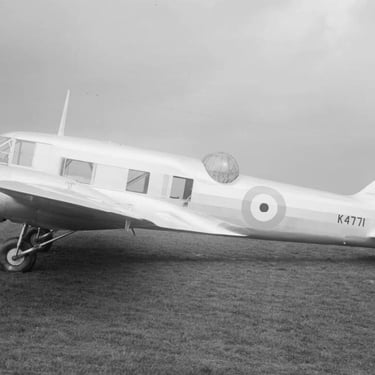
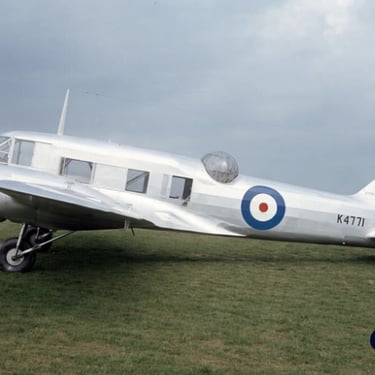
Avro focused all its subsequent efforts on the military variant. The first Avro 652A was assembled, as scheduled, in March 1935. On March 24, this aircraft, with the military serial number K4771, took to the air for the first time, with B. Thorne at the controls. The Avro 652A differed from its civilian counterpart in its bulky Armstrong Whitworth dorsal turret housing a Lewis machine gun (from the Whitley bomber), round windows (instead of rectangular ones), and distinctive "ribbed" engine cowlings (instead of the old round ones). A second machine gun, a Browning, was mounted in the forward fuselage on the port side. The bomb load was located under the cabin floor in the center section. The standard version carried two 100-pound bombs and four more 20-pound bombs. Flares and smoke buoys could also be carried. The crew initially consisted of three. In April, the aircraft underwent thorough testing at the Martlesham Aircraft Center. Following testers' recommendations, the horizontal stabilizer span was increased by approximately a quarter, while the elevator area was reduced.
From May 11th to 17th, official comparative trials of the Avro 652A and the DH-89M took place at Gosport. The latter was smaller in size and inferior in speed and, especially, in flight endurance. Avro won the competition. On May 25th, the aircraft was officially accepted into service by the Royal Air Force under the name "Anson" I (in honor of the 18th-century English admiral), with an order later placed for 174 production aircraft. It was the first modern monoplane to enter service with the Royal Air Force, and also the first aircraft with retractable landing gear. On June 29th, K4771 was unveiled at the Hendon Air Review.
Following the completion of the competition, parallel development of Project 664, a somewhat scaled-down version of the Anson, was discontinued, with focus shifting to the refinement of the Avro 652A. Based on the testing results, 38 design changes were made, as stipulated by the G.18/35 production specification. These included more powerful Chita IX engines (350 hp), raised and enlarged cockpit side glazing (in the form of a continuous strip of windows), an even longer horizontal tail, and the replacement of the rudder's horn-type compensation system with a mass compensation system. This last innovation was tested on the converted K4771 in September 1935; the Avalon and Avalon were similarly modified at the same time.
The first production Anson I, serial number K6152, rolled out of the Woodford factory shop on New Year's Day, December 31st. In February 1936, the first aircraft of this type were delivered to No. 48 Squadron at Manston, and on March 6th, it was officially declared combat-ready. That same year, Avro received a new order for 135 Ansons. This batch (beginning with the 3rd series) was to feature a metal aileron frame (instead of the old wooden one) and a new, less sloping cockpit canopy with a window on the left side. These aircraft were built beginning in 1938. Starting with aircraft K8720, Schrenk landing flaps were introduced.
Meanwhile, interest in the Anson was also growing abroad. Australia ordered the first 12 aircraft. They were assembled and shipped by November 19, but the Australians requested 36 more. The last ten of these, unlike those intended for the British Royal Air Force, were equipped with a special, advanced Sperry instrument suite for blind flying. Later, aircraft of this type were also purchased for training. In total, Australia received 82 Ansons before the war.
Three aircraft from the 3rd series were sent to Finland, and one was sold to Estonia. This last one, built on October 25, 1937, was originally numbered K8741, but in Estonia, "158." Along with other Estonian Air Force equipment, it was captured by the Red Army in 1940. Unlike many other former Estonian aircraft, it was not scrapped, but rather joined the corps air squadron of the 22nd Territorial Corps of the Red Army and, with it, saw the outbreak of war in the Baltics. Nothing is known about its subsequent fate.
In October 1936, one unarmed aircraft, civilian designation SU-AAO, was flown to Egypt. There, it was to be tested for possible purchase of the type to equip a bomber-transport squadron of the Egyptian Air Force. The aircraft was officially designated the Anson II, as it had several differences from the Anson I. For example, its door was located on the port side (like the Avalon and Avalon), rather than the starboard side, as on combat aircraft. This prototype remained the only one produced.
Later, the Anson often received requests from abroad. Beginning in March 1937, four aircraft were sent to Ireland. There, they equipped the Coast Guard patrol unit. The Turks ordered 25 aircraft, but only six were delivered before the outbreak of World War II; the rest were requisitioned by the British Air Force. In June 1939, 12 Ansons flew to Greece. They later took part in combat operations against the invading Italian army. After Germany entered the war against Greece in April 1941, some of the aircraft fell into German hands, and several managed to fly to Egypt, where they were used by the British. In 1938-39 The Royal Air Force donated several Ansons to Iraq. Ironically, they were destroyed in a British air strike on an Iraqi airfield on May 2, 1941, during the German-backed Rashid Ali rebellion.
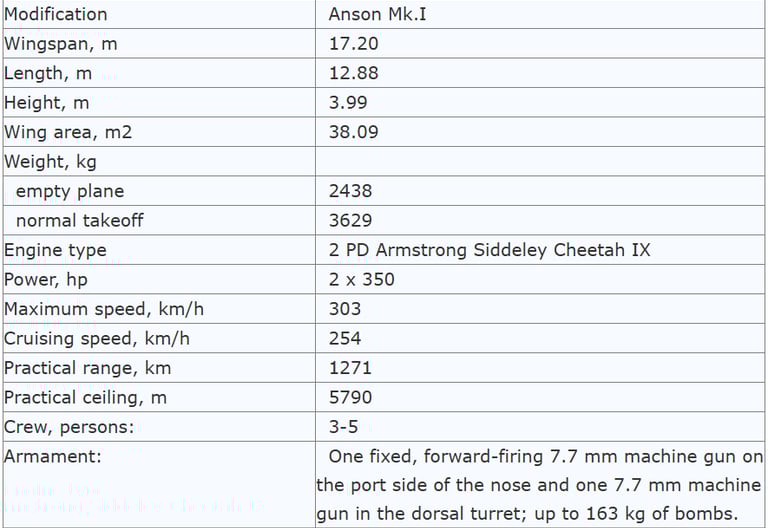
But the lion's share of all the aircraft of this type produced by Avro went to the Royal Air Force Coastal Command, created in 1936. This simple and reliable aircraft was increasingly used there. On June 26, 1937, five full squadrons of Ansons flew in formation over the heads of spectators at the Hendon Air Display. By early 1939, these aircraft had already been flown by 12 squadrons. Aircraft produced in 1937-39 differed slightly from earlier ones in terms of equipment and armament. In particular, the Lewis machine gun in the upper turret was replaced with a more modern Vickers K. Due to the equipment and the increased crew (4), the takeoff weight increased to 3,629 kg, compared to the 3,330 kg of the prototype.
By 1939, the Anson no longer met Coastal Command's requirements, primarily in terms of range. In May, the first Lockheed Hudson aircraft began arriving from the United States, significantly outperforming the Avro in speed and almost three times in range. The Hudson, also based on a passenger airliner (the Lockheed 14 Super Electra), belonged to a completely different generation: all-metal construction, powerful engines, a well-mechanized wing, and excellent radio and instrumentation. Nevertheless, 11 Coastal Command squadrons entered the war with Ansons.
Most sources indicate that the first enemy encounters were two Ansons from No. 233 Squadron, attacking a German U-boat on September 5, 1939. However, recent research reveals a completely different picture: there were two U-boats. And both were British! Fortunately, the pilots missed, but two bombs dropped at low altitude ricocheted off the sea surface and exploded in mid-air, striking one of the patrol aircraft with shrapnel. With its fuel tanks riddled, it failed to reach shore and ditched. The crew was forced to use an inflatable dinghy. However, that same day, an Anson from No. 500 Squadron "rectified the situation" by sinking a German U-boat off the southeast coast of England.
In 1939-40, these obsolete aircraft made a significant contribution to convoy escort, submarine search and destruction, and rescue operations. The Anson was robust and fairly durable, although its weak defensive armament, lack of armor protection for the crew, and lack of fuel tank seals made their presence felt. However, on the open sea, they rarely encountered fighters, and sometimes even showed aggression toward larger enemy aircraft, attacking German bombers and floatplanes, which were much better armed. For example, on November 8, 1939, a lone Anson attacked two Dornier Do-18 flying boats and shot down one of them. The Ansons' combat credits also include the Heinkel He-111 bomber and the Heinkel He-115 twin-engine floatplane, as well as another aircraft that was shot down so quickly that the British pilots did not even have time to identify it.
Occasionally, they were able to successfully fend off fighters. In June 1940, three Ansons over the English Channel were overtaken by nine Bf-109s. But the British not only escaped unscathed (two wounded in such a situation practically doesn't count), but also sent two Messerschmitts into the sea and damaged a third. In July of that same year, an Anson crew, spotting four Bf-110s attacking British minesweepers, drew the enemy onto themselves and gave them a worthy reception: the first fighter to approach from the side encountered a point-blank burst of fire and crashed.
However, the Anson's firepower was clearly insufficient. Therefore, units mounted additional machine guns in the cockpit windows, from which the navigator fired. These firing positions partially covered the forward blind spots. The commander of 500 Squadron mounted a 20mm Hispano cannon on his aircraft, firing downwards and rearward through a hatch in the fuselage. During the evacuation from Dunkirk, it was used quite effectively against German torpedo boats. Some pilots followed the commander's example and similarly modified their aircraft. Interestingly, when firing the cannon in bursts, the Anson's speed increased by approximately 5 knots per hour. In the second half of 1940, mass deliveries of Hudsons made it possible to significantly re-equip patrol squadrons with the new equipment.
This process ended in 1941. Finally, the permitted bomb load for Ansons was increased to 500 pounds (227 kg); typically, two 250-pound depth charges were carried. This brought the aircraft's takeoff weight to 4,218 kg. Ansons continued to fly over the sea until 1942, but this time as part of RAF rescue squadrons. Some were equipped with ASV radars to detect surface targets. Similar modifications were also made in Australia.
But the primary use of the Anson by this time had long since become training units. Soon after the adoption of the Joint Training Plan for Commonwealth Air Forces in December 1939, the Anson was chosen as the standard multi-engine trainer. Reliable, fuel-efficient, inexpensive, and primitively simple, the Anson was well suited for this purpose. Most training aircraft were unarmed. A total of 2,476 Anson I aircraft were built without machine guns. Specifically, without machine guns, as the Armstrong-Whitworth turret cupola was usually retained—it was very convenient for training celestial navigators. 313 aircraft were built for training air gunners with hydraulically powered Bristol B.I MkVI turrets (from the Blenheim bomber). With the new turret, the aircraft weighed 4,388 kg, which was already too much for the Anson's underpowered engines. The engines often overheated. For this reason, some aircraft were fitted with smooth cylindrical cowlings, modeled after those on the Airspeed Oxford aircraft for the same engines, which provided improved cooling. Anson I trainers, produced between 1940 and 1942, had landing lights in the wings instead of the single nose light previously installed. Some aircraft had additional blisters above the navigator's station and were equipped with various types of radio compasses, with open ring antennas or radome-enclosed ones.
Not only did Anson production not decline, but it actually increased. In 1939, the Air Force placed an order for 1,500 aircraft, and then for another 800. In 1943, a new, powerful plant in Chedong began producing Ansons. The Anson remained the primary training aircraft for pilots, navigators, and gunners in bomber aircraft throughout the war.
During the war, Anson exports continued. In addition to the 48 previously delivered, 40 aircraft were sent to Australia in 1939-40. There, these aircraft were flown by the 2nd, 4th, and 6th Bomber Squadrons. Australian Ansons took part in the Pacific War in 1941-42. The Australian Air Force used them for coastal patrols, and then as trainers and light transport aircraft. They served in this latter capacity throughout the war, then remained in storage until 1948. The last of these aircraft was decommissioned in 1963. A small number of aircraft went to the Union of South Africa. They equipped one squadron (the 60th) and three separate flights, previously armed with Junkers Ju-86Zs – converted passenger aircraft. They were used for coastal patrols. One Anson was equipped with floats in South Africa. It was stationed at Congella Air Base as a non-flying training floatplane.
Beginning in the second half of the war, the Anson began to be actively used as a light transport aircraft. Initially, these were disarmed machines withdrawn from combat squadrons (several were transferred to American units based in England), followed by special modifications. The first of these was the X modification, produced in 1943. It consisted of an Anson I with a reinforced cabin floor for cargo transportation. Since these machines were considered dual-role (trainer and transport), some retained their armament (Bristol BI MkVI turrets). The last Anson Xs were assembled with smooth, round cowlings.
In 1944, specialized military transport versions of the Anson—the XI and XII models—were produced. They were intended to serve as command, liaison, ambulance, and light cargo aircraft. The Anson XI, which made its maiden flight on July 30, 1944, differed externally from the Model I in its increased cabin height. The Cheetah XIX engines (housed in smooth, round cowlings) drove Fairey-Read constant-pitch metal propellers. The Model IX was the first British Anson to feature hydraulically actuated landing gear and flaps (this innovation was introduced three years earlier on the Canadian models, which will be discussed later). A little later, on October 27, the first Anson XII took to the air. It differed from the previous version in its powerplant—Chita XV engines (420 hp) with Rotol propellers. The first prototype, followed by 16 production aircraft, were converted from Type I aircraft. The last Anson XII Series 2 aircraft were produced with all-metal wings. A total of 90 Type XI aircraft were produced, and 246 Type XII aircraft. All of them served in the UK, with the exception of one Anson XII, which was sent to Australia after the war.
Canadian factories made a significant contribution to Anson production during World War II. In July 1940, the Canadian government commissioned Federal Aircraft to develop production of this type of aircraft for training purposes. The aircraft's design was modified to accommodate components and technology available in Canada. The result was the Anson II. The first prototype flew on August 21, 1941. Federal Aircraft converted it from an Anson I imported from England. It was powered by American Jacobs L6MB engines producing 330 hp each. The aircraft also differed from its British counterparts in its modified glazing, a pressed nose section made of plywood impregnated with synthetic resins (something similar to our "delta wood"), a different landing gear design, and the introduction of hydraulic control for the landing gear and flaps. Subsequently, a total of 1,050 Anson IIs were manufactured through six subcontractors. Fifty of these were transferred to the US Army Air Forces in 1943 as AT-20s. They were powered by Jacobs R-915-7 engines (the military version of the same L6MB).
The same Jacobs engines were used in aircraft built for Canada and British factories; the batch of Anson I aircraft produced with them was designated modification III. Another 223 aircraft were built with 300 hp Wright R-760-E1 Whirlwind engines (Anson IV).
In 1942, Anson Vs began rolling off Canadian assembly lines. Instead of continuous strips of glass, they introduced individual round windows, and most importantly, the fuselage was now entirely constructed as a plywood shell (monocoque) without a supporting steel truss. They were not armed. This modification was also produced in large quantities (1,070 units) by three companies: Federal Aircraft, Canadian Car and Foundry, and McDonald Brothers Aircraft. A variant based on this model, the Anson VI, was also produced for aerial gunnery training, with a Bristol B.1.MkVI turret. Both versions were powered by 450-hp Pratt & Whitney R-985-AN12B Wasp Junior engines with Hamilton or Hoover fixed-pitch propellers. The Anson V remained in service with the Canadian Air Force until the late 1950s.
After the war, the Anson I was retired from service with the Royal Air Force, and a significant number were sold abroad. They found their way into the air forces of Belgium, Egypt, Iran, Israel, Norway, Portugal, and Saudi Arabia. Dutch pilots who served in 320 Squadron in England during the war returned home with several Anson I aircraft, which were later used to rebuild the Royal Netherlands Air Force. In addition, the Dutch government purchased 10 more aircraft of this type from war surplus. Similarly, one Anson XII (or Anson X) ended up in Czechoslovakia along with a squadron of Spitfires (there it was later designated D41). France proved to be the largest buyer of Ansons, receiving 223 aircraft. In the first post-war years, these aircraft were used in flight schools, in naval aviation (for coastal patrols), in colonial squadrons in Syria and Africa.
Many Ansons of various modifications were sold to private companies (more than three hundred in total). Inexpensive, simple, fuel-efficient, and undemanding of airfields, they found a home on local airlines in remote areas. In Kenya, they fought locusts, in Scotland, they delivered mail, and in Denmark, they served as flying ambulances. Ansons were especially widespread in the British Commonwealth, former colonies, and protectorates, including Uganda, Singapore, Bahrain, and Jordan.
Until 1962-63, this small, unpretentious aircraft was often encountered. They were converted into passenger and cargo carriers (windowless ones – such as those owned by the English company Transair), flying laboratories (the company Ecco Electronics used one machine for testing aircraft radars until 1967; similar conversions were also owned by Decca, Smith's Instruments, Hawker, and other companies), and training aircraft (for civil aviation pilots).
Taking advantage of the production capacity and mass-production technology that had grown during the war, Avro, after the return of peace in Europe, rushed to conquer the commuter airline market, which until then had been almost exclusively occupied in Great Britain by de Havilland products (primarily the DH89 Dragon Rapid biplane). To this end, at the end of the war, they developed a "refined" civilian version of the Anson XII, marketed under the commercial name "Avro Nineteen." Soundproofing was improved, the cabin was redesigned (to accommodate nine passengers), the continuous side glazing was replaced with oval windows, and the entry door was returned to the left side (as on the first Avro 652). The first Avro Nineteen, G-AGNI, flew in January 1945. Serial production was carried out at the Greengate plant. Railway Air Service purchased 14 aircraft from Avro and deployed them on the London-Belfast and Liverpool-Belfast routes. Scottish Aviation and other airlines followed suit.
Similar to the Anson XII, the Avro Nineteen gradually adopted an all-metal wing and tail. These aircraft were designated Series 2. Under the Anson C.19 designation, this modification entered service with the Royal Air Force. A small number of these aircraft were also used by other countries' military aviation: two went to Australia, four were purchased by the Irish Army Air Corps, and 12 by the Afghan police. The latter differed slightly from the C.19, so they were given their own name—Anson 18. Mass production of the C.19 continued until 1947. 263 aircraft were built, including 158 Series 2 aircraft.
Several specialized types of training aircraft were created on the basis of the C.19. The Anson T.20 was a bomber trainer with a glazed nose and bombsight, the T.21 was a flight navigation class (used in Southern Rhodesia), and the T.22 was designed for training radio operators. The T.22, produced in 1952, was the last in the large Anson family (38 modifications were produced in total). The last aircraft of this type to be produced was the T.21, delivered to the RAF in May of that year. The Anson remained in production for 17 years—not a record, but an impressive length of time. In total, 11,020 Ansons of all modifications were produced during this period. Of these, 8,138 (including 6,779 Anson I) were manufactured by Avro, and the remaining 2,882 were added in Canada.
However, it remained in service with the British Royal Air Force long after its production ended. The last of these, the C.19, was ceremoniously retired on June 28, 1968. That same year, the Anson took part in the final war of its long career: six C.19 ambulances were used in the Nigerian Civil War.
Thus, this seemingly unassuming aircraft lived a long and rather interesting "life" (it served in the British Royal Air Force alone for 34 years!). It didn't achieve any records or celebrated combat successes—it simply served reliably and faithfully where it was needed. In England, this aircraft is still remembered and revered—six Ansons of various modifications and years of production are preserved in various museums across the country.
Modifications:
Anson I – equipped with two Armstrong Siddeley Cheetah IX engines, armament: two 7.7 mm machine guns (one in the nose of the fuselage, the second on a turret in the tail), two bombs under the center section and eight bombs under the wings. A total of 6,742 aircraft were produced at two factories in Woodford and Yeadon.
Anson II – manufactured in Canada. Equipped with Jacobs L-6 MB R-915 engines (see Jacobs R-915[eng.]), producing 330 hp, equipped with a hydraulic landing gear retraction system.
Anson III – 432 Mk I aircraft were converted in Canada to Jacobs L-6 MB R-915 engines.
Anson IV – one Mk I aircraft was converted in Canada to Wright Whirlwind engines.
Anson V – 1,069 aircraft were built in Canada for navigator training. They were equipped with Pratt & Whitney R-985 Wasp Junior engines producing 450 hp and a new monocoque wooden fuselage developed in the USA.
Anson VI – one aircraft was built in Canada for bombing and gunnery training.
Anson X – 104 Anson Mk I were converted into a transport version with a reinforced cabin floor.
Anson XI and XII – 90 Anson Mk I were converted into Mk XIs, 221 aircraft were built from scratch. The aircraft were equipped with hydraulic flaps and landing gear.
Anson XIII – gunnery trainer (project).
Anson XIV – gunnery trainer (project).
Anson XV – bombing trainer (project).
Anson XVI – navigation trainer (project).
Anson C.19 – liaison and transport aircraft; 264 were built for the Royal Air Force.
Anson T.20 – 60 copies were built for Southern Rhodesia. A trainer aircraft for bombing and navigation training.
Anson T.21 – 252 copies were built. A trainer aircraft for flight navigation training.
Anson C.21 – a modification of the T.21 for transport and communications.
Anson T.22 – 54 copies were built. A trainer for radio operators.
Anson 18 – 12 aircraft were transferred to the Royal Air Force of Afghanistan for use as liaison aircraft, police patrol and aerial photography.
Anson 18C – 13 aircraft were built for the government of India, used for training crews of civil aircraft.
Anson 19 – 56 aircraft were built. A civil transport version.
AT-20 – 50 copies were built in Canada for the US Air Force.
Avro 652 "Anson", Patrol Aircraft